The construction industry is undergoing a huge upheaval as new technology, novel materials, and sustainable practices reshape project planning, execution, and maintenance. Promising faster, safer, and more affordable projects, the combination of digital tools, cutting-edge gear, and environmentally friendly solutions is preparing the ground for a building revolution.
The Rise of Smart Construction
Smart construction is becoming an increasingly important part of modern building projects, employing digital technologies to improve precision, decrease waste, and streamline processes. Building Information Modeling (BIM) has revolutionized project planning by offering comprehensive 3D models allowing real-time cooperation for engineers, architects, and contractors. Predicting maintenance needs and optimizing resource allocation are also greatly aided by artificial intelligence and machine learning, so that projects go from start to completion without hiccups. Further improving efficiency and productivity is the real-time monitoring of equipment, worker safety, and environmental conditions made possible by the sensors and Internet of Things (IoT) devices included in building sites.
Automation and Robotics in Construction
The use of automation and robotics is drastically changing the construction sector by lowering labor-intensive activities and enhancing precision. While reducing human error, autonomous machinery, including robotic arms for building structures and brick-laying robots, is helping to speed up building times. Site surveys, progress tracking, and safety checks are just a few of the applications for drones—real-time airborne data that improves decision-making. By allowing the fast building of buildings utilizing innovative composite materials, 3D printing technology is also making an impact by lowering material waste and general expenses.
Sustainable and Green Building Innovations
Sustainability is at the forefront of the construction industry, with more companies embracing environmentally friendly building materials and energy-efficient designs. Using renewable energy sources, energy-efficient insulation, and clever waste management systems helps green buildings reduce their environmental impact. Modern building techniques, such as modular construction, carbon-absorbing bricks, and self-healing concrete, are changing the way buildings are constructed. Modern buildings are increasingly incorporating solar panels, rainwater collection systems, and passive cooling techniques, reducing dependency on nonrenewable energy sources.
Prefabrication and Modular Construction
Prefabrication and modular construction are altering the business by allowing for faster project completion while reducing costs and waste. Building components off-site manufacture ensures a controlled environment in which components are precisely integrated prior to delivery to the construction site. Large-scale projects prefer this strategy because it improves quality control and reduces delays caused by weather conditions. Modular building, in which entire sections of a building are prefabricated and assembled like jigsaw pieces, is becoming increasingly popular due to its cost-effectiveness and scalability.
Enhanced Safety Measures and Construction Technologies
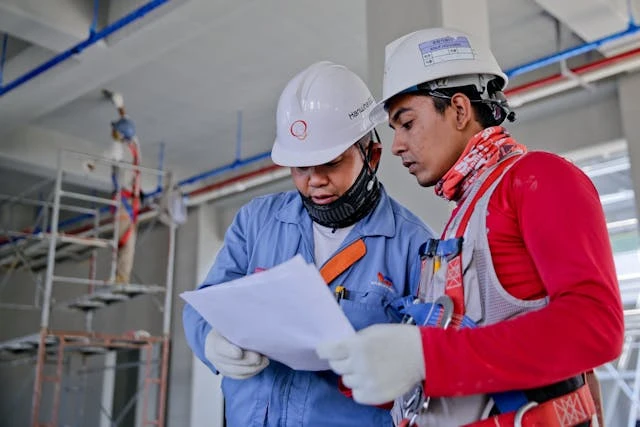
Ensuring worker safety is a primary responsibility in the construction sector, prompting the use of innovative safety technologies and processes. Wearable technology, such as smart helmets, vests, and exoskeletons, is used to track worker health, minimize tiredness, and avoid injuries. AI-powered surveillance systems and drone monitoring are being used to detect safety infractions and enforce compliance with regulations. You can buy cuplock scaffolding from a reputable vendor that improves safety by giving a secure and adaptable framework for personnel at elevated heights. As construction sites grow more technologically advanced, safety measures will improve to reduce workplace accidents while increasing overall project efficiency.
Digital Twin Technology and Virtual Construction
Digital twin technology is revolutionizing construction by generating virtual counterparts of physical structures that can be analyzed and monitored in real-time. These computer models let architects and engineers replicate various situations, therefore optimizing design aspects and spotting possible problems before the building starts. Driven by augmented reality and virtual reality, virtual building methods let stakeholders see projects at all phases, hence enhancing cooperation and decision-making. In order to monitor building performance, energy consumption, and maintenance requirements following completion, digital twins are also being coupled with IoT sensors.
Conclusion
The future of the building is being molded by a convergence of technology developments, sustainable practices, and novel materials that are transforming the sector. From smart construction and automation to AI-driven analytics and green building advances, the industry is changing at unheard-of speed. Using prefabrication, robots, and digital twin technologies is simplifying procedures, lowering expenses, and improving safety. Companies that include these trends in their operations will flourish in a market growingly competitive as the sector welcomes change. Modern solutions pushing efficiency, sustainability, and advancement define the building scene instead of conventional techniques.