Decentralized finance, or DeFi, has become one of the defining pillars of the Web3 economy. Instead of depending on banks, brokers, exchanges, or other centralized intermediaries, DeFi uses smart contracts on blockchains to provide financial services directly through code. These services include trading, lending, borrowing, staking, payments, and yield generation. The broader market opportunity is substantial: Grand View Research estimates the global decentralized finance market at USD 26.94 billion in 2025 and projects it could reach USD 1.42 trillion by 2033, reflecting how quickly decentralized financial infrastructure is expanding.
For businesses, developers, and entrepreneurs, understanding DeFi development is no longer optional if they plan to participate in blockchain-based innovation. DeFi is not just another software category. It is a financial technology stack where product design, token economics, risk management, and smart contract security all intersect. In the Web3 era, this makes DeFi development both promising and demanding. A successful DeFi product must do far more than function on-chain. It must solve a real financial problem, earn user trust, manage liquidity, and remain resilient in volatile market conditions. Official documentation from Aave and Uniswap shows how mature DeFi systems are built around transparent protocol rules, self-custody, and direct on-chain execution rather than centralized operational control.
What DeFi development really means
DeFi development refers to the design and creation of blockchain-based financial applications that run through smart contracts rather than traditional centralized infrastructure. In conventional finance or fintech, companies typically hold user balances in private databases, authorize actions internally, and settle transactions through banking or payment rails. In DeFi, those actions are executed by code deployed on a blockchain, where the rules are visible and transactions are validated by the network. Aave describes its protocol as a non-custodial liquidity protocol that enables supplying and borrowing through battle-tested smart contracts, while Uniswap describes its protocol as a peer-to-peer system for exchanging ERC-20 tokens through persistent smart contracts designed around self-custody and censorship resistance.
This difference changes the entire development mindset. A DeFi team is not simply building an app interface over a financial backend. It is building the backend itself as programmable financial logic. That means developers must think carefully about contract architecture, how funds move, how users are protected, and how the protocol behaves under stress. In that sense, DeFi development is not just software engineering. It is software engineering fused with financial systems design.
Why DeFi matters in Web3
Web3 is often described as an internet built around ownership, permissionless participation, and open digital infrastructure. DeFi fits naturally into that vision because it gives users direct control over assets while making financial services accessible through interoperable protocols. This is one reason DeFi has become one of the strongest real-world use cases for blockchain technology. Uniswap’s protocol documentation emphasizes that its contracts are designed to function without trusted intermediaries, and Aave’s framework similarly allows users to participate as suppliers or borrowers without centralized custody.
The ecosystem’s scale also shows that DeFi is not a small experimental niche. DefiLlama reports that it tracks more than 7,000 DeFi protocols across 500-plus chains, offering real-time metrics on total value locked, fees, yields, and protocol activity. That breadth indicates a rapidly expanding environment where many different financial primitives are already live and competing for adoption.
For businesses, this matters because DeFi is becoming infrastructure rather than novelty. A wallet app can integrate swaps. A fintech platform can build on lending markets. A treasury product can automate yield strategies. A payments company can use stablecoins and on-chain rails. The Web3 era makes financial services more modular, and DeFi development is how those modules are created.
The main building blocks of a DeFi platform
Although DeFi covers many categories, most applications are built from a relatively small set of core primitives. These include liquidity pools, automated market makers, lending pools, collateral systems, governance mechanisms, oracles, and token incentives. Uniswap’s overview explains that its protocol operates as an automated market maker, enabling peer-to-peer market making and token swaps through persistent smart contracts. Aave’s protocol overview, by contrast, focuses on supplying and borrowing through pooled liquidity markets.
These primitives can be combined in many ways. A decentralized exchange can feed liquidity into a yield strategy. A lending platform can accept LP tokens or stablecoins as collateral. A treasury dashboard can route assets into multiple protocols. This composability is one of DeFi’s greatest strengths, because it allows projects to build on top of existing infrastructure instead of reinventing every function from scratch. At the same time, composability introduces dependency risk. If one protocol or oracle fails, connected systems may also be affected.
Major categories of DeFi development
One of the easiest ways to understand DeFi fundamentals is to look at its major product categories. Decentralized exchanges are among the most important. Uniswap’s protocol provides a foundational example of how token swaps can happen without a centralized order book or custodian.
Lending and borrowing protocols are another major category. Aave’s official documentation shows how suppliers deposit assets to earn interest while borrowers access liquidity by posting collateral. This model has become one of the most established forms of DeFi because it offers practical utility for both passive asset holders and users seeking capital efficiency.
Other categories include stablecoins, yield aggregators, synthetic assets, derivatives, staking infrastructure, and tokenized real-world asset systems. In practice, many modern DeFi products combine several of these functions. A wallet may support swaps, borrowing, and staking within one product. A trading platform may blend DEX execution with lending-backed leverage. This is why DeFi development requires product-level thinking rather than a narrow feature checklist.
The DeFi development process
A sound DeFi project usually begins with a financial use case, not with code. The first question is what real problem the product solves. Is it helping users borrow against assets, trade tokens efficiently, earn yield, access cross-chain liquidity, or manage treasury capital? Without a clear use case, even technically impressive protocols often struggle to gain traction.
Once the use case is clear, the next step is protocol architecture. This includes defining how users interact with the system, what assets are supported, how fees are charged, how liquidity is sourced, and what mechanisms protect solvency and user funds. In a lending application, that means setting collateral rules, interest models, and liquidation triggers. In an exchange protocol, it means designing swap logic, fee parameters, and liquidity incentives. Aave and Uniswap both illustrate how much of a protocol’s success depends on the design of its underlying financial rules, not just its frontend interface.
After architecture comes implementation. This involves smart contract development, oracle integration, wallet support, frontend dashboards, analytics, testing frameworks, and deployment pipelines. Post-launch work is just as important. Protocols require monitoring, parameter tuning, governance planning, and sometimes upgrades or migrations. DeFi development is therefore not a one-time build. It is an ongoing product and infrastructure lifecycle.
Key technical concepts every business should know
Businesses entering DeFi need to understand a few concepts early. The first is self-custody. In many DeFi systems, users interact through their own wallets rather than depositing funds into a company-controlled account. Uniswap explicitly prioritizes self-custody, which changes how user onboarding and transaction flows work.
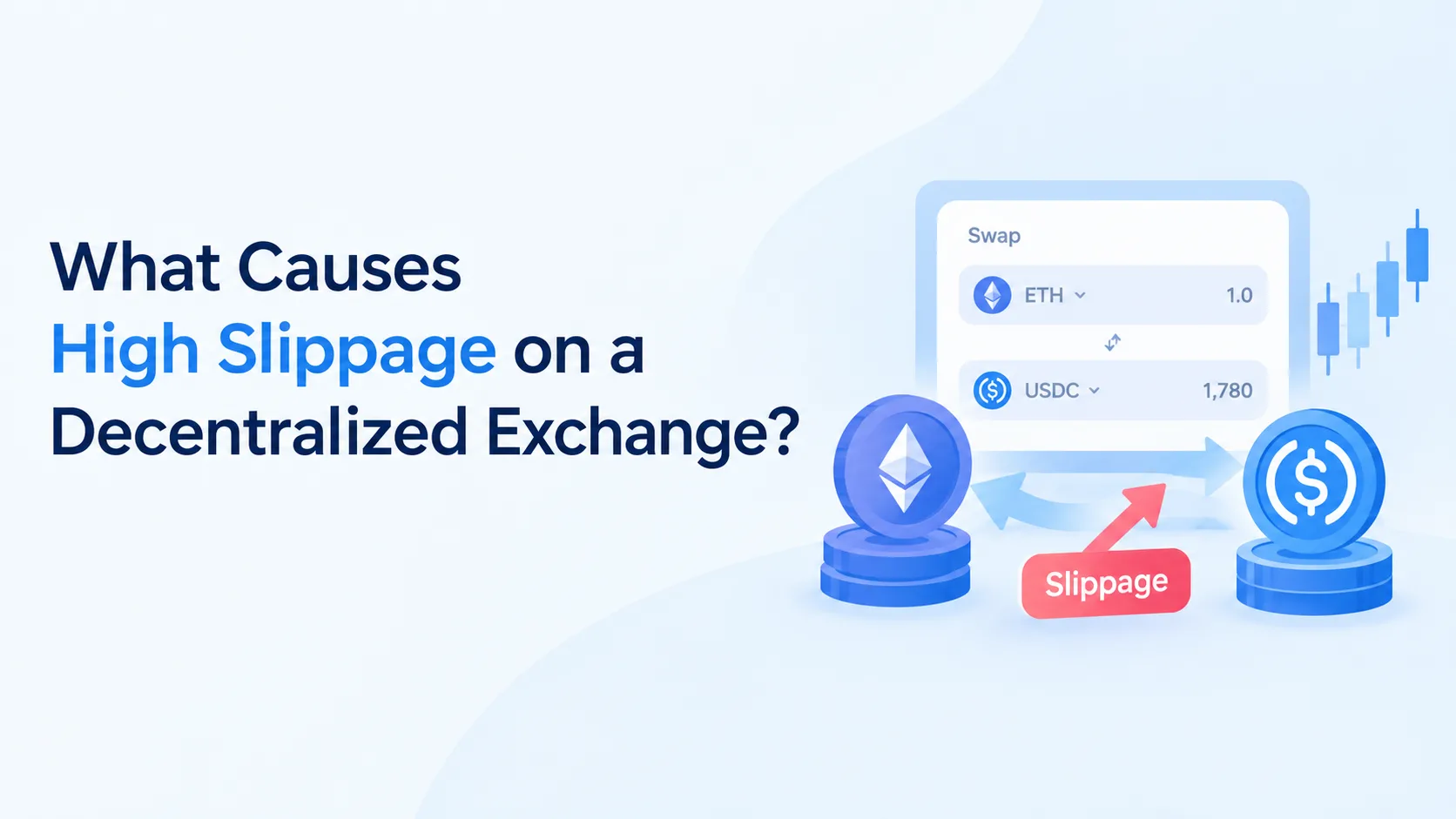
The second is liquidity. DeFi markets only function well when capital is available. Exchanges need deep pools to reduce slippage, and lending markets need enough deposits to support borrowing demand. Liquidity is not merely an add-on metric. It is a core design requirement.
The third is interoperability. DeFi products often rely on other protocols, standards, and services. This can accelerate growth but also increases complexity. A project may depend on external price feeds, bridge infrastructure, or liquidity venues, which means external failures can affect the product.
The fourth is immutability and upgrade design. Because smart contracts may be persistent or only partially upgradeable, mistakes can be much harder to fix than in a conventional web application. Uniswap’s documentation, for example, stresses the persistent and non-upgradable nature of the protocol contracts it describes.
Security is central to DeFi development
Security is one of the most important fundamentals in DeFi because users’ assets are directly exposed to smart contract behavior. A bug or exploit can lead to immediate financial loss. Financial Times reported in late 2025 that more than $140 billion in crypto assets was held on DeFi protocols globally, highlighting the scale of value exposed to protocol risk.
That risk means security has to be built into every stage of development. Smart contract audits matter, but they are not enough on their own. Teams also need rigorous testing, simulation of edge cases, access control reviews, oracle design, monitoring, and incident response planning. Strong security is one of the main reasons businesses often seek out a defi development company rather than trying to assemble a DeFi system without specialist expertise.
Business value and commercial opportunity
DeFi development creates commercial opportunity because it turns financial functions into programmable infrastructure. A business can launch a swapping interface, a lending product, a yield platform, or a tokenized treasury service without reproducing the full overhead of traditional financial institutions. Aave’s documentation even notes that its infrastructure can be integrated into wallets, exchanges, fintech platforms, and DeFi-native products, showing how protocols increasingly act as reusable financial rails.
This is why many businesses look for defi development services when entering Web3. They are often not just asking for code. They need architecture planning, smart contract engineering, integration support, testing, security preparation, and post-launch maintenance. At a more strategic level, a decentralized finance development company may also help with token utility design, governance frameworks, and product-market fit for on-chain financial applications.
Challenges businesses should not ignore
Despite the opportunity, DeFi development comes with real obstacles. Regulatory treatment continues to evolve. User experience is still more complex than mainstream fintech. Gas fees, chain fragmentation, and bridge dependencies can complicate adoption. Liquidity is difficult to bootstrap, and unsound incentive models can attract users briefly without creating lasting value.
There is also the challenge of trust. Because DeFi products deal directly with money, users judge them harshly when security, transparency, or usability falls short. This is why the most durable protocols are usually the ones that combine careful engineering with clear financial logic and responsible communication.
The future of DeFi development in Web3
The fundamentals of DeFi development suggest that its long-term importance will only grow. DefiLlama’s scale data and market forecasts both point to an ecosystem that is broadening across more chains, more protocols, and more use cases. Web3 is gradually making finance more open, programmable, and composable, and DeFi is the clearest expression of that shift.
For businesses, the takeaway is simple. DeFi development is not about following hype. It is about understanding how blockchain can be used to build transparent financial systems that users can access directly. The teams that succeed in this space will be the ones that treat DeFi as both a technology discipline and a financial discipline. When those two perspectives come together, DeFi can move from experimental product to durable Web3 infrastructure.