Congratulations! You've made it. After years of hard work, you've graduated from your dream B-school and landed a great job with a fantastic salary. The hard part is over, right?
Wrong.
As a career counselor who has tracked the journeys of hundreds of successful MBA graduates, I can tell you that the first 90 days in your new role are the most critical period of your entire professional life. This is the time when first impressions are forged, your initial credibility is built, and the foundation for your future promotions and success is laid. Many brilliant MBA graduates stumble in this crucial phase because they fail to navigate it strategically.
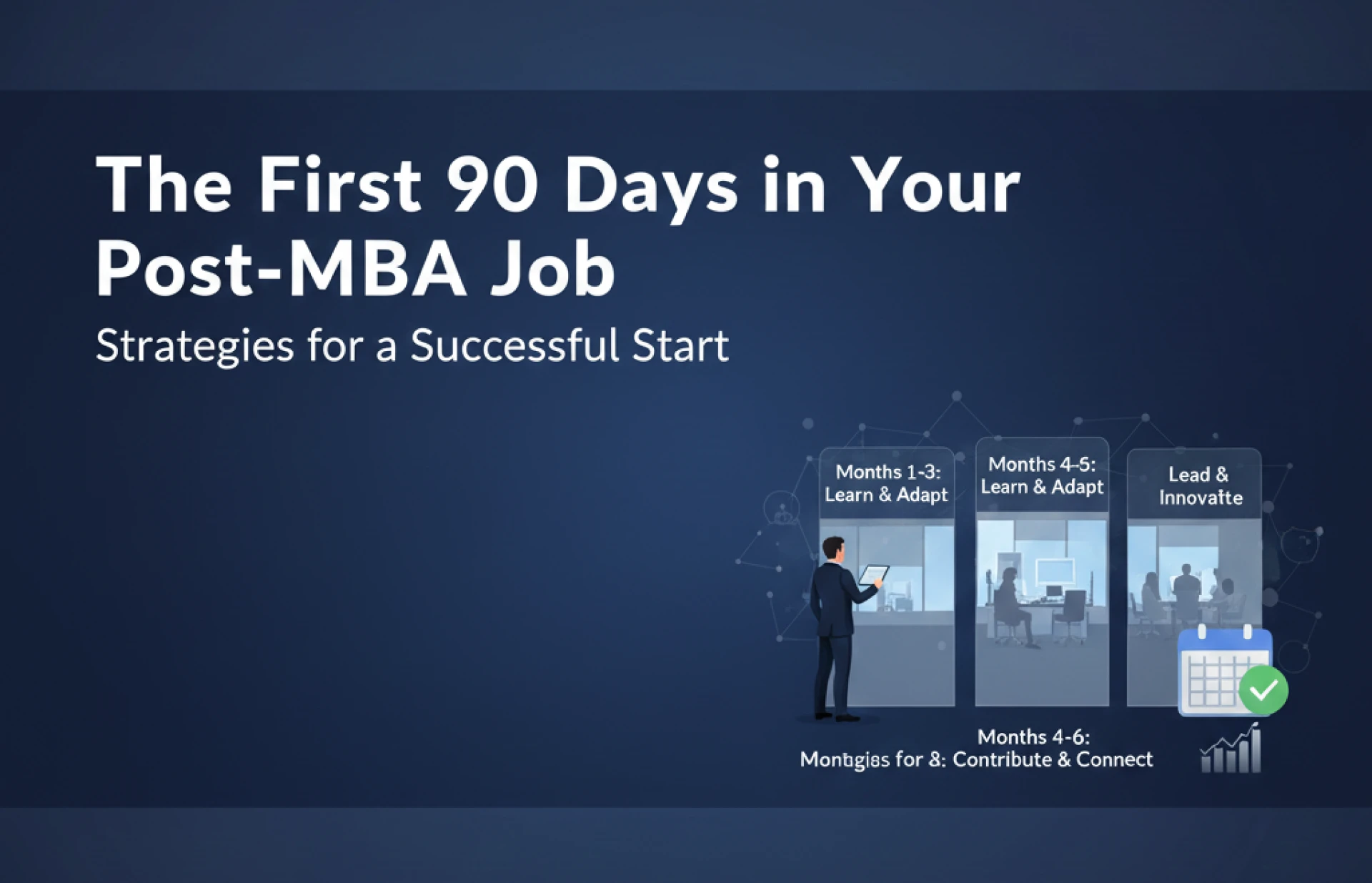
This is your definitive 30-60-90 day plan to not just survive in your new role, but to thrive and make a killer first impression.
The Golden Rule: Shift Your Mindset from "Student" to "Professional"
The first and most important step is a mental one. You need to consciously shift your mindset.
In B-school, you were rewarded for asking smart theoretical questions and winning debates. In your new job, you are rewarded for delivering results and solving problems. Your first few months are not the time to show everyone how much you know or to challenge the existing processes. Your first mission is to listen, learn, and understand.
Phase 1: The First 30 Days - Your Mission is to Learn and Listen
Think of your first month as being a sponge. Your primary goal is to absorb as much information as possible about the company, the culture, and your role.
Meet Everyone: Your top priority should be to schedule brief, 15-30 minute introductory chats with your manager, all your team members, and key people in other departments that you will be working with. Don't just introduce yourself; ask them two powerful questions:
"What does success look like in this role from your perspective?"
"What is the biggest challenge our team is facing that I can help with?"
2. Understand the Business: Become a student of the company. Read every document you can get your hands on: past annual reports, old strategy decks, process manuals, and internal websites. Your goal is to understand the company's products, its customers, its competitors, and how it makes money. For students from institutions like International Business Institute IBI Greater Noida, this foundational corporate research is a key part of leveraging their robust industry exposure right from day one.
3. Clarify Expectations with Your Boss: Within your first week, have a clear meeting with your manager to understand your Key Responsibility Areas (KRAs). Ask them, "What are the one or two things I need to achieve in the first quarter to be considered successful?" This clarity is crucial.
4. Find an Informal Mentor: Identify a friendly and respected senior colleague (not your direct boss) who seems helpful. This person can be an invaluable guide to understanding the unwritten rules and the real culture of the organization.
Remember, when you join a company as a graduate from a top-ranked institution like IIM Raipur, the expectations are sky-high from day one. Your colleagues will be watching. Use these first 30 days to prove that you are not just smart, but also humble, a great listener, and a quick learner.
Phase 2: Days 31-60 - Your Mission is to Start Delivering Value
Now that you have a good grasp of the landscape, it's time to start moving from learning to contributing.
1. Secure an "Early Win": This is crucial for building credibility. Don't try to solve the company's biggest problem. Instead, identify a small but visible issue that you can solve relatively quickly. It could be improving a weekly report, streamlining a small process, or getting positive feedback from a difficult client. Successfully delivering on this early win will earn you a huge amount of trust and respect.
2. Proactively Seek Feedback: Don't wait for your 6-month performance review. Have regular, informal check-ins with your manager. Ask simple questions like, "How am I doing so far?" and "Is there anything I could be doing better or differently?" This shows maturity, humility, and a strong desire to improve.
3. Build Your Cross-Functional Network: Continue to build relationships, especially with people outside your immediate team. Understand how other departments work and how your role impacts them. This will be invaluable for future projects.
Phase 3: Days 61-90 - Your Mission is to Take Initiative
By now, you are no longer the "new person." You understand the business, you've built some relationships, and you've delivered a small win. Now is the time to transition from being reactive to being proactive.
1. Identify and Propose Improvements: Now that you understand the processes, start identifying bigger opportunities for improvement. Write a small, well-researched, one-page proposal for a new idea and present it to your manager. Even if it's not approved immediately, it shows that you are thinking strategically and taking initiative.
2. Leverage Your Unique Strengths: Think about the unique skills you brought from your MBA. Can you use your advanced analytical skills to build a new dashboard? Can you use your marketing knowledge to suggest a new campaign idea?
3. Use Your B-School Network: Don't be afraid to reach out to your seniors for advice. The alumni network of a close-knit institution like IRMA, Anand, is incredibly supportive. If there's an alum from your B-school in your company, they can be an invaluable guide and a sounding board for your new ideas in these crucial first few months. Students who have benefited from the vast industry connections and mentorship at schools like Fortune Institute of International Business FIIB Delhi are often adept at leveraging their network effectively for these initial steps.
The Foundation for Your Future
The final verdict is this: the first 90 days are a sprint that sets the pace for your entire career marathon. Your journey can be summarized in three simple steps:
Month 1: Learn
Month 2: Contribute
Month 3: Initiate
By being humble, proactive, and relentlessly focused on delivering value, you can make a powerful first impression and lay a rock-solid foundation for your journey to the top.