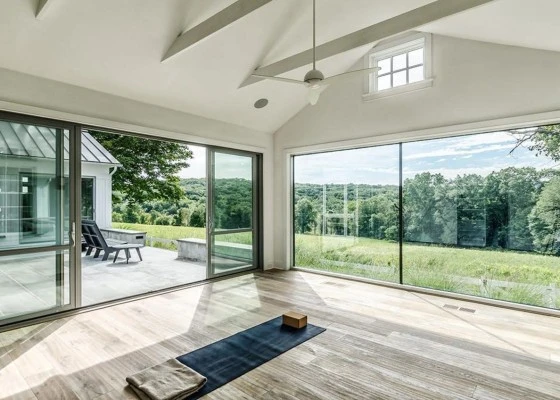
Dubai, a city celebrated for its architectural marvels and commitment to luxury, also faces significant environmental challenges, particularly concerning energy consumption for cooling. Large glass facades, including Panoramic Sliding Doors In Dubai, are a hallmark of its modern buildings, offering breathtaking views and abundant natural light. However, the sheer expanse of glass raises crucial questions about their environmental footprint, particularly in a climate characterized by intense heat and prolonged sunshine. This article delves into the data surrounding the environmental impact of these popular architectural features, highlighting key considerations for sustainable building in the emirate.
Understanding Energy Consumption in Dubai
Dubai's energy demands are overwhelmingly driven by air conditioning. With average summer temperatures soaring above 40°C, maintaining comfortable indoor environments requires continuous cooling. This reliance on cooling directly translates into high electricity consumption, primarily generated from fossil fuels, contributing to carbon emissions. Therefore, any building component that can mitigate heat gain or improve thermal performance has a direct and significant positive environmental impact.
The Role of Glazing in Heat Gain
Large glass surfaces, while aesthetically pleasing, are inherently less insulating than solid walls. In a hot climate like Dubai's, traditional single-pane glass acts as a "thermal bridge," allowing external heat to easily transfer indoors. This phenomenon, known as solar heat gain, forces air conditioning systems to work harder and longer, leading to increased energy consumption.
Data from various studies on building performance in the UAE consistently shows that a significant portion of a building's total heat gain (often between 30-50%) can be attributed to its windows and glazed areas. This underscores the critical importance of specifying high-performance glazing for panoramic sliding doors.
Key Data-Backed Features for Mitigating Environmental Impact
Modern panoramic sliding doors are not simply large panes of glass; they incorporate advanced technologies designed to enhance thermal performance and reduce their environmental footprint.
1. Low-Emissivity (Low-E) Coatings
A crucial innovation is the use of Low-E coatings. These microscopically thin, transparent metallic layers are applied to the glass surface. Data indicates that Low-E coatings, particularly "solar control Low-E" types, can reflect a significant percentage of solar infrared radiation (heat) while still allowing visible light to pass through. Studies in hot climates show that using Low-E glass can reduce cooling costs by up to 30% in well-glazed properties, directly translating to lower energy consumption and reduced carbon emissions.
2. Double and Triple Glazing
The use of multiple panes of glass with sealed, inert gas-filled (e.g., argon or krypton) cavities between them dramatically improves insulation. This creates an effective barrier against heat transfer. Data confirms that double glazing significantly outperforms single glazing in reducing heat gain, and triple glazing offers even further enhancements in thermal performance, particularly for very large glass expanses. This multi-layered approach keeps indoor temperatures more stable, lessening the load on HVAC systems.
3. Thermally Broken Frames
Even with high-performance glass, the door frame itself can be a weak point for heat transfer if it's made of a highly conductive material like aluminum without proper insulation. Modern panoramic sliding doors feature "thermal breaks" – insulating materials (often polyamide strips) integrated within the frame profile. Data shows that these breaks create a barrier that prevents heat from traveling through the frame, significantly improving the overall U-value (a measure of heat transfer, where lower is better) of the door unit.
4. High-Quality Seals and Weather-stripping
Air leakage around doors and windows can account for a substantial amount of energy loss. Data emphasizes that robust, continuous weather-stripping and high-quality seals are essential for maintaining the building envelope's integrity. Even small gaps can lead to significant energy waste, as conditioned air escapes and unconditioned air infiltrates.
Also Read : Which Sliding Doors in Dubai Are Best for Energy-Saving Homes?
Dubai's Green Building Regulations and the Future
Dubai's Green Building Regulations already mandate specific performance criteria for building envelopes, including windows and doors. These regulations encourage the adoption of energy-efficient glazing and framing systems to meet thermal performance targets. As the city continues its drive towards sustainability, further emphasis will be placed on data-driven decisions regarding building materials and technologies. The goal is to balance the aesthetic desire for panoramic views with the imperative of minimizing energy consumption and environmental impact.
Conclusion
In conclusion, while panoramic sliding doors are an undeniable asset to Dubai's luxury homes for their aesthetic and functional benefits, their environmental impact is a critical consideration. Data overwhelmingly supports the use of advanced features like Low-E coatings, double/triple glazing, and thermally broken frames to ensure these stunning architectural elements contribute to a sustainable future. Homeowners and developers looking for high-performance and environmentally conscious solutions should prioritize products that meet stringent thermal ratings and align with local green building standards, and companies like BMTS Folding & Automatic Doors LLC UAE are at the forefront of providing such solutions.