
Imagine trying to stream a 4K movie over a dial-up connection from 1998. That is, effectively, the situation facing much of the global electrical grid today. We are trying to push a twenty-first-century energy load driven by AI data centers, electric vehicle fleets, and massive renewable energy farms through infrastructure built for the era of lightbulbs and radios.
For decades, the solution to grid congestion was brute force: build more towers, string more heavy steel cables, and carve out new rights-of-way. But in today’s economic and regulatory climate, "building new" is becoming a logistical nightmare. It takes too long, costs too much, and faces too much public opposition.
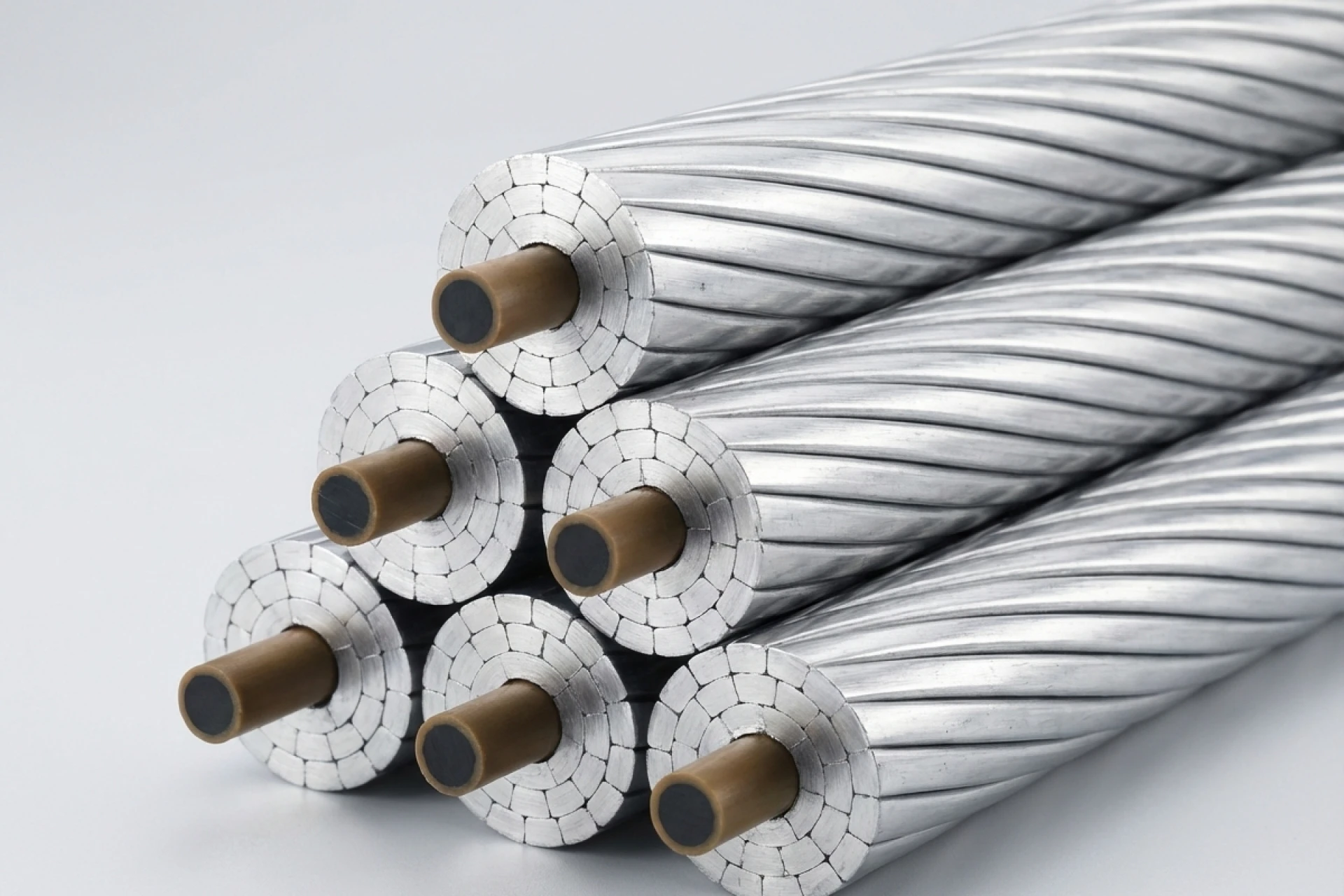
This is where the economics of Carbon Fiber Conductors, specifically Aluminum Conductor Composite Core (ACCC) technology, are quietly revolutionizing the energy sector. They offer a way to upgrade the highway without widening the road.
The Heavy Cost of Heavy Metal
To understand the economic leap, we first have to look at the incumbent technology: Aluminum Conductor Steel Reinforced (ACSR) cables. These have been the industry standard for over a century. They consist of aluminum strands wrapped around a heavy steel core. Steel is strong, but it has two major economic flaws: it is heavy, and it expands significantly when heated.
When electricity flows through a wire, it generates heat. As a steel-core cable heats up, it sags. If it sags too low, it can touch trees or ground structures, causing catastrophic wildfires or blackouts. To prevent this, utilities have to limit the amount of power they push through the line, effectively capping their revenue and efficiency.
Replacing these lines traditionally meant building stronger towers to support heavier cables or acquiring new land to build parallel lines—a process that can take a decade and cost millions per mile in legal and land acquisition fees.
The Economic Case for Carbon Fiber
Carbon fiber conductors flip this equation. By replacing the heavy steel core with a carbon fiber composite, manufacturers created a cable that is 50% lighter and significantly stronger. More importantly, carbon fiber hardly expands when heated.
The immediate economic implication is simple but profound: you can string these new conductors on existing towers. This process, known as reconductoring, allows utilities to double the power capacity of a transmission corridor without driving a single new pile or fighting a single eminent domain court battle.
While the upfront material cost of carbon fiber conductors is higher—often two to three times the price per meter compared to steel—the total project cost is frequently lower. When you factor in the elimination of structural reinforcements, the avoidance of new land acquisition, and the dramatic reduction in permitting time (months instead of years), the premium for the cable itself becomes a rounding error.
Operational Savings: The Hidden Revenue Stream
The economic benefits extend far beyond the construction phase. One of the most overlooked aspects of grid economics is "line loss." As electricity travels over long distances, a percentage of it is lost as heat due to electrical resistance. In traditional steel-core lines, these losses can be substantial, bleeding potential revenue into thin air.
Carbon fiber conductors allow for a greater volume of aluminum to be packed into the same diameter cable (since the core is smaller and lighter). This increased aluminum content reduces resistance. Studies and real-world deployments have shown that ACCC lines can reduce line losses by 25% to 40% compared to their steel counterparts.
For a utility company, this is essentially found money. Over the 40-year lifespan of a transmission line, the value of that saved energy often exceeds the initial cost of the conductor entirely. In an era where carbon taxes and sustainability mandates are tightening, reducing line losses is also one of the cheapest ways to cut overall emissions. It is efficiency that pays for itself.
Resilience as an Asset
There is also a defensive economic argument to be made. Climate change has turned grid resilience from a "nice-to-have" into a balance sheet necessity. Extreme heat waves and ice storms are becoming more frequent. Traditional steel lines sag dangerously in high heat and can snap under heavy ice loads.
Carbon fiber conductors are practically immune to thermal sag. They can operate at temperatures up to 200°C (compared to roughly 100°C for steel) without violating clearance safety codes. This resilience reduces the risk of sparking wildfires—a liability that has already driven major utility providers into bankruptcy. Investing in sag-free conductors is, in financial terms, a massive insurance policy against catastrophe.
The Bottleneck Breaker
Perhaps the most compelling economic driver is the "time value of money." We are currently seeing a backlog of renewable energy projects waiting to connect to the grid. Solar and wind farms are built faster than transmission lines can be upgraded. Every day a solar farm sits idle because the local grid cannot handle its output is a day of lost revenue.
Because reconductoring with carbon fiber uses existing structures, projects that would typically take seven to ten years can be completed in eighteen months. This speed unlocks generation revenue years ahead of schedule, improving the internal rate of return (IRR) for energy developers and stabilizing prices for consumers.
A Strategic Imperative
The sticker price of a spool of cable is no longer the only metric that matters. When viewed through the lens of total lifecycle cost, capacity, and risk mitigation, the economics of upgrading to carbon fiber conductors are undeniable.
We are entering a period where the grid needs to be dynamic, capable of handling massive surges from renewables and the heavy draw of electrification. Sticking with century-old steel technology because it is "cheaper to buy" is a false economy. The real cost lies in the wasted energy, the capped capacity, and the vulnerability to a changing climate. The future of the grid isn't just about generating more power; it’s about carrying it on shoulders strong enough—and light enough—to bear the load.