Output on a construction site is never just one thing. It's the engine holding under load. The transmission not hunting for gears on a gradient. The screening plant keeping pace with the excavator feeding it. When these are matched well, the site produces. When one is underspecified, everything slows to accommodate it.
The Engine Is Where It Starts
Heavy plant runs on a diesel engine. That won't change soon on plant working in remote locations or under heavy load. What has changed is the demand placed on it. Variable loads, emissions standards, integrated diagnostics, multiple auxiliary systems drawing from the same source. The engine in a current screening plant is doing more than its equivalent from fifteen years ago.
Evaluating diesel engine price in isolation misses most of what matters. Two engines at different price points can look close on paper until fuel consumption figures are applied across a full shift. An engine burning ten percent less fuel over a ten-hour operating day produces a saving that compounds over a project. Add in service interval length and the cost per hour picture changes again. Purchase price is one line in a calculation that has several others.
What The Transmission Does To Output
An Allison transmission is what sits between the engine and the drive wheels on a large number of heavy vehicles and construction machines operating across civil, mining, and infrastructure projects globally. The fully automatic configuration means the operator is not managing gear selection while also managing load, gradient, and site conditions. That sounds like a small thing until a manual shift is mistimed on a loaded haul truck and the powertrain absorbs the consequence.
An Allison transmission for sale is a torque converter unit. It absorbs shock loads before they reach the drivetrain. On a site where machines start under load repeatedly, that protection extends component life in ways a direct drive can't replicate. Fewer drivetrain failures. Fewer unplanned stops. That reliability doesn't appear on a spec sheet but shows up in the programme.
Screening Plants And The Output They Protect
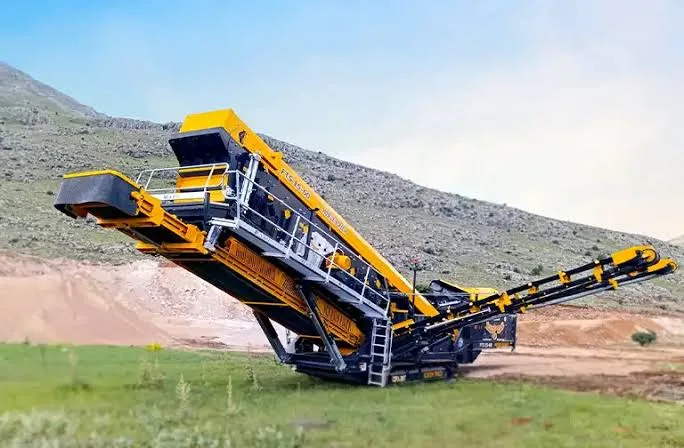
A screening plant processes material at a rate determined by the feed coming in and the decks keeping up with it. When the power source is stable and the drive system isn't introducing vibration or inconsistency, the screen runs at design capacity. When either of those things is off, the output drops and the material either backs up or passes through unsorted. The screening plant is only as consistent as the components running it.
Contractors looking at a screening plant for sale will find the market splits between tracked mobile units and static or wheeled configurations. The tracked units follow the material. They're on site within hours, processing within a day, and relocated when the feed moves. Static and wheeled plants suit operations with a fixed or semi-fixed material source where the volume justifies a more permanent setup. The configuration decision shapes every other specification choice that follows.
How The Components Affect Each Other
A screening plant running off an undersized engine drops throughput when feed rates increase. The same plant on a correctly specified engine with an Allison driving the ancillaries holds its rate as conditions vary. These aren't separate choices. They're a system and it performs at the level of its weakest part.
Matching transmission to engine, engine to application, plant to material volume. Getting one wrong caps what everything around it can achieve.
What Higher Output Actually Looks Like
Higher output isn't always about bigger machines. Sometimes it's a correctly specified engine replacing one that was marginal for the application. Sometimes it's a transmission that stops absorbing power through inefficiency and puts more of it to the ground. Sometimes it's a screening plant sized to what the excavator can actually feed rather than what the yard had available. The gains from getting these things right don't announce themselves. They show up in shift reports, fuel records, and a programme that didn't slip.