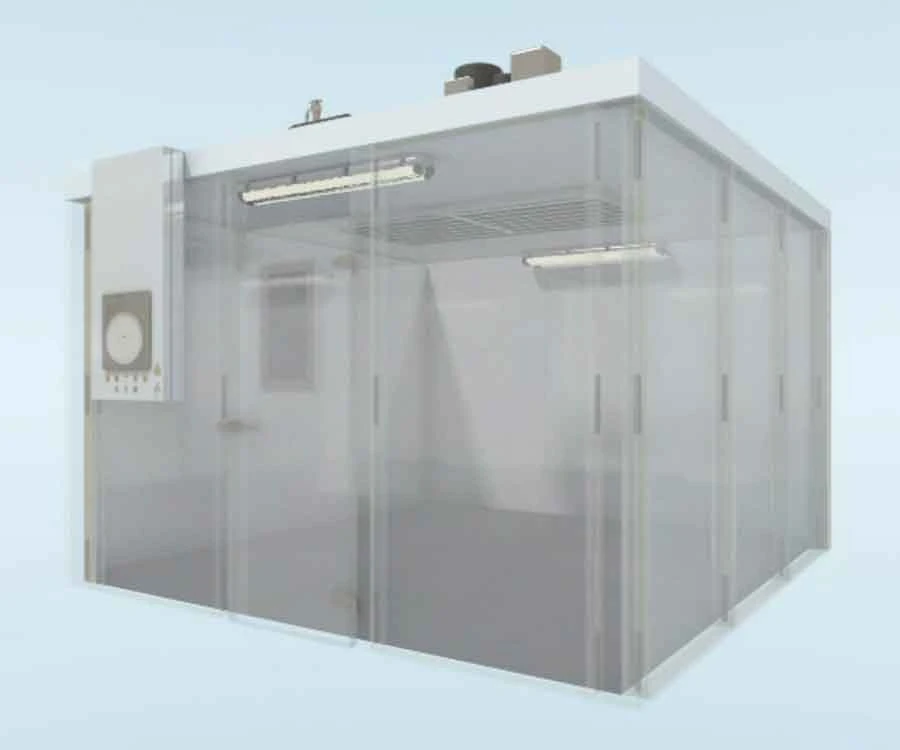
Environmental chambers, also known as climatic or simulation chambers, are highly engineered enclosures designed to replicate specific environmental conditions such as extreme temperatures, humidity, altitude, and solar radiation. While they might appear to be simple "industrial refrigerators" to the untrained eye, they are sophisticated scientific instruments essential for quality assurance, safety compliance, and research and development. In an era where consumer expectations for product longevity are higher than ever and global safety regulations are increasingly stringent, environmental chambers have become a cornerstone of the modern manufacturing landscape. By subjecting prototypes to "accelerated aging" or extreme-stress tests, companies can predict how a product will perform over a 10-year lifespan in just a matter of weeks.
1. Aerospace and Defense: Testing at the Edge of Earth
The aerospace industry operates in the most unforgiving environments known to man. Components used in aircraft and spacecraft must transition from the blistering heat of a desert runway to the cryogenic temperatures and vacuum-like conditions of high altitudes within minutes. Environmental chambers used in this sector are often large-scale walk-in units capable of simulating rapid decompression, high-altitude low pressure, and thermal shock.
For defense contractors, these chambers ensure that sensitive electronic guidance systems, communication arrays, and mechanical hardware remain operational despite the sandstorms of the Middle East or the freezing humidity of the Arctic. Without the rigorous "burn-in" testing provided by environmental simulation, the risk of catastrophic mid-flight failure would be unacceptably high. These chambers allow engineers to identify "fatigue points" in materials like carbon fiber and titanium long before they are integrated into a multi-million dollar airframe.
2. The Automotive Sector: From the Sahara to Siberia
Modern vehicles are essentially high-powered computers on wheels, and they are expected to function perfectly whether they are parked in a humid coastal town or a dry, high-altitude mountain pass. Automotive manufacturers rely heavily on environmental chambers to test everything from engine performance to the durability of interior upholstery.
EV Battery Testing: With the rise of electric vehicles (EVs), environmental chambers have become critical for testing lithium-ion batteries. These batteries are highly sensitive to temperature; extreme cold can sap their range, while extreme heat can lead to thermal runaway. Specialized explosion-proof chambers allow engineers to push batteries to their thermal limits in a controlled environment.
Corrosion Testing: Salt-spray and high-humidity chambers simulate years of exposure to coastal air or winter road salt, allowing manufacturers to refine rust-proofing techniques and paint finishes.
Component Longevity: Dashboards and steering wheels are subjected to intense UV radiation and heat cycles to ensure they won't crack, fade, or emit toxic fumes (off-gassing) when left under the summer sun.
3. Pharmaceuticals and Biotechnology: Ensuring Life-Saving Stability
In the pharmaceutical industry, the stakes of environmental testing are literally life and death. Many life-saving medications, vaccines, and biologics are chemically unstable and can degrade if exposed to improper temperatures or light. Environmental chambers are used for "Stability Testing" to determine the shelf life of a drug and to establish the rigorous "cold chain" requirements for shipping.
The World Health Organization (WHO) and the FDA require pharmaceutical companies to prove that their products remain potent under various climatic zones. Stability chambers maintain precise, unwavering temperatures (often $5^\circ\text{C}$ for refrigeration or $-20^\circ\text{C}$ to $-80^\circ\text{C}$ for deep-freeze storage) and humidity levels for months at a time. This data is what allows a manufacturer to print an expiration date on a bottle with scientific certainty. Furthermore, "photostability" chambers use specific light spectrums to ensure that a drug's molecular structure doesn't break down when exposed to sunlight.
4. Electronics and Telecommunications: Fighting the Heat
As electronics become smaller and more powerful, they generate significant internal heat. Environmental chambers are used to conduct "Highly Accelerated Life Testing" (HALT) and "Highly Accelerated Stress Screening" (HASS). These processes involve cycling a device between extreme temperature points—often ranging from $-70^\circ\text{C}$ to $+180^\circ\text{C}$—while the device is powered on and functioning.
This testing reveals weaknesses in solder joints, circuit boards, and liquid crystal displays (LCDs). For telecommunications providers, chambers simulate the outdoor environments where 5G towers and fiber-optic hardware must survive for decades. By identifying which capacitors or microchips fail under high-humidity or high-heat conditions, manufacturers can improve the reliability of the devices that power our modern digital lives, from smartphones to data center servers.
5. Renewable Energy: Testing the Future of Power
The transition to green energy relies on hardware that must live outdoors for 25 years or more. Solar panels and wind turbine components are constant targets for environmental stress. Solar modules are placed in "Damp Heat" and "Humidity Freeze" chambers to ensure that the lamination holding the cells together won't delaminate or allow moisture to penetrate and cause electrical shorts.
For wind energy, environmental chambers test the specialized lubricants and composite materials used in turbine blades. These components must withstand constant UV exposure, salt-air corrosion in offshore wind farms, and the physical stress of ice buildup. By simulating these conditions, renewable energy companies can guarantee the long-term ROI of their installations, which is essential for the economic viability of the green transition.
6. Food and Beverage: Quality and Safety Assurance
While often overlooked, the food industry uses environmental chambers to study the "accelerated shelf life" of packaged goods. By increasing temperature and humidity in a controlled way, food scientists can simulate the passing of months in just a few days. This helps in developing better packaging materials that prevent spoilage, mold growth, or moisture loss.
These chambers are also vital for the "farm-to-table" journey, testing how different types of produce react to various storage conditions. For example, they can help determine the exact humidity level needed to keep apples crisp during long-term storage or how to prevent chocolate from "blooming" (developing a white, powdery coating) during transport through different climates.
Conclusion
Environmental chambers are the unsung heroes of the global supply chain. They provide the empirical data necessary to bridge the gap between a theoretical design and a reliable, consumer-ready product. Whether it is ensuring that a satellite can survive the vacuum of space, a vaccine remains potent in a remote village, or an EV battery doesn't fail in a heatwave, these chambers provide the ultimate proof of durability. As technology continues to advance and our global climate becomes more unpredictable, the reliance on precision environmental simulation will only continue to grow across every major sector of industry.