
Mobile devices are intricate pieces of technology. Some people root them—a process that grants users with full administrative access (or "superuser" status) to the operating system. The apps that people use to root devices are called malicious root apps. These apps can access system files and settings, compromise system integrity, steal sensitive data, bypass a device’s security checks, etc.
How Malicious Root Apps Compromise Security?
Malicious root apps allow attackers to gain complete control of a mobile device. Attackers misuse this access to:
- Manipulate The Device: Attackers leverage malicious root apps to alter system configurations, disable vital security features, and inject malicious code into legitimate apps. This transforms legitimate software into covert carriers for malware, enabling spying, data theft, etc.
- Steal Data: Root-level access permits these applications to circumvent Android Operating System's standard permissions, granting them direct access to protected data such as passwords, text messages, etc. This means sensitive user and business data can be intercepted without any warning signals.
- Monitor User Activity: Attackers can use malicious root apps to capture keystrokes, intercept communications, and monitor user activity in real time.
- Persist Within The Device: Malicious root apps embed themselves deep within system directories or modify essential files. This technique allows them to survive common uninstallation attempts and even persist through a complete factory reset, making their full removal extremely difficult.
Malicious root apps present a critical security threat by weakening a device's core security controls. This makes the protection of privacy, data integrity, and safe operations incredibly challenging. From loss of personal information and Intellectual Property to exposing sensitive business information, these apps disrupt business and user activity.
Businesses must implement a proactive Runtime Application Self-Protection (RASP) based security solution to protect their mobile apps from malicious root apps. RASP means integrating security directly into an app so it can defend itself, even if it's installed on a rooted device.
How Bugsmirror Defender Protects Mobile Apps From Malicious Root Apps?
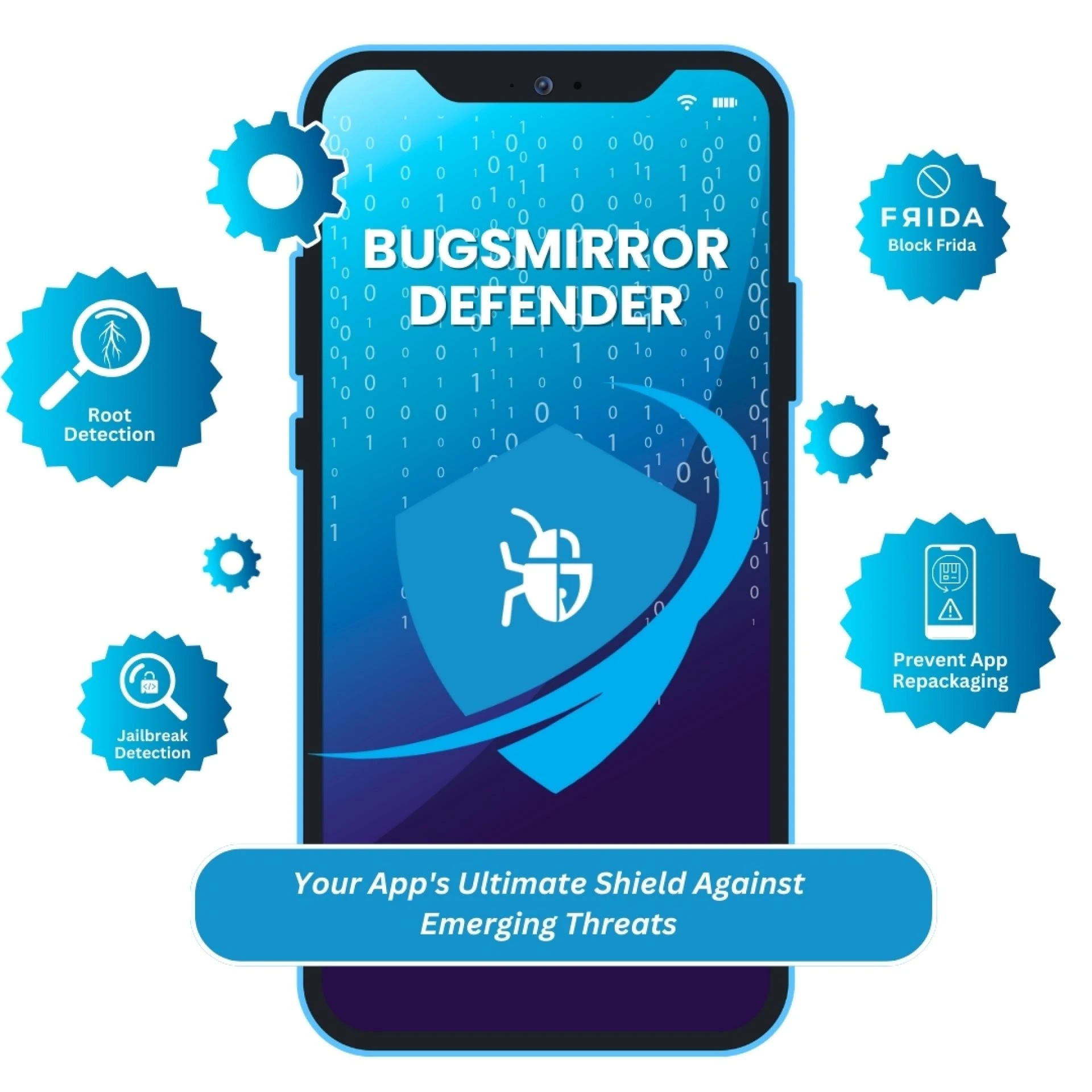
Bugsmirror Defender is an ideal solution for countering malicious root apps. It provides malicious root app detection using several security layers:
- Runtime Protection: Defender provides essential in-app protection. It doesn't just scan; it actively verifies the integrity of the application's code and assets while the app is running. This ensures that even on a rooted device, the app maintains its intended security features.
- Continuous Environment Monitoring: Bugsmirror Defender constantly monitors the device environment for subtle evidence of rooting, checking for modified system paths, exposed root binaries, and altered file permissions that signify elevated access.
- Specific Tool Identification: Defender maintains a signature database of various root tools like Magisk and SuperSU. The detection of these tools triggers a high-risk alert, signaling probable malicious activity.
With Bugsmirror Defender, businesses not only get the malicious root app detection security feature but also 45 more features like debugger detection, app repackaging prevention, packet sniffing detection, root detection, etc. Defender helps businesses effectively protect their mobile apps and users.
Bugsmirror Defender is a part of Bugsmirror MASST (Mobile Application Security Suite and Tools), a complete mobile app security platform with security solutions for threat detection, mitigation, and visibility.
Read More: The Business Consequences Of Runtime Security Threats