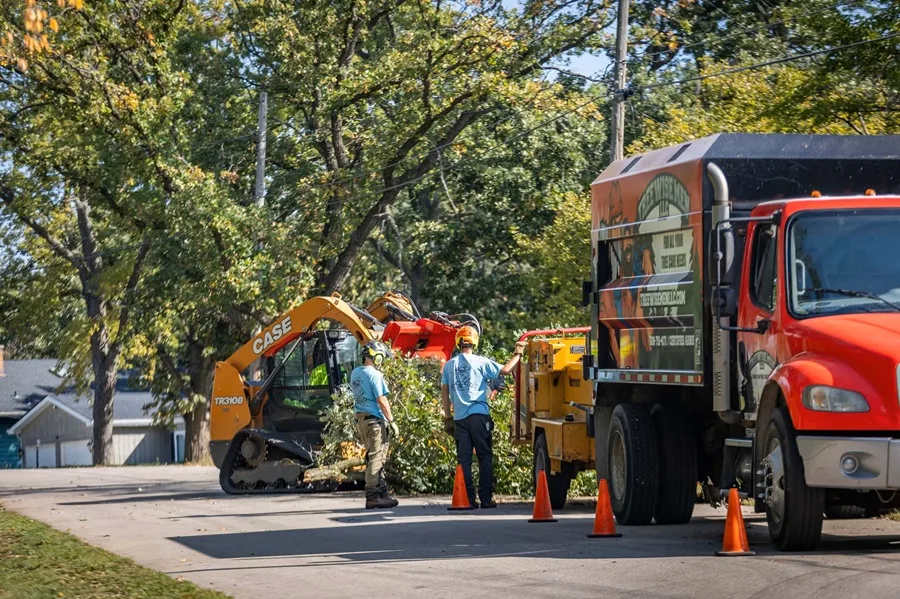
Urban forestry presents unique challenges that differ greatly from clearing a rural woodlot. In cities like Madison, trees often grow in close proximity to power lines, rooftops, and busy sidewalks. Navigating these constraints requires a combination of engineering, physics, and deep biological knowledge to ensure that the process remains controlled and predictable.
Engineering a Controlled Descent
The process of a large tree removal involves more than just a chainsaw and a ladder. It requires complex rigging systems, including high-strength ropes and pulleys, to guide heavy wood to the ground. This scientific approach prevents "shock loading" the equipment and ensures that the ground crew remains safe throughout the entire technical operation.
Protecting Your Property and Neighbors
Collateral damage is a major concern during tree work in residential areas. Professional crews use specialized mats to protect your lawn from heavy machinery and carefully plan the fall zone of every limb. This attention to detail ensures that your fences, sheds, and flower beds remain intact while the hazardous tree is systematically dismantled and removed.
Challenges of Urban Tree Work- Extremely limited workspace between houses.
- Proximity to high-voltage electrical lines.
- Managing traffic and pedestrian safety.
- Dealing with underground utilities and pipes.
Preparing Your Landscape for the Freeze
Proactive maintenance is the best way to prevent a middle-of-the-night emergency. Before the first snowfall, it is wise to have your trees inspected for structural flaws. Investing in professional tree removal services before the storm hits can save you thousands of dollars in potential roof repairs or insurance deductibles caused by falling ice-laden limbs.
Handling 24/7 Emergency Responses
When a tree does fall during a storm, timing is everything. You need a team that can respond quickly to clear driveways and remove debris from power lines. Emergency tree work is significantly more dangerous than standard removals because the wood is often under extreme tension and can "snap" or shift unexpectedly during the cutting process.
Winter Tree Care Tips- Clear heavy snow from low-hanging branches.
- Monitor for new cracks after high wind events.
- Avoid using salt near the root zones of trees.
- Keep emergency contact numbers for arborists handy.
The Difficulty of Winter Large Tree Removal
Operating heavy equipment in freezing temperatures and on icy ground adds a layer of difficulty to any project. Performing a large tree removal in the winter requires specialized traction gear and a crew that knows how cold weather affects the brittleness of certain wood species. Despite the cold, winter is often an ideal time for removals to minimize lawn damage.
Accessing Expert Tree Removal Services
Choosing the right team is the difference between a stressful ordeal and a smooth experience. In Southern Wisconsin, homeowners look for firms with hundreds of positive reviews and a track record of reliability. Accessing top-tier tree removal services ensures that the job is completed efficiently, following all local regulations and safety protocols without any unnecessary delays.
Benefits of Certified Arborists- Expertise in tree biology and structural health.
- Knowledge of local pests like Emerald Ash Borer.
- Ability to provide long-term landscape advice.
- Professionalism and clear communication at all times.
Conclusion
Managing large-scale tree projects requires a level of expertise that only a certified team can provide. By understanding the complexities involved, you can make an informed decision for your landscape. Tree Wise Men LLC brings over a decade of experience to Janesville and Madison, ensuring your urban forest stays beautiful and safe.