We should also be in a position to have a clear mental checklist when it comes to a situation where every second counts. Basic Life Support (BLS) algorithms serve as a guide that can be used by first responders and other healthcare professionals in high-pressure emergencies. These sequential procedures will guarantee the provision of care that is fast, accurate, and consistent.
It’s important to highlight that basic life support certification, American Heart Association programs in Florida, and CPR classes would assert that you learn these algorithms with a practical aspect and professional technique.
In this article, we'll explore:
● The definition of BLS algorithms and their importance.
● The greatest life-saving measures to keep in mind.
● The application of these algorithms in real scenarios by the first responders.
● The value of adequate CPR training and certification.
● Where to study and apply these requisite skills in Florida.
What Are BLS Algorithms?
BLS algorithms are defined as follow-up steps that are easy to follow and which help responders to walk through emergencies such as cardiac arrest, choking, and respiratory failure. These algorithms are developed by the American Heart Association and formulated on the latest medical discoveries and are regularly updated to enhance the outcomes of patients.
They eliminate speculation and aid the responders to be focused in times of high stress.
The Core Sequence Adult Cardiac Arrest Algorithm
This is the worst algorithm that any responder should be familiar with:
● Responsiveness to check and to breathe.
● Request assistance / activate an emergency.
● Begin good-quality CPR.
● Connect the AED as soon as possible.
● Deliver shock if advised.
● Repeat the CPR cycles (30 compressions: 2 breaths).
The trick here is to avoid interruptions as well as have good, consistent compressions.
High-Quality CPR Checklist
The following are the basics to make CPR efficient:
● Push firmly and quickly (100-120 compressions per minute)
● Alternate the compression with full chest recoil.
● Minimum interruptions of less than 10 seconds.
● Alternate switch rescuers after every 2 minutes.
● Make sure hands are placed well.
AED Use Made Simple
AEDs are installed to work swiftly even when the user is a non-expert. The algorithm is simple:
● Turn on the AED
● Apply pads to the chest of the patient.
● Follow voice prompts
● Deliver shock if instructed
● Immediately continue CPR on resume.
Team Dynamics in BLS
Coordination among the first responders in teams is necessary. BLS algorithms emphasize:
● Clear role assignment
● Effective communication
● Frequent evaluation of patient reaction.
● Fluid movements throughout CPR cycles.
Why Training Matters
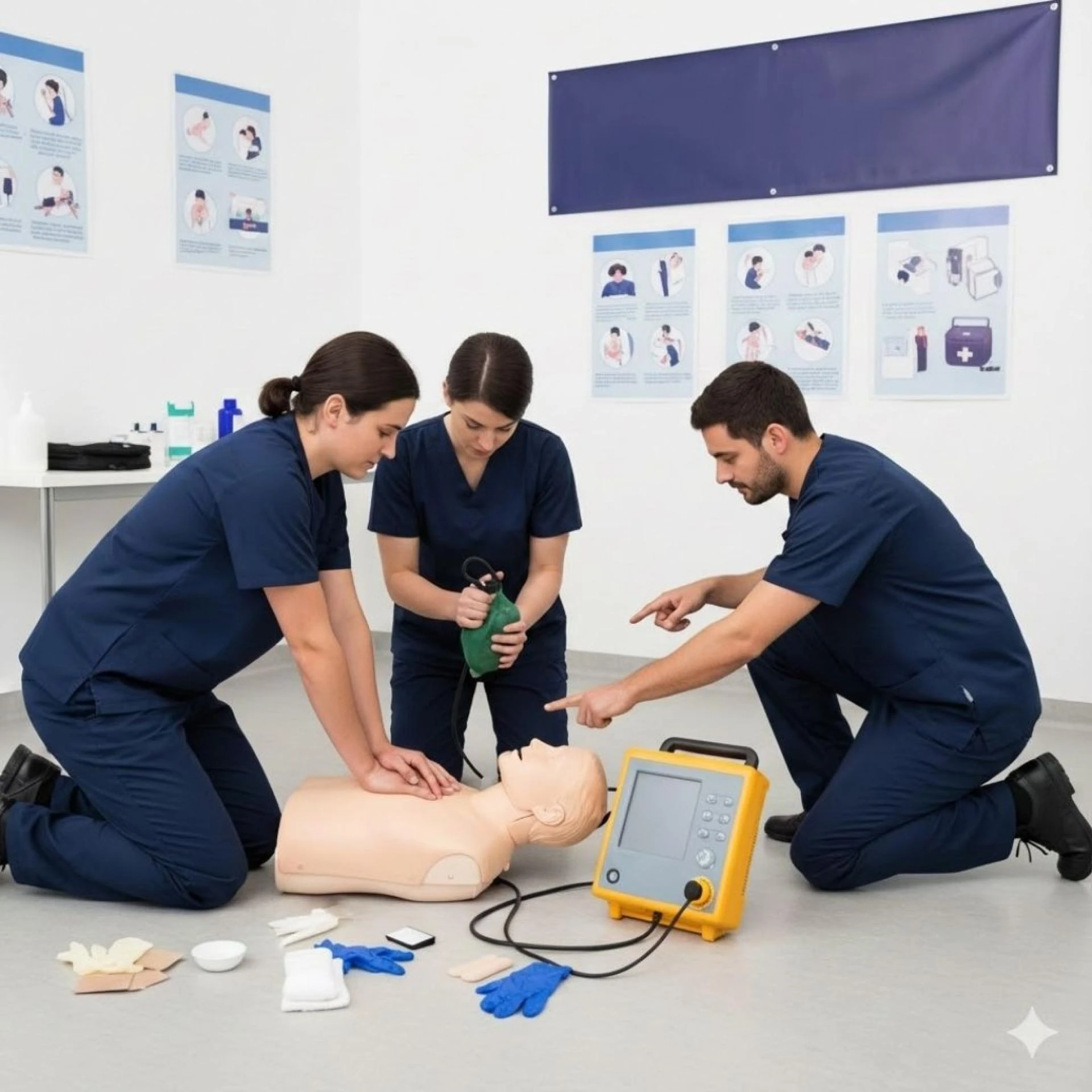
It is not just knowing the steps, but it is practice that makes the difference. With the help of CPR classes through the American Heart Association of Florida, the attendants are able to obtain practical time along with mannequins and AED trainers so that they are prepared to face an emergency situation.
Training helps you:
● Build muscle memory
● Improve reaction time
● Stay calm under pressure
● Provide quality care in a self-assured manner.
Who Should Learn These Algorithms?
Such core competencies do not just apply to paramedics or nurses. Preparedness is the ability to take action when the life of an individual is in danger. They are valuable for:
● Emergency and first responders.
● Healthcare professionals
● Teachers and school staff
● Workplace safety teams
● Community volunteers
Conclusion
BLS algorithms are mighty methods that help in directing responders on life-saving procedures with clarity and certainty. Attending basic life support certification, or CPR classes, through the American Heart Association in Florida will equip you with the know-how and practical experience that would enable you to effectively use these steps in the case of an actual emergency.
Fujahn Life Support Training LLC offers quality training of the American Heart Association by experienced professionals in a non-stressful atmosphere. The flexibility of classes and their pragmatic approach to learning will make you feel confident in your ability to act fast and save lives when time is of the essence.