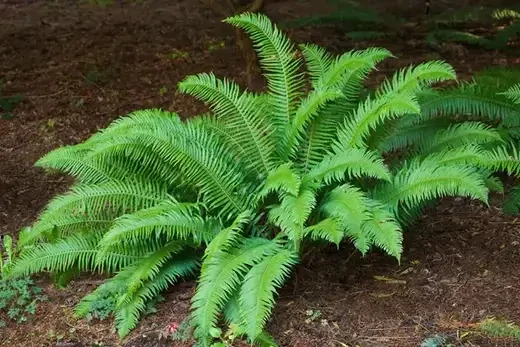
Not every plant in a landscape needs to command attention. Some shape a space more quietly, and ferns are among the most effective at doing so.
Their contribution is largely textural. The finely divided fronds create softness where broad leaves might feel heavy and where flowering plants may appear seasonal or temporary. Ferns bring continuity. They hold space together visually, especially in areas where light is filtered and shadows dominate.
Shade often presents limitations. Beneath mature trees or along the sheltered side of a structure, planting options narrow quickly. Many landscape design plants thin out or lose vigor over time. Ferns respond differently. Shade garden ferns settle into those subdued environments and create a layered understory that feels stable and grounded.
Their value is not limited to appearance. The root systems help secure soil. Dense foliage reduces surface evaporation. Habitat conditions improve for beneficial insects and ground-dwelling species. For property owners interested in low-maintenance landscape plants that remain dependable year after year, outdoor ferns provide a steady, long-term solution.
Why Ferns Are Valuable in Landscape Design
A planting bed can be full and still feel incomplete. Often, what is missing is texture.
Ferns correct that imbalance with ease. Their fronds contrast naturally against solid foliage forms, preventing the space from appearing dense or static. The visual lightness they introduce allows heavier shrubs to feel intentional rather than overwhelming.
They also moderate transitions. Stone walls, pathways, and building edges can create abrupt visual stops. Ferns soften those points. The gentle arc of their growth reduces the sense of rigidity without concealing architectural elements.
Under trees, they become especially important. Turf struggles in root-heavy soil and limited light. Ferns, by contrast, establish layered ground planes similar to those found among mature woodland garden plants. The result is cohesive rather than improvised.
Among the more practical benefits of ferns:
- Soil stabilization on slopes
- Reduced erosion in shaded zones
- Reliable performance in low-light areas
- Support for small-scale biodiversity
They bring quiet strength to a design — both visually and structurally.
Key Benefits of Incorporating Ferns
Strong landscapes rely on depth. Without vertical layering, even well-planted beds can feel flat. Ferns naturally fill the middle tier between groundcovers and shrubs, linking the lower and upper layers into a continuous composition.
They pair comfortably with woodland garden plants such as hostas, native shrubs, and shade-tolerant perennials. Broad leaves emphasize the delicacy of fern foliage. At the same time, ferns prevent dense plantings from becoming visually heavy.
Being able to change makes them more valuable. Many plants like soil that is always moist, but once they are established, some can handle moderate dryness. The texture of the soil is not as important as its drainage and organic content. This flexibility lets shade garden ferns work in different property conditions without changing the design.
Maintenance demands remain modest. Most outdoor ferns hold their shape throughout the growing season. They rarely require staking or reshaping. For property owners seeking low-maintenance landscape plants, reliability matters.
Their seasonal character makes them more appealing. In the spring, tightly coiled fronds open up with the precision of a sculpture. Evergreen types keep their shape in the winter, which keeps things going when other plants go away.
Featured Fern Varieties for Landscape Design
Sensitive Fern
The Sensitive Fern stands out for its beautiful spring emergence. Its tightly curled shoots slowly unfurl into graceful, arching fronds, bringing gentle movement and fresh energy to shaded areas. It thrives in filtered light and consistently moist, organic soil. When planted along pathways or beneath canopy trees, the Sensitive Fern enhances layered plantings without making them feel heavy or crowded.
Fiddlehead Fern
The springtime appearance of the Fiddlehead Fern is what makes it unique. The tightly coiled shoots slowly open themselves into arching fronds, which start to move in the shadow. It does best in light that has been filtered and soil that is always moist and organic. It strengthens layered compositions without making them look heavier when placed along paths or under canopy trees.
Giant Ostrich Fern
The Giant Ostrich Fern adds vertical structure. The way it grows in a vase shape lets tall, feathery fronds stand out in rich soil. Partial to full shade helps plants grow quickly. In bigger landscapes, it holds the back of borders or frames water features, giving them height without making them too thick.
Bracken Fern
Bracken Fern spreads gradually through underground rhizomes, forming open colonies. It adapts to partial shade and tolerates sunnier conditions if moisture is available. Soil types may vary. Its triangular fronds create a relaxed, informal aesthetic, making it well-suited for naturalized or transitional areas where structure blends into woodland edges.
Maidenhair Fern
Maidenhair Fern adds fine detail. The stems are thin and dark, and the leaflets are shaped like fans, making the plant look almost like lace. It grows best in soil that is rich in humus, stays moist, and gets some filtered shade. It is often put in places where people can see it up close, and it adds softness and contrast to more structured plantings.
Lady Fern
Lady Fern makes thick, arching clumps of leaves that are very small. It does well in partial shade and moderately moist soil, and once it is established, it can handle short dry spells. It can be used in mixed borders and woodland-style gardens because it can fill in the space between shrubs and shorter perennials.
New York Fern
New York Fern spreads into low drifts beneath tree canopies. It prefers shaded woodland conditions with steady moisture. In areas where turf declines, it creates a cohesive ground layer that stabilizes soil and visually unifies taller plantings. Its growth habit feels relaxed yet controlled.
Hay-Scented Fern
Hay-Scented Fern develops arching fronds that release a subtle scent when disturbed. It tolerates partial shade and moderately dry woodland soils. Because it spreads to form soft colonies, it works well on slopes or expansive understory plantings. Its lighter texture contrasts effectively with larger foliage forms.
Christmas Fern
Christmas Fern remains evergreen in many climates, maintaining deep green foliage throughout winter. It grows in tidy clumps rather than spreading aggressively. Partial to full shade and well-drained soil support long-term stability. Along pathways or foundation beds, it offers consistent structure year-round.
Designing with Ferns for Maximum Visual Impact
Designing with ferns requires restraint and repetition. Taller varieties establish background structure. Mid-sized species connect layers. Lower, spreading types unify the ground plane.
Planting in drifts strengthens cohesion. Isolated specimens tend to disappear visually. Repetition beneath mature trees allows shade garden ferns to replace turf entirely, forming a composed understory.
Contrast should remain intentional. Broad-leaved shrubs highlight the intricacy of fern fronds. Evergreen backdrops provide stability. In woodland-inspired layouts, limiting the number of plant varieties helps maintain clarity and rhythm.
Maintenance Considerations for Long-Term Success
Preparation shapes performance. Incorporating organic matter improves moisture retention and soil structure, particularly in compacted sites. Even moisture-tolerant species require adequate drainage.
Water consistently during establishment. Once mature, many outdoor ferns require only periodic irrigation. Mulch supports root health and reduces weed competition.
There isn't much maintenance needed during the season. Taking off damaged fronds in early spring helps new growth. To keep the edges of defined planting beds clear, you may need to thin out spreading varieties from time to time.
With modest care, ferns remain stable components of the landscape.
Final Thoughts
Ferns are still used in professional landscape design because they solve real problems without being too noticeable. They add texture, make layers of depth, and work well in the shade, which limits other plant options.
Ferns are good for more than just making things look better. They help keep the soil stable, support a wide range of life, and don't need much care. They are easy-to-care-for plants that add consistency to designs that might otherwise be thrown off by things that are hard to predict.
Outdoor ferns may not dominate a planting scheme, but they anchor it. In shaded landscapes especially, their presence brings balance, durability, and quiet structure that strengthens the entire composition.