
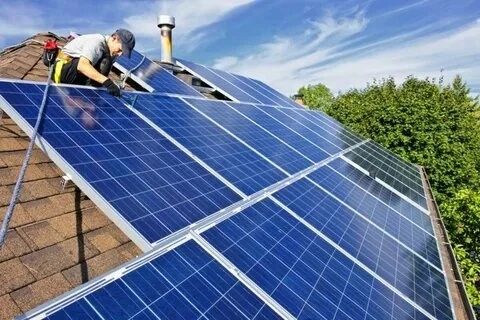
The relationship between renewable energy systems and weather is often misunderstood as adversarial. In truth, masterful energy harvesting transforms every meteorological condition into an opportunity. This isn't about fighting nature's variability it's about developing a sophisticated dialogue with the elements.
The Alchemy of Low-Light Energy Capture
Conventional wisdom suggests solar panels become useless under heavy clouds, but advanced techniques can extract surprising yields from diffused light. Solar panel installers Leicester have pioneered methods that turn Britain's famously overcast skies into productive energy assets:
Specialized anti-reflective coatings now allow panels to capture photons from all angles simultaneously, making the most of indirect sunlight. Bifacial panel installations, when elevated properly, harvest reflected light from wet surfaces below meaning rainy days actually boost their rear-side production. Some Leicester installations report 18% higher winter yields simply by optimizing for cloud diffusion patterns rather than fighting against them.
The most innovative systems now incorporate machine learning that adjusts panel angles incrementally throughout cloudy days, chasing subtle intensity variations invisible to the human eye. These micro-adjustments can squeeze 7-12% more energy from what would otherwise be written off as a "low production" day.
The Hidden Thermal Dance of Photovoltaics
Temperature affects solar panels in counterintuitive ways. While cold weather improves panel efficiency, it often coincides with weaker sunlight. Conversely, summer's abundant sunshine comes with heat-induced efficiency losses. Mastering this thermal tango requires nuanced strategies:
In winter, solar panel installers Leicester recommend allowing some snow accumulation on panels the white blanket reflects additional light onto bifacial modules while the cold improves conversion efficiency. The trick is knowing exactly when to clear it (typically after 2-3 days) to maximize this effect without significant production loss.
For hot climates, innovative cooling techniques are emerging. One Leicester University prototype uses hydrophobic panel coatings that cause rainwater to spread into an ultra-thin, evaporative cooling film during summer showers. This simple solution reduces temperature-related losses by up to 9% without any moving parts or energy input.
The Wind Energy Paradox
While wind turbines obviously need wind, few operators understand how to harvest turbulent or inconsistent breezes effectively. The latest adaptive systems treat wind variability as an asset rather than a problem:
Machine learning algorithms now predict wind patterns at the micro-level, adjusting blade pitch milliseconds before gusts arrive. Vertical-axis turbines, once considered inefficient, are finding new purpose in urban areas where their ability to capture omnidirectional winds outperforms traditional designs.
Some forward-thinking solar panel installers Leicester are now combining vertical wind turbines with solar arrays in hybrid installations. The turbines benefit from the same elevated mounting structures as the panels, while their operation helps cool the solar modules below a symbiotic relationship that boosts overall energy yield by 15-22%.
The Rainwater Energy Multiplier
Precipitation is typically viewed as an energy system's nemesis, but modern designs flip this narrative. Cutting-edge hydrovoltaic panels generate electricity from falling raindrops through sophisticated triboelectric nanogenerators. While current outputs are modest (about 5% of a panel's solar capacity), the technology has intriguing potential:
When integrated with conventional solar arrays, these systems provide baseline production during heavy rainfall when solar output would otherwise plummet. Early adopters in Leicester report smoother energy curves during spring showers, with the hydrovoltaic component compensating for approximately 30% of the solar dip.
More remarkably, these panels actually become more efficient when dirty—the mineral deposits from rainwater improve the triboelectric effect. This creates a self-cleaning system where energy production incentivizes maintenance-free operation.

The Frost Harvesting Technique
In cold climates, frost is typically removed from panels at first opportunity. However, pioneering installations are experimenting with controlled frost utilization:
Specialized panel coatings encourage frost to form in crystalline patterns that act as light-diffusing lenses. When calibrated precisely, these temporary frost formations can increase morning light capture by up to 12% before melting away naturally. The technique requires exacting temperature monitoring and panel angle adjustments, but the results are rewriting cold-weather energy rules.
Leicester researchers have developed an AI system that predicts ideal frost formation windows and automatically adjusts panel angles to maximize this effect while preventing damaging ice accumulation. Their field tests show 8-15% better winter morning production compared to conventional defrosting approaches.
The Humidity Energy Buffer
High humidity has traditionally been considered detrimental to solar production due to increased light diffusion. However, innovative systems are turning atmospheric moisture into an advantage:
New photovoltaic materials actually increase efficiency in humid conditions through moisture-assisted charge transport. When combined with strategic panel spacing that allows humidity to circulate naturally, these systems maintain peak performance where conventional arrays would falter.
Some solar panel installers Leicester are experimenting with humidity-controlled ventilation systems that optimize air flow around panels based on real-time weather data. The results? Summer production dips reduced by as much as 18% compared to standard installations.
The Dynamic Load Matching Revolution
The Energy Systems Catapult has demonstrated that aligning energy consumption with weather patterns can be more impactful than trying to maximize production alone. Their research shows:
Smart appliances that automatically run during optimal production windows can increase effective system output by 22% without any physical modifications. Battery systems that learn weather patterns and adjust storage strategies accordingly achieve 15% better utilization. Even simple behavioral changes like scheduling energy-intensive tasks around forecasted production peaks can yield significant improvements.
Ending thoughts: The Meteorologist's Mindset
True energy mastery doesn't come from overpowering weather systems, but from developing an intimate understanding of their rhythms and idiosyncrasies. The most successful installations aren't those that perform best in ideal conditions, but those that maintain remarkable consistency across all seasons and weather patterns.
For solar panel installers Leicester and energy-conscious homeowners alike, the future belongs to those who view every cloud, every raindrop, every breeze not as obstacles, but as unique opportunities in an endless energy dance. This refined approach transforms renewable energy systems from fair-weather performers into all-season powerhouses that deliver reliable yields regardless of what the skies may bring.