
The conversation surrounding website security has fundamentally shifted. A few years ago, securing an online business meant purchasing an SSL certificate, setting up a standard firewall, and keeping your content management system updated. If your site stayed online and didn’t show explicit defacement, you assumed your security measures were working perfectly.
Today, that passive approach to security is a major vulnerability. The threats facing modern web applications have migrated up the network stack, moving away from crude, loud server attacks to highly targeted, silent manipulations at the application layer (Layer 7).
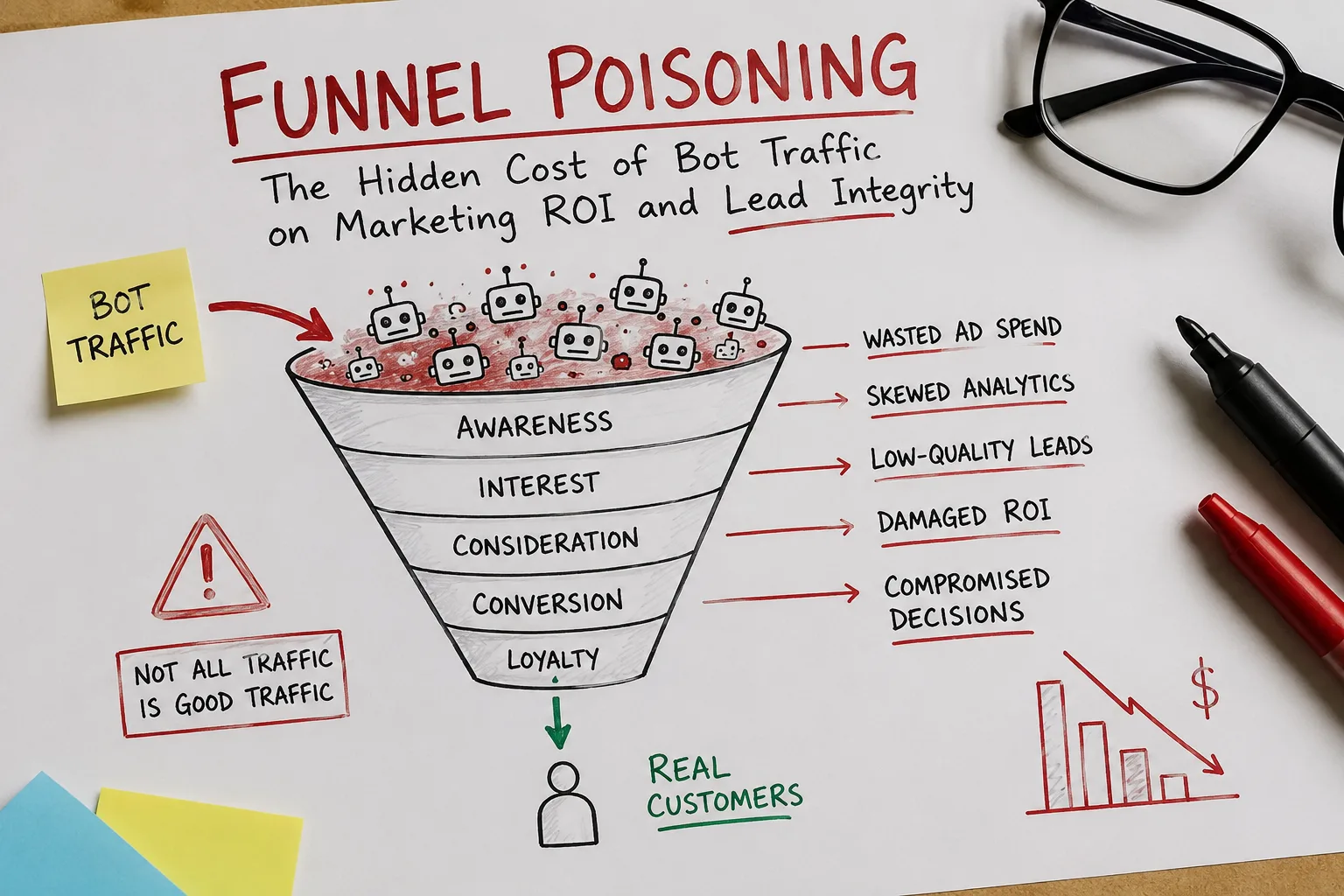
With automated traffic now making up over half of all web requests, bad actors are no longer just trying to crash your server. Instead, they deploy highly specialized, AI-driven scripts designed to mimic human shoppers, exploit API endpoints, manipulate shopping carts, and systematically drain your inventory.
To safeguard your digital ecosystem and protect your bottom line, you must understand how these modern automated threats operate and why your current defenses are completely blind to them.
1. The Weaponization of the Checkout Lane: Inventory Scalping and Cart Hoarding
For e-commerce platforms, digital service providers, and booking engines, the checkout page is the most sensitive and financially critical part of the entire application. It is also the primary target for modern automated networks.
Instead of executing standard denial-of-service attacks, malicious operators use automated networks to perform "inventory hoarding" and "scalping." The process is highly calculated: thousands of distributed scripts flood your website the moment a high-demand product launches or a promotional window opens. These scripts instantly add items to their shopping carts or hold reservation slots, locking up your physical inventory within milliseconds.
To your backend system, it looks like an incredible surge in customer demand. But in reality, these items are trapped in a state of artificial abandonment. The automated scripts hold the inventory while checking secondary marketplaces to see if they can resell the items at a premium. If they can’t turn a profit, the scripts abandon the carts simultaneously.
This behavior robs genuine human buyers of the opportunity to purchase your products, completely destroys customer brand loyalty, and leaves your business dealing with massive, erratic server spikes that disrupt normal operational workflows. Managing this highly volatile traffic distribution requires moving beyond basic firewalls and adopting comprehensive Traffic Management frameworks capable of dynamically throttling suspect execution pathways without impacting legitimate user journeys.
2. The API Vulnerability: The Silent Doorway to Your Database
As modern web design shifts heavily toward decoupled architectures, mobile applications, and microservices, businesses have become heavily reliant on Application Programming Interfaces (APIs). APIs are the underlying conduits that allow different software systems to communicate, pass data, and process transactions rapidly.
However, this connectivity comes with an immense security trade-off. Because APIs are designed to process structured data queries programmatically, they are highly attractive targets for automated exploitation.
Malicious operators configure scripts to target unshielded API endpoints directly, completely bypassing your frontend user interface and any basic visual security measures you have placed on your main web pages. Once a script finds an open API channel, it can execute high-velocity credential stuffing attacks (testing millions of stolen username and password combinations in seconds) or systematically scrape proprietary customer data and internal pricing structures directly from your database.
Standard security protocols struggle to stop these API attacks because each individual request uses correct data syntax and looks like a valid programmatic query. Mitigating this risk requires a deeply analytical approach to your perimeter defense. Implementing an advanced, context-aware Website Bot Protection strategy is the only way to inspect the underlying intent behind programmatic data streams, allowing you to instantly sever malicious automated database connections while maintaining seamless integration for authorized third-party integrations and mobile users.
3. Shifting Defense to the Edge with Blackwall SmartProtect
Trying to defend your checkout lanes, login portals, and API networks at the local server level is a losing strategy. By the time an automated script interacts with your database or triggers a security rule inside your content management system, it has already consumed valuable system RAM, filled your connection pools, and slowed down your response times for real human visitors.
True modern resilience requires establishing an intelligent, adaptive gatekeeper entirely outside of your local hosting environment. This is the exact design philosophy driving the deployment of Blackwall SmartProtect.
This managed security framework acts as an advanced, cloud-native filter that sits directly in front of your primary web assets. By analyzing incoming connection behaviors at the network edge—long before they can reach your checkout architecture or API endpoints—the system screens out malicious automated traffic instantly.
The platform relies on sophisticated behavioral telemetry to spot the minute, mechanical anomalies that give away even the most advanced AI-driven scripts. Whether a bot is trying to execute brute-force login attempts, hoard limited inventory, or scrape your backend databases, the edge filter intervenes seamlessly, leaving your core hosting resources completely unburdened and dedicated entirely to processing transactions for real, revenue-generating human visitors.
Final Thoughts
The internet is no longer a passive highway; it is an active, highly automated ecosystem where your data and infrastructure are constantly being evaluated by autonomous scripts. Relying on legacy, reactive security measures to protect modern, API-driven web applications is an operational gamble that regularly results in inflated hosting bills, distorted business metrics, and eroded customer trust.
By taking a proactive approach to edge security and establishing behavioral traffic filters, you insulate your digital storefront from the chaos of automated exploitation—guaranteeing an online space that is incredibly secure, consistently stable, and completely optimized for your real human audience.