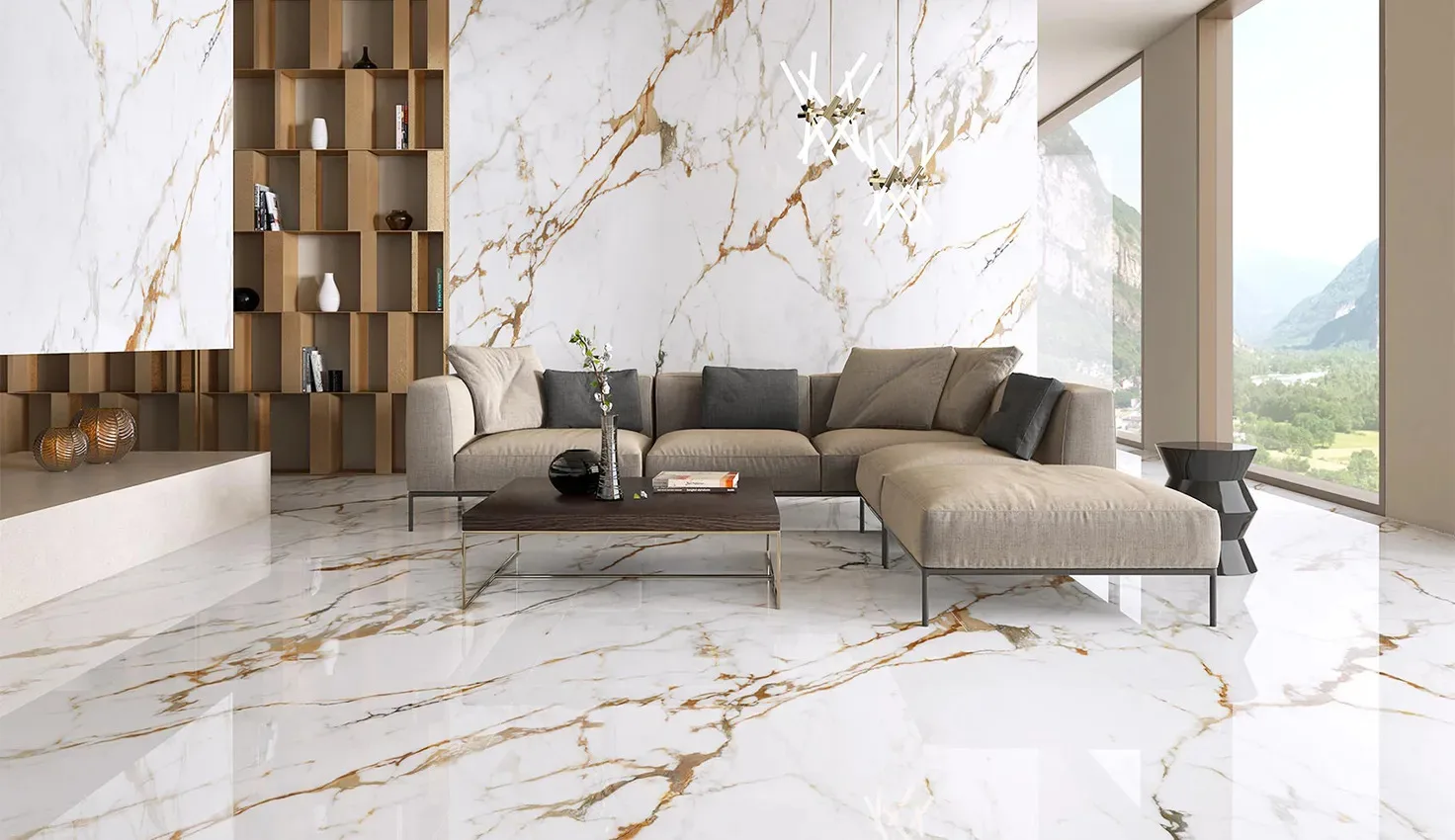
Selecting the right flooring material represents one of the most consequential architectural decisions in residential design. While synthetic alternatives such as porcelain tiles, luxury vinyl planks, and engineered hardwood offer predictable uniformity, natural stone remains the benchmark for structural permanence and aesthetic distinction. Among natural stones, metamorphic calcium carbonate—commonly known as marble—has been utilized in residential and monumental architecture for millennia due to its distinct crystalline structure, thermal conductivity, and geological uniqueness.
At Galaxy Exports, decades of working directly with quarried stone have demonstrated how properly selected and finished marble transforms interior environments. Understanding the geological properties, installation requirements, and long-term performance metrics of marble allows homeowners, architects, and interior designers to make informed material investments.
Geological Uniqueness and Aesthetic Permanence
Unlike manufactured surfaces printed with repeating digital patterns, natural marble is formed over millions of years when limestone undergoes intense heat and pressure beneath the Earth's crust. During this metamorphic recrystallization process, mineral impurities such as iron oxides, clay, silt, and graphite distribute organically through the calcite matrix, creating non-repeating veining patterns and tonal variations.
Because every geological deposit yields distinct mineral compositions, no two marble slabs share an identical pattern. When installed across living rooms, foyers, or master suites, marble creates an uninterrupted visual flow that synthetic tiles cannot replicate. Furthermore, sourcing directly from an established marble exporter in Rajasthan ensures access to diverse mineralogical varieties—ranging from pure white calcitic marbles to warm beige, dramatic green, and subtle grey formations—each calibrated to meet international architectural tolerances.
Thermal Regulation and Energy Efficiency
One of the most practical yet frequently overlooked benefits of marble flooring is its high thermal mass and natural coolness. In warm and tropical climates, dense metamorphic stone absorbs ambient heat slowly and maintains a consistently cool surface temperature underfoot. This passive cooling effect reduces indoor heat accumulation during peak summer months, lowering reliance on mechanical air conditioning systems.
Conversely, marble exhibits excellent thermal conductivity, making it an ideal surface material for modern hydronic or electric radiant floor heating systems in colder regions. Once warmed, marble slabs retain and radiate heat evenly across the room, eliminating cold spots and improving overall residential energy efficiency.
Precision Fabrication and Structural Longevity
When properly quarried, processed, and installed over a stable subfloor, marble flooring routinely outlasts the structural lifespan of other interior finishes. While carpet, vinyl, and laminate require replacement every ten to twenty years due to wear, delamination, or fading, natural marble can endure for centuries.
Achieving this level of durability depends heavily on factory-level fabrication standards. Modern architectural stone requires precise slab calibration, gang-saw cutting, resin vacuum reinforcement, and multi-head polishing to eliminate micro-fissures and ensure uniform thickness. At Galaxy Exports, adherence to strict natural cutting and process protocols guarantees that every slab meets exact dimensional tolerances, minimizing lippage during installation and providing a structurally sound surface capable of withstanding decades of daily residential foot traffic.
Restorability and Surface Customization
A critical distinction between natural marble and ceramic or porcelain tile lies in surface restorability. If a glazed ceramic tile chips or loses its surface sheen, the damaged tile must be excavated and replaced—often resulting in mismatched dye lots. Marble, being a solid, homogeneous natural stone throughout its entire thickness, can be mechanically restored on-site.
- Honing and Polishing: Over years of use, minor surface scratches or dullness caused by acidic spills can be removed through diamond-pad grinding and honing, restoring the stone to its original factory luster without removing the floor.
- Custom Finishes: Homeowners can select finishes tailored to specific room functions, such as high-gloss mirror polish for formal living areas, satin-smooth honed finishes for contemporary spaces, or textured leather and brushed finishes that enhance slip resistance in bathrooms and wet zones.
- Hygienic Non-Allergenic Surface: Properly sealed marble provides a dense, hypoallergenic flooring surface that does not harbor dust mites, pet dander, pollen, or mold spores, contributing to healthier indoor air quality.
Supply Chain Integrity and Long-Term Property Value
From a real estate and asset-valuation perspective, authentic marble flooring consistently commands higher market appraisal values compared to synthetic substitutes. Discerning homebuyers recognize the capital cost, craftsmanship, and longevity associated with genuine stone installations.
Realizing these architectural benefits begins at the quarry level, where block selection determines structural integrity, color consistency across large floor plans, and minimal internal veining defects. Partnering with a reputable natural stone blocks supplier in Rajasthan provides builders and homeowners with verified material provenance, ensuring that blocks extracted from sound geological beds are free from structural cracks and clay pockets before slab processing begins.
Essential Care Practices for Lasting Performance
Maintaining marble flooring in optimal condition requires straightforward, scientifically sound maintenance protocols rather than complex chemical regimens:
- Penetrating Sealer Application: Applying a breathable, fluoropolymer-based impregnating sealer immediately after installation and every two to three years thereafter fills microscopic surface pores, preventing oil and water-based staining without altering the stone's natural appearance.
- pH-Neutral Cleaning: Because marble is composed primarily of calcium carbonate, acidic cleaners containing vinegar, lemon, or harsh bleaches will react chemically with the calcite and cause surface etching. Routine cleaning with clean water and a dedicated pH-neutral stone soap preserves the polish.
- Preventative Entry Protection: Placing walk-off mats at exterior doorways captures quartz sand and abrasive grit carried in on footwear, preventing micro-abrasions across high-traffic pathways.
By combining geological beauty, passive thermal performance, full-body restorability, and proven structural endurance, marble flooring remains an enduring architectural investment for modern residential interiors.