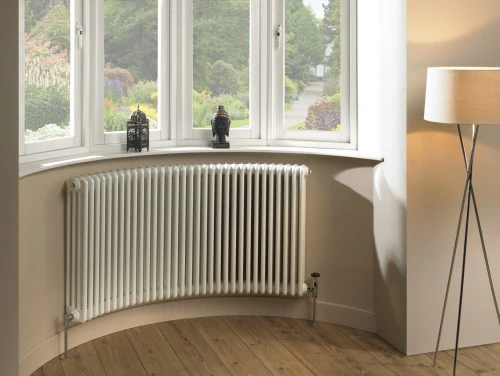
The clock never strikes midnight for autonomous vehicles. Unlike personal cars that rest in garages or taxis that pause for driver changes, self-driving fleets face an unrelenting operational reality: perpetual motion demands perpetual cooling. This fundamental shift is birthing a new generation of thermal systems that make traditional Aluminium Radiators look like relics from a bygone automotive era. The radiator, once a simple heat exchanger, is evolving into a mission-critical system that never sleeps.
Endurance Engineering: When 100,000 Miles is Just Break-In
Robotaxis logging continuous operation present cooling challenges that would destroy conventional systems within months. Consider the punishing math:
20+ hours of daily operation
100,000+ miles annual usage
95% uptime requirements
8-10 year service life expectations
Where a traditional Aluminium Radiator might cycle through 30,000 thermal cycles in its lifetime, an autonomous vehicle radiator could endure that many in a single year. This extreme duty cycle has forced engineers to completely reimagine material science and system architecture.
The New Thermal Landscape of Always-On Mobility
Autonomous vehicles don't experience driving patterns they create entirely new thermal profiles:
Computational Tidal Waves
AI systems don't idle they alternate between low-power observation and sudden, intense processing bursts when navigating complex scenarios. These unpredictable spikes can send coolant temperatures soaring 30°C in seconds.
Sensor Heat Islands
LiDAR, radar, and camera arrays generate concentrated thermal zones that conventional cooling systems weren't designed to address. The thermal gradient across an autonomous vehicle's sensor suite can exceed 50°C.
Urban Heat Traps
Stop-and-go traffic in city cores creates worst-case scenarios where computational loads peak while airflow drops to near zero precisely when cooling is needed most.
Material Science at the Breaking Point
The solutions emerging from labs look nothing like traditional Aluminium Radiators. Modern autonomous cooling systems incorporate:
Self-Healing Alloys
Microcapsules filled with liquid metal embedded in radiator fins automatically repair cracks caused by thermal cycling. BMW's latest prototypes show 80% longer lifespan using this technology.
Graphene-Enhanced Microchannels
Ultra-thin cooling veins with thermal conductivity exceeding copper by 5x, allowing compact radiators to handle massive heat loads. Tesla's new "Neural Radiator" uses this approach to cool its Full Self-Driving computer.
Electrostatic Dust Repellents
Nanoscale surface treatments that prevent particulate buildup critical for maintaining efficiency during months of continuous operation without cleaning.
The Silent War on Corrosion
Traditional coolants fail spectacularly under 24/7 operation. New formulations address:
Electrochemical breakdown at sustained high temperatures
Additive depletion rates in continuous-use scenarios
Material compatibility across 50,000+ thermal cycles
Water loss prevention over decade-long service lives
The latest extended-life coolants from BASF and Dow Chemical incorporate ceramic nanoparticles that actually strengthen protective oxide layers over time—the opposite of conventional coolant behavior.
Redundancy as Religion
Single-point failures are unacceptable when vehicles operate without human oversight. Cutting-edge systems feature:
- Dual independent cooling loops with automatic failover
- Phase-change backup systems that activate during pump failures
- Distributed micro-pumps that continue operating if main pumps fail
- Self-diagnosing smart coolant that alerts to impending issues
Waymo's fifth-generation system can reportedly lose 60% of its cooling capacity and still operate safely a standard that would be unthinkable for traditional Aluminium Radiators.
Energy Harvesting: Waste Heat as a Resource
Forward-thinking designs now view heat as an opportunity rather than just a byproduct:
Thermoelectric Generators
Solid-state devices converting excess heat into electricity to power sensors and computers. Porsche's autonomous prototypes recover up to 400 watts this way.
Cabin Pre-Heating
Redirecting computational heat to warm passenger compartments in cold climates, reducing HVAC load.
Battery Temperature Management
Using AI system waste heat to maintain optimal battery temperatures in electric autonomous vehicles.
The Department of Energy's Vehicle Technologies Office recently highlighted these innovations in their 2024 roadmap.
The Maintenance Paradox
Autonomous fleets can't afford regular downtime for cooling system service. This has driven development of:
- Self-flushing coolant systems that remove particulates automatically
- Condition-based maintenance algorithms that predict failures
- Robotic inspection ports for quick diagnostics
- Modular radiator designs allowing section replacement without full system drain
These advances could extend service intervals to 500,000 miles something unimaginable with conventional Aluminium Radiators.
Closing: The Dawn of Immortal Cooling
The autonomous revolution demands more than just smart algorithms it requires thermal systems that can outlast, outthink, and outperform anything in automotive history. Where traditional cooling approached its task reactively, next-generation systems must anticipate, adapt, and endure like never before.
The implications extend far beyond transportation. The breakthroughs emerging from this challenge—self-healing materials, intelligent fluids, distributed thermal management are already influencing data centers, aerospace, and industrial equipment. What begins as a solution for sleepless vehicles may well redefine how we manage heat across all technology.
As we stand at this thermal crossroads, one truth becomes clear: in the age of autonomous mobility, the radiator has evolved from a simple heat exchanger to the beating heart of artificial intelligence on wheels. And unlike its Aluminium Radiator ancestors, this new generation was born to run forever.