
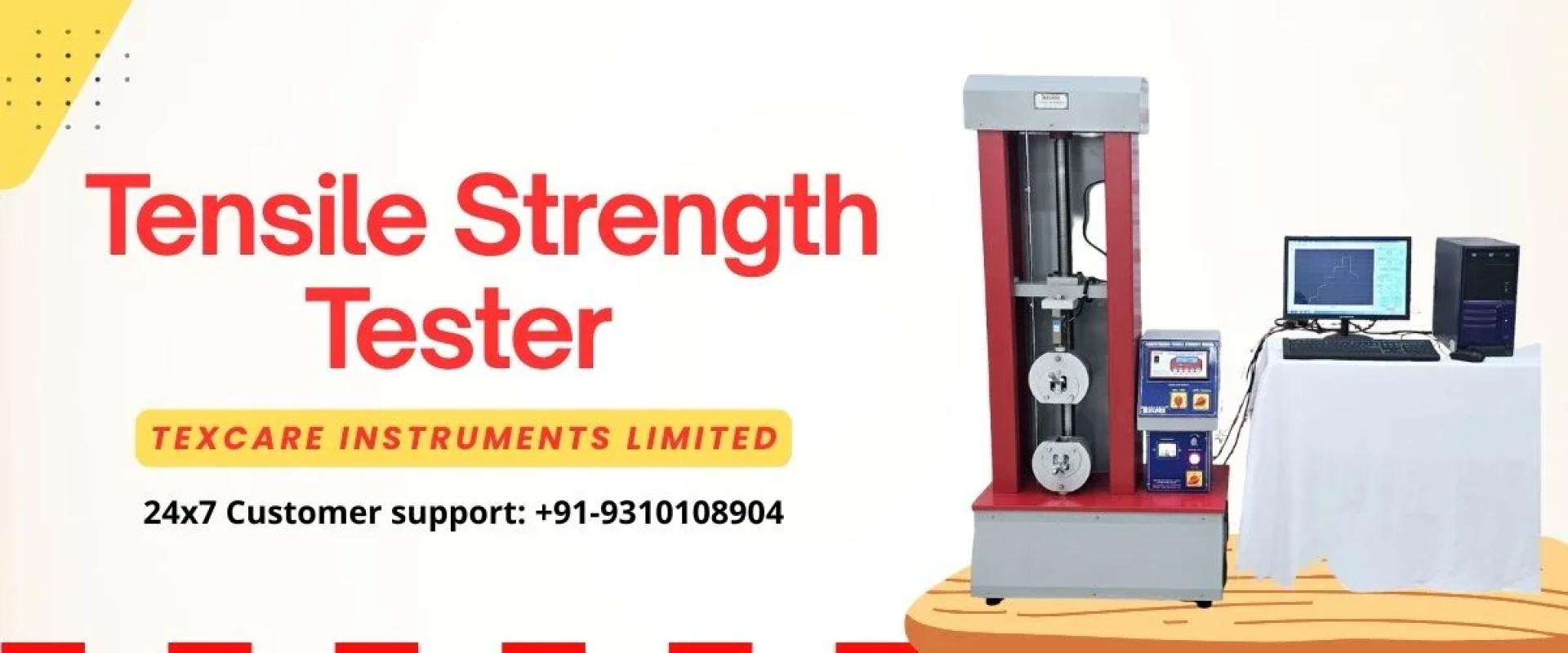
In modern industries where quality, safety, and durability are non-negotiable, material testing plays a critical role in ensuring product reliability. Among the various testing methods, tensile testing is one of the most fundamental and widely used techniques. It evaluates how a material behaves under tension, helping manufacturers understand its strength and performance. A tensile strength tester manufacturer provides the advanced equipment required to carry out these essential tests with precision and consistency.
From textiles and plastics to metals and packaging materials, tensile strength testing is crucial across multiple sectors. Manufacturers rely on high-quality testing machines to meet international standards and maintain product integrity.
What is a Tensile Strength Tester?
A tensile strength tester is a specialized instrument used to measure the resistance of a material to breaking under tension. It determines key mechanical properties such as tensile strength, elongation, yield strength, and modulus of elasticity.
The machine works by applying a controlled force to a sample until it breaks. During this process, it records how much force the material can withstand and how much it stretches. These results are essential for determining whether a material is suitable for a specific application.
Importance of Tensile Testing
Tensile testing is vital for maintaining product quality and ensuring safety. It helps manufacturers:
- Evaluate material strength and durability
- Ensure compliance with international standards
- Improve product design and performance
- Reduce the risk of product failure
- Maintain consistency in production
Without proper tensile testing, materials may fail under stress, leading to costly damages and safety risks.
Role of a Tensile Strength Tester Manufacturer
A reliable tensile strength tester manufacturer is responsible for designing and producing high-quality testing machines that meet industry requirements. These manufacturers focus on:
- Precision engineering for accurate results
- Durable construction for long-term use
- Advanced digital systems for easy operation
- Compliance with global standards like ASTM, ISO, and BIS
They also provide customization options, installation services, and after-sales support to ensure smooth operation.
Key Features of Modern Tensile Strength Testers
Modern tensile testing machines are equipped with advanced features that enhance performance and usability:
- High-precision load cells for accurate force measurement
- Digital control systems for easy operation
- User-friendly software for data analysis and reporting
- Wide testing range for different materials
- Automatic testing functions for efficiency
- Robust frame design for stability and durability
These features make tensile testers highly reliable and suitable for industrial and laboratory use.
Applications Across Industries
Tensile strength testers are used in a wide range of industries:
1. Textile Industry
Used to test yarn and fabric strength, ensuring durability and quality.
2. Plastic and Polymer Industry
Helps evaluate flexibility and resistance of plastic materials.
3. Packaging Industry
Ensures packaging materials can withstand stress during transportation.
4. Automotive Industry
Tests components for strength and safety under load conditions.
5. Construction Industry
Evaluates building materials like steel and composites.
Working Principle
The working principle of a tensile strength tester is based on applying a uniaxial force to a specimen. The machine grips the material at both ends and gradually pulls it apart. As the force increases, the material stretches until it reaches its breaking point.
During this process, the machine records data such as:
- Maximum force applied
- Elongation at break
- Stress-strain relationship
This data is then used to analyze material behavior and performance.