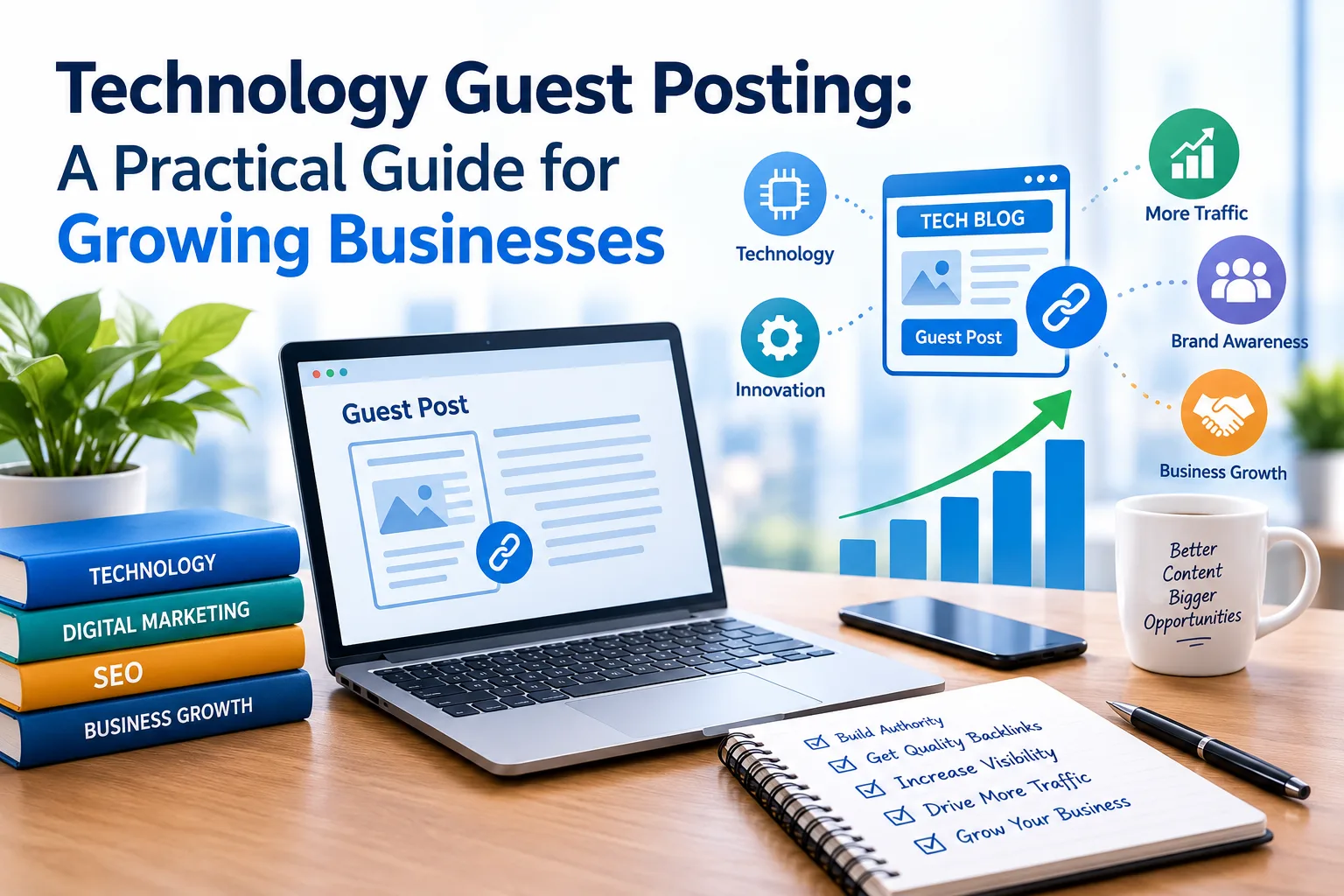
Businesses in automobiles, beauty and other competitive industries rely on more than a good product to earn attention online. Customers research brands, compare expertise and look for useful answers before making decisions. Technology guest posting can help a business reach readers through relevant industry websites, while building a stronger digital reputation over time. The key is to treat it as a focused publishing strategy rather than a quick way to collect backlinks.
What Technology Guest Posting Can Do for a Business
Guest posting means creating an article for a website other than your own. In the technology space, that might involve writing about cybersecurity for small companies, customer data tools, software adoption, or how technology is changing a particular industry. A relevant article can introduce your expertise to a new audience and give readers a useful next step, such as visiting a related resource on your website.
For example, an auto service business might contribute an article about the role of diagnostic software in vehicle maintenance. A beauty brand could explain how booking systems help independent salons manage appointments. These topics connect technology with a real business need, making the article more valuable than a broad overview of a popular gadget.
Choose a Focused Technology Niche
A clearly defined niche makes it easier to select topics and publishers. Instead of trying to cover every technology trend, decide which subjects your business can address with genuine knowledge. Possible areas include business software, artificial intelligence, mobile applications, digital payments, cybersecurity, cloud services and technology for specific industries.
Consider what your intended readers need to know. A small business owner may want a straightforward explanation of choosing a customer relationship management tool, while an automotive reader could be interested in connected vehicle services or fleet management software. A focused angle helps the article feel relevant to the publisher’s audience and prevents it from becoming a generic sales pitch.
Evaluate Websites Before You Pitch
A website’s apparent size is not the only measure of its value. Review its recent articles, audience, editorial standards and subject coverage. Does it publish thoughtful material related to your niche? Do its articles appear to be written for real readers? Is the site maintained consistently, with a clear point of view? These questions help distinguish a useful publishing opportunity from a placement that offers little lasting value.
Check whether the publisher’s audience overlaps with the people you want to reach. A technology publication may be a natural fit for a software company, but a specialist business or automotive website could be more effective for a subject aimed at a particular industry. When considering the process, this technology guest posting guide covers choosing a niche, assessing relevant websites and planning contextual backlinks.
Pitch an Article That Fits the Publisher
Before sending a pitch, read several recent pieces on the website. Note their typical length, level of technical detail and style. Then suggest a topic that adds something new rather than repeating an article the publisher has already covered. A good pitch is brief: describe the proposed angle, explain why the audience may care and show how the article will be useful.
Once a topic is approved, write for the reader first. Explain unfamiliar terms, use examples that clarify the point and avoid unsupported claims. If you refer to a product or service, make sure it genuinely belongs in the discussion. Editors are more likely to value an article that informs their audience than one built around a company’s promotional messages.
Make Backlinks Relevant and Natural
A contextual backlink should help readers continue exploring a subject. Place it within a sentence where the linked resource provides more detail, rather than adding it simply to satisfy a campaign target. The surrounding discussion should make clear why the destination is relevant. Follow the publisher’s linking policies, and do not assume that every article will permit the same number or type of links.
Useful links are only one part of the value of guest publishing. A well-matched article can also bring referral visits, introduce a brand to new readers and create relationships with editors in an industry. Those outcomes depend on the quality of the content and the fit between the publisher and the business, not just the presence of a backlink.
Use Freelancers Carefully and Track the Work
Businesses without an in-house writer may bring in freelance help for research, drafting, editing or outreach. Define the assignment before work begins: explain the audience, topic, tone, required expertise, deadline, revision process and ownership expectations. To avoid hidden costs hiring freelancers, agree on the full scope and payment terms in advance rather than relying on a vague estimate. Osdire is one marketplace where businesses can compare freelancers across writing, marketing and technology categories; its freelancer hiring guide outlines a step-by-step approach to briefs, candidate comparisons and payment protection.
After an article is published, record the placement and monitor results over a sensible period. Useful measures include referral traffic, engagement on the destination page, relevant enquiries and any change in visibility for the topics you are targeting. Keep expectations realistic: one article rarely transforms a campaign on its own. Reviewing results across several placements can show which subjects and publishers are worth pursuing again.
Build a Consistent, Reader-Focused Strategy
Technology guest posting works best when it is part of a broader content plan. Choose a defined audience, publish on sites that genuinely serve that audience and contribute articles that answer practical questions. Careful topic selection, thoughtful publisher research and natural links help protect the credibility of both the contributor and the host website. With clear goals and regular measurement, businesses can use guest articles to share expertise and reach readers in a way that supports long-term growth.