
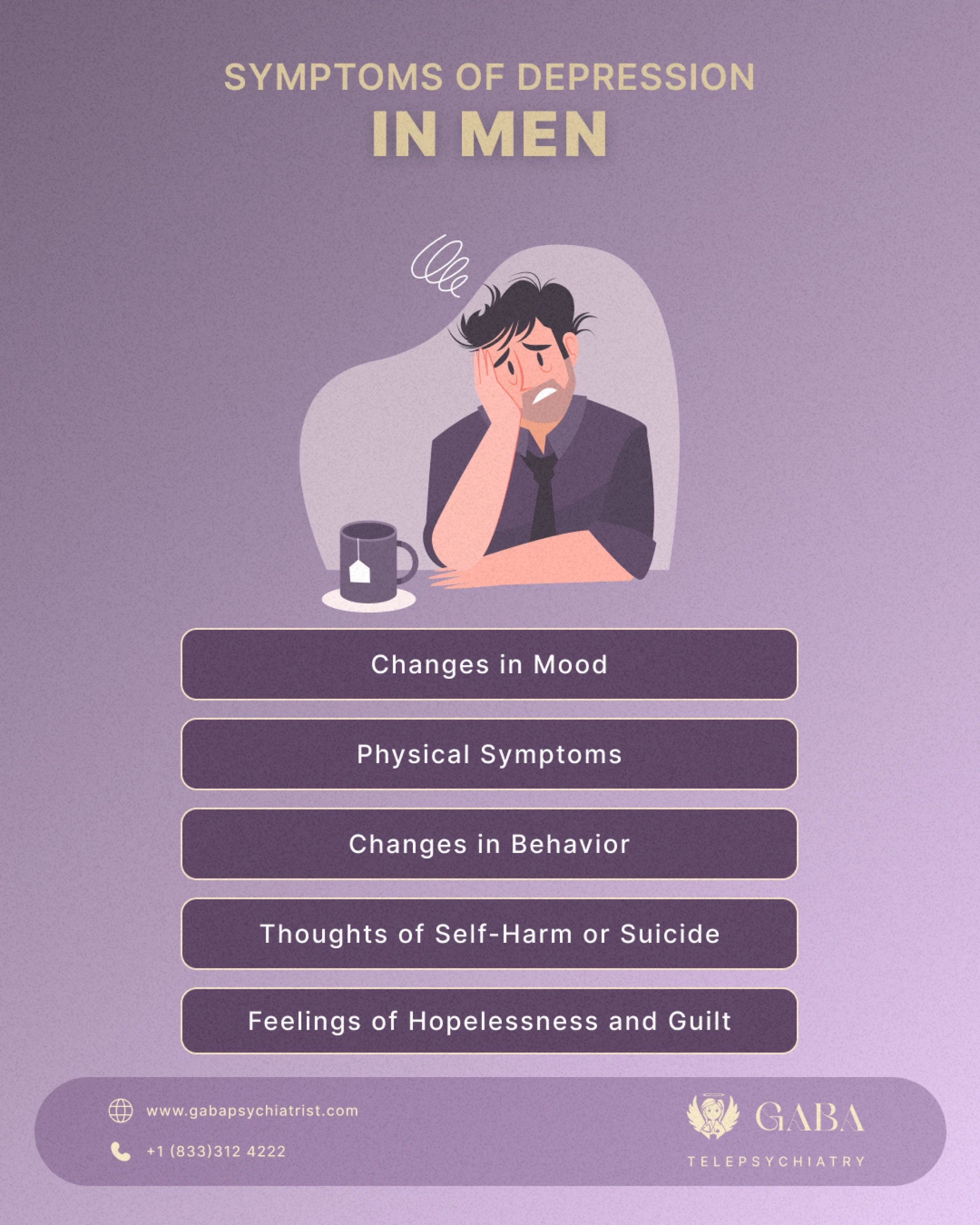
Men are often pressured to “man up” and hide their emotions, making it difficult to recognize when they’re struggling with depression.
Depression is more than just feeling sad or having a tough day—it’s a serious mental health condition that affects thoughts, emotions, and daily life. While anyone can experience depression, men often show different symptoms than women, which can make it harder to identify.
Instead of displaying sadness, men may become angry, irritable, or even aggressive. This can be confusing for friends and family, who may not realize these behaviors are signs of underlying emotional distress. Since many men avoid discussing their feelings, their depression may go unnoticed until it starts affecting their work, relationships, or daily responsibilities.
Common Symptoms of Depression in Men
Changes in Mood: Rather than showing sadness, men may appear constantly frustrated, easily irritated, or emotionally detached. They may withdraw from loved ones, avoiding conversations and isolating themselves. Even in social settings, they might seem distant or uninterested in things they once enjoyed.
Irritability: Men are more likely to display irritability rather than openly acknowledge feelings of sadness. Small inconveniences can feel overwhelming, leading to snappiness, impatience, or frustration that others may not understand.
Anger: Depression in men can present as anger—toward loved ones, at themselves, or even at life in general. This can include outbursts, road rage, and even a tendency to pick fights or argue unnecessarily. Some men may blame others for their problems, feeling like life is unfair or that people around them are making things worse.
Unreasonableness: Depression can make men react irrationally, leading to stubbornness, defensiveness, or difficulty handling criticism. They may struggle to make decisions, become overly sensitive to minor setbacks, or push others away when they try to help.
Feelings of Guilt: Many men with depression dwell on past mistakes or feel like they are failing in their careers, relationships, or roles as providers. This sense of guilt can be overwhelming, making it hard for them to move forward.
Blaming Others: Instead of recognizing their own distress, some men externalize their frustration, believing others are responsible for their struggles. They might lash out at family, coworkers, or friends, damaging relationships in the process.
Loss of Sex Drive: A decrease in libido or difficulty with intimacy is common, often linked to hormonal imbalances and emotional exhaustion caused by depression. This can lead to further stress in romantic relationships.
Irrational Negative Thoughts: Depression can lead to a persistently pessimistic mindset. Men may feel hopeless, assume the worst about their future, or believe they will never escape their current struggles.
Impaired Conflict Resolution: Men with depression may struggle with communication, leading to frequent arguments and difficulty resolving disagreements. They may shut down emotionally, making it harder for loved ones to understand what they’re going through.
Alcohol Abuse: Many men turn to alcohol as a way to cope, using it to numb emotional pain or escape from their thoughts temporarily. This can create a cycle where alcohol worsens depression, leading to deeper struggles.
Hypersomnia: Some men sleep excessively, struggle to get out of bed, or feel constantly fatigued, making it difficult to complete daily tasks. Others may experience insomnia, lying awake at night with racing thoughts.
Binge Eating: Using food for comfort, overeating, or relying on unhealthy, high-calorie foods is a common way men try to distract themselves from emotional distress. This can lead to weight gain, low energy, and worsening self-esteem.
Recognizing depression in men is the first step toward getting help. It’s important to understand that depression is not a sign of weakness—it’s a medical condition that can be treated. Therapy, medication, lifestyle changes, or a combination of these approaches can make a real difference.
Encouraging open conversations about mental health can help men feel less alone and more willing to seek support. Many men hesitate to reach out for help, but professional support can lead to real improvement and a better quality of life.
To learn more about depression and treatment options, visit GABA Telepsychiatry or call +1(833)312-4222 to book your first session.