A private swimming pool has shifted from a luxury symbol to a lifestyle investment for Indian homeowners, resorts, and commercial properties. Whether you're building a rooftop plunge pool in Kolkata or a resort-style infinity pool in Goa, the design you choose determines cost, maintenance, safety, and long-term satisfaction. This guide answers the most common questions people ask before hiring pool designers, comparing styles, materials, and costs so you can make a confident decision.
What Are the Most Popular Swimming Pool Designs in India Today?
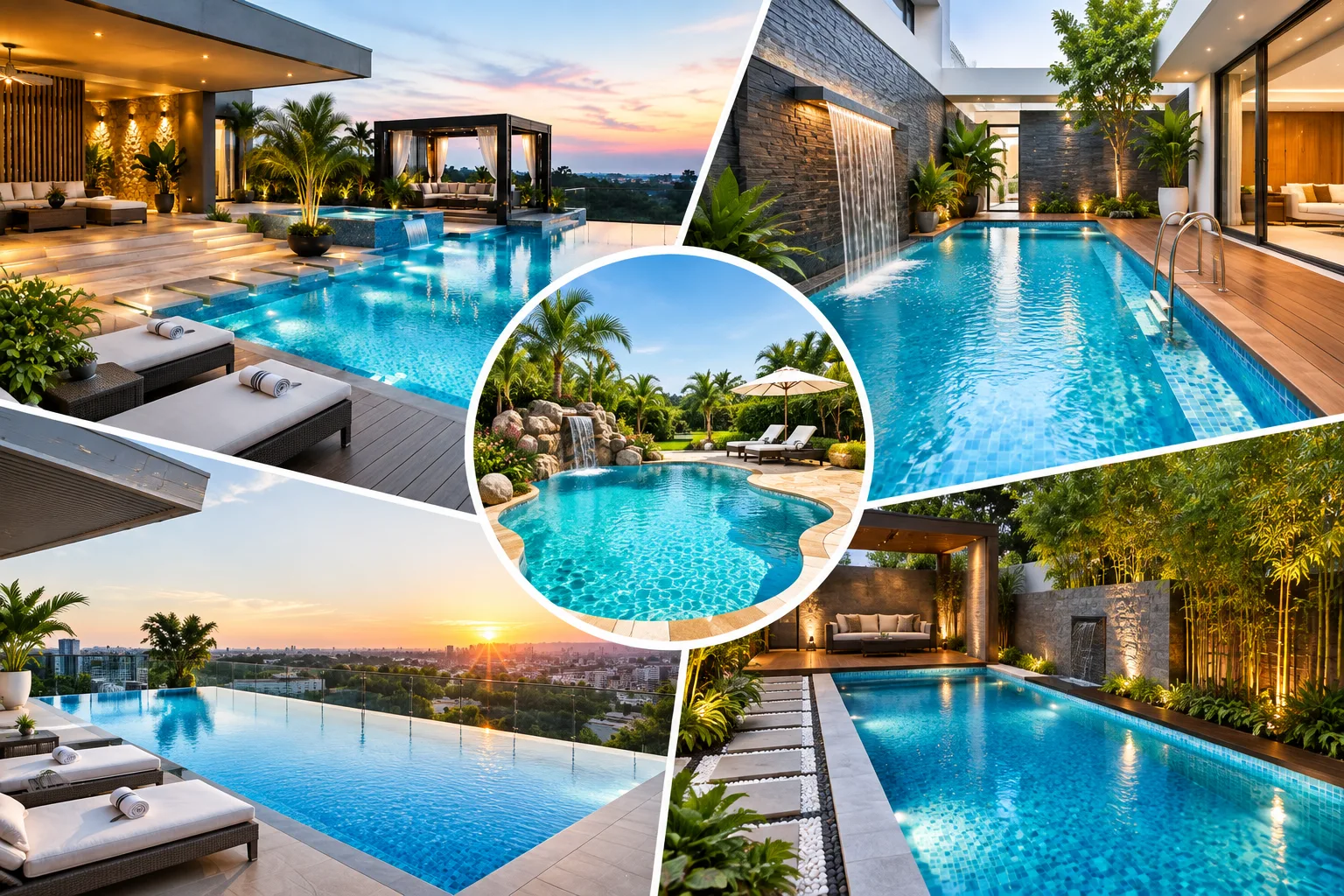
The most in-demand swimming pool designs in India in 2026 include infinity pools, rooftop plunge pools, skimmer pools, overflow (deck-level) pools, natural/lagoon-style pools, and lap pools. Infinity and overflow pools remain popular for villas and resorts because of their visual impact, while skimmer pools are preferred for compact urban homes due to lower construction cost and easier maintenance.
Leading pool designers in India typically customize these base designs around plot size, water table depth, climate, and the structural load capacity of the building — especially for rooftop installations.
How Do You Choose the Right Swimming Pool Design for Your Home?
Choosing the right design depends on five practical factors: available space, budget, purpose (leisure, fitness, or aesthetics), maintenance capacity, and structural feasibility. A lap pool suits fitness-focused homeowners with a long, narrow plot, while a plunge pool works well for compact terraces or rooftops.
Quick decision checklist:
- Small urban plot (under 800 sq ft): Plunge pool or skimmer pool
- Villa with garden space: Infinity or overflow pool
- Fitness-first household: Lap pool (minimum 12–15 meters recommended)
- Rooftop installation: Lightweight fiberglass or modular pool
- Resort/commercial property: Freeform or lagoon-style pool with landscaping integration
Comparison of Swimming Pool Types: Design, Cost, and Maintenance
Pool TypeBest ForApprox. Cost (INR/sq ft)Maintenance LevelSkimmer PoolHomes, small plots1,200–1,800Low–MediumOverflow/Deck-LevelVillas, resorts2,200–3,500Medium–HighInfinity PoolLuxury villas, hotels2,800–4,500HighPlunge PoolRooftops, terraces1,500–2,500LowLap PoolFitness enthusiasts1,800–2,800MediumNatural/Lagoon PoolFarmhouses, resorts2,500–4,000Medium–HighCosts vary by city, contractor, material grade, and site conditions; these figures are indicative estimates, not fixed quotes.
What Makes a Pool Designer "Leading" in India?
Leading pool designers in India are typically distinguished by structural engineering expertise, filtration system knowledge, portfolio diversity (residential, commercial, resort), and compliance with safety and construction standards. A genuinely experienced designer will:
- Conduct soil and water table assessment before finalizing depth
- Recommend filtration systems (sand, cartridge, or UV/ozone) based on usage
- Provide waterproofing warranties (typically 5–10 years)
- Offer transparent cost breakdowns covering excavation, plumbing, tiling, and finishing
- Follow relevant Indian building and safety codes for structural and electrical work
When evaluating leading pool designers in India, ask for at least three completed project references and inspect one in person if possible — photos alone can hide finishing and long-term maintenance issues.
Why Are Swimming Pool Contractors in Kolkata in High Demand?
Swimming pool contractors in Kolkata have seen rising demand due to increasing rooftop and terrace pool installations in apartment complexes, growing farmhouse culture on the city's outskirts, and a rise in boutique hotels along Digha, Mandarmani, and Santiniketan requiring resort-style pools. Kolkata's high water table and monsoon-heavy climate make waterproofing and drainage planning especially critical, so local contractors with soil-specific experience are preferred over generic or out-of-state teams.
If you're hiring swimming pool contractors in Kolkata, prioritize those familiar with the region's clay-heavy soil and monsoon drainage requirements, since improper waterproofing is the leading cause of pool cracks and leakage in eastern India.
What Materials Are Used in Modern Swimming Pool Construction?
Modern swimming pool designs use RCC (reinforced cement concrete) shells as the structural base, finished with one of the following:
- Ceramic or vitrified tiles – budget-friendly, wide design variety
- Glass mosaic tiles – premium finish, used in infinity and luxury pools
- PVC/vinyl membrane liners – faster installation, moderate lifespan
- Fiberglass shells – prefabricated, ideal for rooftops due to lighter weight
- Natural stone (pebble, marble finish) – used in lagoon-style and farmhouse pools
How Long Does It Take to Build a Swimming Pool in India?
A standard residential swimming pool takes 45–75 days to construct, depending on size, design complexity, and weather conditions. Infinity and overflow pools with intricate plumbing can take 90 days or longer. Monsoon season (June–September) typically extends timelines in eastern and western India due to excavation and curing delays.
What Safety and Regulatory Standards Should a Pool Follow?
Pool construction in India should align with structural safety norms under the National Building Code of India, published by the Bureau of Indian Standards, which addresses structural design, fire safety, and water supply/drainage systems relevant to swimming pool construction (Bureau of Indian Standards, Government of India). For public and commercial pools, additional hygiene and water quality guidelines from local municipal health authorities should be followed, particularly around filtration and chlorination standards.
Homeowners installing rooftop pools should also request a structural load-bearing certificate from a licensed engineer before construction begins — this is non-negotiable for high-rise or older buildings.
How Much Does Pool Maintenance Cost Annually in India?
Annual maintenance for a mid-sized residential pool typically ranges from ₹40,000 to ₹90,000, covering chemical treatment, filtration servicing, tile cleaning, and seasonal draining. Saltwater pools reduce chemical costs but have higher upfront equipment costs. Costs are generally higher in coastal cities due to faster equipment corrosion.
Final Thoughts
Choosing among swimming pool designs isn't just an aesthetic decision — it's a structural, financial, and long-term maintenance commitment. Whether you're consulting leading pool designers in India for a resort-style infinity pool or reaching out to swimming pool contractors in Kolkata for a monsoon-resilient rooftop plunge pool, the right partner will assess your soil, structure, and usage needs before recommending a design. Start with a site visit and a written cost breakdown — it's the clearest signal of a contractor's transparency and expertise.