
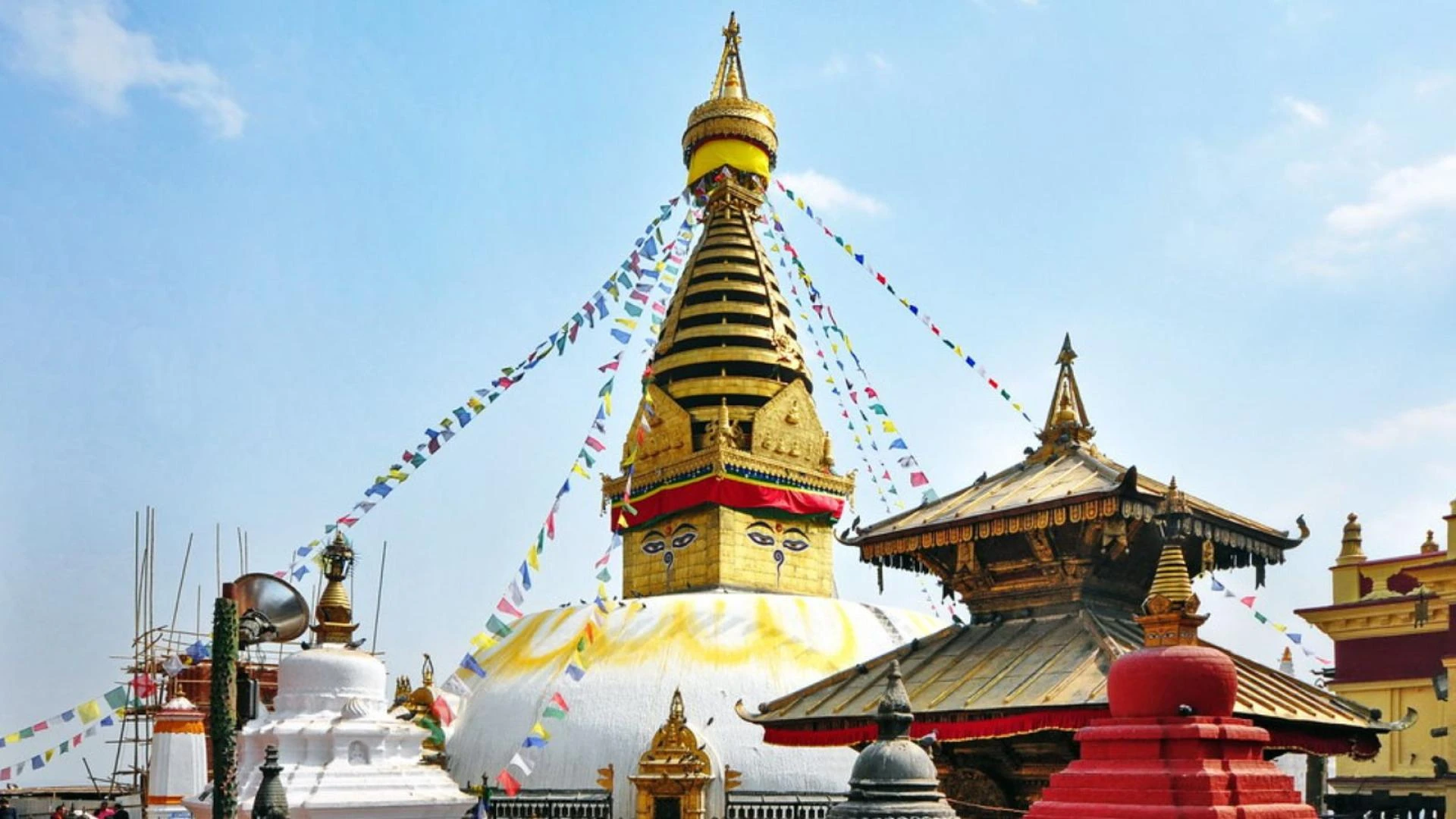
Nepal, a country rich in spiritual and cultural heritage, is home to some of the most iconic and revered sites in the world. Among them, the Swayambhunath Temple stands as a symbol of both spiritual enlightenment and historical significance. Located atop a hill overlooking the Kathmandu Valley, this ancient temple, also known as the "Monkey Temple," offers a profound journey through Nepal’s rich cultural and spiritual tapestry. Visitors to the Swayambhunath Temple are not just embarking on a physical journey to a sacred site but also a passage through time, connecting them to Nepal's centuries-old traditions, myths, and history.
The Origins and Mythological History of Swayambhunath Temple
The Swayambhunath Temple has a history that stretches back over 2,000 years, making it one of the oldest and most revered religious sites in Nepal. The temple’s origin is shrouded in fascinating myth and legend, which blends Buddhist and Hindu traditions. According to one of the most well-known myths, the Kathmandu Valley was once a large lake. The story suggests that the Buddhist deity Manjushri drained the lake by cutting through the mountain at Chobhar, and in the middle of the drained lake, a lotus flower bloomed on a hill. This hill was believed to have mystical properties, and a stupa was built on the site as a symbol of enlightenment.
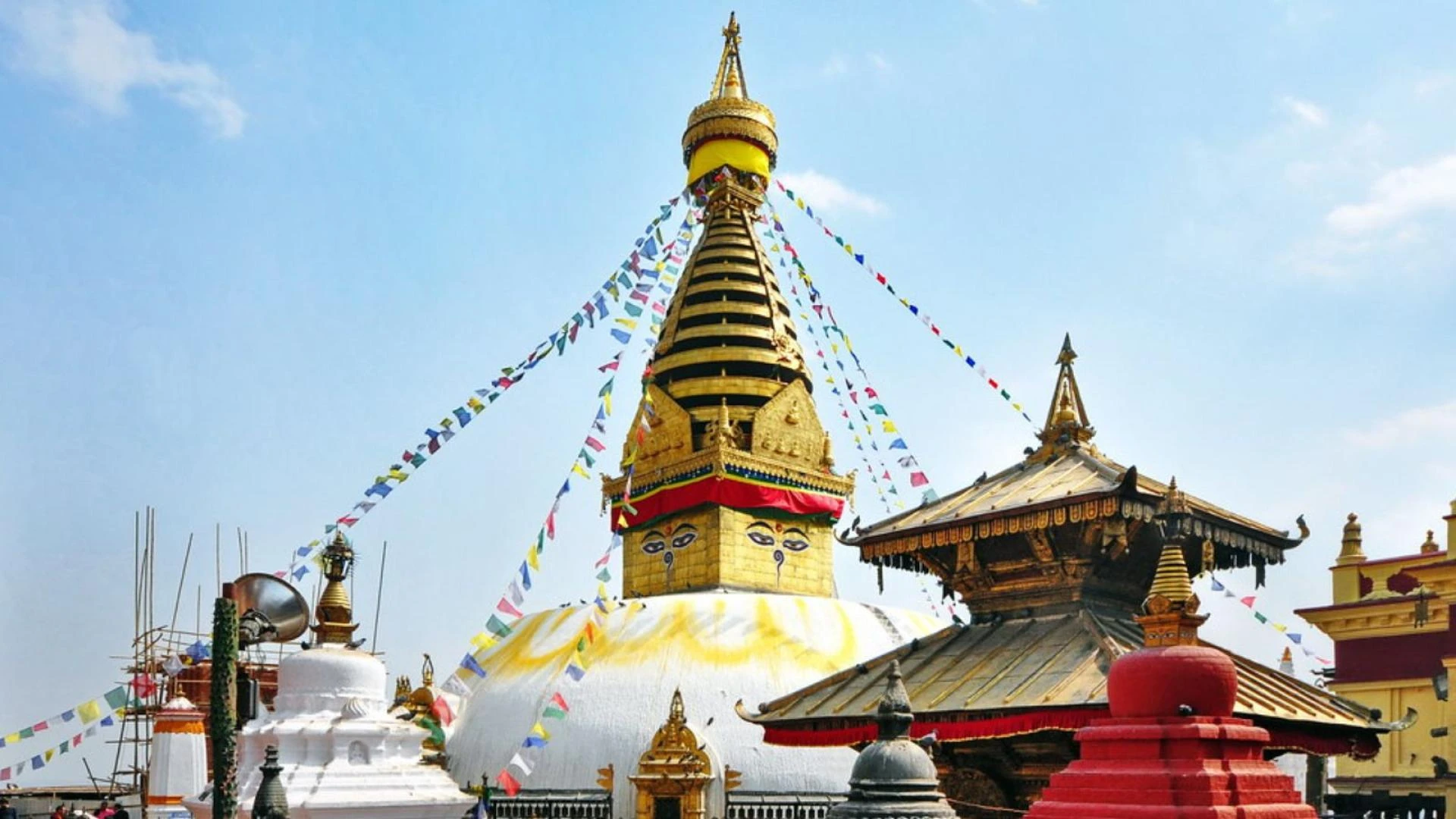
The name Swayambhu means “self-created” or “self-existent,” signifying the belief that the stupa and its divine properties were naturally formed and not the product of human effort. The stupa at Swayambhunath, thus, came to be regarded as a sacred relic, emanating from the divine, with its site chosen for its spiritual significance. This mystic origin story reflects the temple's importance as a hub for both Buddhists and Hindus in Nepal.
It is believed that the temple was established around the 5th century during the reign of King Vastu Deva, who constructed the initial stupa. Over the centuries, the temple was expanded and renovated under the guidance of numerous kings and spiritual leaders, solidifying its place as a sacred center of devotion and pilgrimage.
The Stupa: A Symbol of Cosmic Harmony
At the heart of the Swayambhunath Temple stands the stupa, a monumental structure that has become a symbol of Nepal’s cultural and spiritual identity. The stupa is a sacred and symbolic architectural feature in Buddhism, representing the Buddha’s presence. The stupa at Swayambhunath is considered one of the finest examples of this ancient architectural style and draws visitors with its grandeur and spiritual significance.
The stupa features a large dome, which symbolizes the world, and an ornate spire, which represents the path to enlightenment. At the top of the spire, you will find the All-Seeing Eyes of Buddha, painted on four sides of the structure, each set looking in a different direction. These eyes are a significant icon in both Buddhist and Hindu traditions, representing the Buddha’s omniscient wisdom and his ability to see all. Below the eyes is a symbol of the third eye, denoting the Buddhist concept of awareness and enlightenment.
Visitors often walk around the stupa in a clockwise direction, a practice known as "circumambulation," which is believed to accumulate merit and reinforce their connection to the divine. As they walk, they can see prayer flags fluttering in the wind, each representing the five elements and the Buddha's teachings. The prayer flags add a colorful, sacred energy to the atmosphere, with each flutter carrying the wishes and prayers of the faithful across the land.
The Monkey Temple: The Sacred Connection with Nature
Swayambhunath Temple is also famously known as the "Monkey Temple" due to the large number of rhesus monkeys that inhabit the temple complex. These monkeys are not only an integral part of the temple’s ecosystem but are also considered sacred creatures in both Hinduism and Buddhism, as they are believed to embody the playful and mischievous nature of the gods. Their presence adds an element of life and liveliness to the temple grounds, making it an unforgettable experience for visitors.
The monkeys are seen scampering up and down the many steps leading to the stupa, occasionally pausing to play or interact with visitors. While they are known for their curiosity, visitors should be cautious, as these monkeys are known to be quite bold when it comes to food or shiny objects. Nevertheless, the monkeys serve as a charming and symbolic presence, adding to the temple’s unique character.
The 365 steps leading up to the temple offer not only a physical challenge but also a metaphorical one, symbolizing the spiritual journey toward enlightenment. Each step brings pilgrims closer to their goal, and the monkeys along the way serve as a reminder of the distractions and hurdles that must be overcome on the path to spiritual growth.
A Place for Meditation and Pilgrimage
The Swayambhunath Temple has long been a place for spiritual reflection, meditation, and prayer. Pilgrims from across Nepal and the world come to Swayambhunath to seek blessings and wisdom. In addition to the central stupa, there are numerous smaller shrines, prayer wheels, and statues throughout the temple complex, each dedicated to various deities. The prayer wheels, which contain sacred mantras, are spun by devotees as part of their daily rituals to accumulate good karma.
The peaceful environment surrounding the temple provides an ideal setting for meditation. The temple offers sweeping views of the Kathmandu Valley, making it a serene and tranquil space for those seeking solace from the hustle and bustle of city life. For many, visiting the Swayambhunath Temple is an act of devotion, a moment of spiritual renewal, or a way to connect with the divine.
Swayambhunath Temple and Nepal’s Cultural Heritage
Swayambhunath is not just a religious site; it is also a key part of Nepal’s cultural and historical identity. The temple complex is located within the Kathmandu Valley, which is home to several other UNESCO World Heritage Sites. As part of the Kathmandu Valley’s rich tapestry of sacred architecture, Swayambhunath is integral to understanding the region's deeply rooted spiritual practices and historical evolution.
The architecture of the temple, with its combination of Hindu and Buddhist influences, reflects the interwoven nature of Nepalese culture. For centuries, the Kathmandu Valley has been a melting pot of these two great spiritual traditions, with many deities, rituals, and philosophies shared by both faiths. The Swayambhunath Temple stands as a perfect example of this cultural and religious amalgamation, where Buddhism and Hinduism coexist harmoniously.
Conclusion: The Enduring Legacy of Swayambhunath Temple
The Swayambhunath Temple is more than just a tourist attraction; it is a spiritual landmark and a cultural heritage site that resonates deeply with both locals and visitors. The temple embodies the timeless quest for enlightenment, wisdom, and peace, inviting all who visit to reflect on their own spiritual journey. With its centuries-old history, breathtaking architecture, sacred atmosphere, and stunning natural surroundings, Swayambhunath remains a powerful symbol of Nepal’s enduring cultural and spiritual heritage.
Whether you are seeking divine blessings, spiritual growth, or simply a deeper understanding of Nepal’s history, a visit to Swayambhunath is a transformative experience. It is a place where past and present merge, where the sacred and the mundane coexist, and where the journey toward enlightenment is accessible to all who seek it.