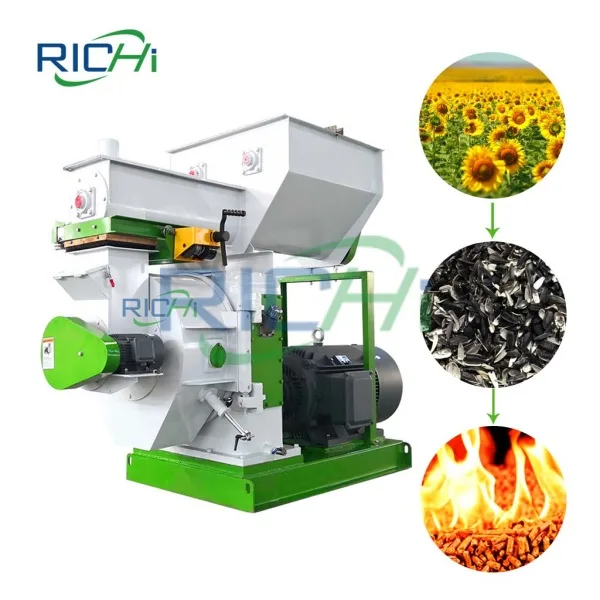
Sunflower shells are an agricultural by-product that can be converted into biomass fuel pellets. For oil processing companies and biomass businesses, pelletizing offers an opportunity to turn loose residues into a more compact product with improved storage and handling characteristics.
However, the investment required varies considerably between projects. When comparing a sunflower shell pellet machine price, buyers should look beyond the price of the main machine and evaluate the entire production process. Raw material conditions, production capacity, equipment configuration, and installation requirements all influence the final budget.
1. Production Capacity Determines the Equipment Scale
The required output is one of the main factors affecting equipment selection and investment.
A small business processing its own sunflower shells may need a relatively simple pelletizing setup. A commercial biomass producer with a larger and more consistent raw material supply may require higher-capacity equipment and automated material handling.
Before requesting quotations, calculate:
- How many tons of sunflower shells are available daily?
- How many hours will the plant operate?
- What is the expected finished pellet output?
- Will production increase in the future?
- Is the project intended for internal fuel consumption or commercial sales?
These details help suppliers recommend a suitable machine rather than simply offering the largest available model.
2. Raw Material Preparation Affects the Total Cost
Sunflower shells do not always arrive in a condition suitable for direct pelletizing. Some materials may contain oversized pieces, excessive moisture, or impurities.
Depending on the actual material, the production line may need additional equipment.
Cleaning equipment: Removes stones, metal, and other unwanted materials before processing.
Crushing equipment: Reduces oversized shells and helps create a more consistent particle size.
Drying equipment: Adjusts moisture when the incoming material is too wet for stable pellet formation.
Conveying equipment: Transfers prepared materials between processing stages and helps maintain continuous feeding.
Not every project needs all these machines. For example, a factory receiving relatively clean, dry, and uniformly sized sunflower shells may not need a complete preparation system.
Testing the raw material before purchasing equipment can help avoid unnecessary investment.
3. Standalone Pellet Mill or Complete Production Line?
The equipment scope makes a significant difference to the quotation.
A standalone pellet mill may suit a factory that already owns suitable crushers, dryers, conveyors, and other supporting equipment. The buyer only needs to confirm that the existing system can supply material in the required condition.
A complete production line is more suitable for a new biomass processing project. Depending on the requirements, it may include:
- Raw material receiving and cleaning.
- Crushing and size reduction.
- Moisture adjustment or drying.
- Material conveying and feeding.
- Pelletizing.
- Cooling and screening.
- Automatic or manual packaging.
When comparing quotations, check whether each supplier includes the same equipment scope. Otherwise, a lower quotation may simply cover fewer processing stages.
4. Machine Configuration and Component Selection
The pellet mill itself also affects the overall investment.
Important components include the motor, transmission system, feeding structure, die, and rollers. Their specifications should match the raw material characteristics and expected production conditions.
For sunflower shells, buyers should pay particular attention to feeding consistency and the suitability of the die and roller arrangement. A machine that cannot handle the prepared material properly may experience unstable operation and require more frequent adjustments.
Businesses processing several agricultural residues can also compare configurations used for a rice husk pellet machine. Although both are biomass applications, differences in material characteristics mean that the final equipment configuration should be confirmed through testing.
5. Installation and Electrical Requirements
Installation costs should be included in the project budget from the beginning.
A standalone machine may require relatively limited installation work if the factory already has suitable foundations, electrical connections, and material handling arrangements.
A complete production line may need a more detailed layout, including equipment foundations, conveyors, electrical control systems, dust collection, and maintenance access.
Ask the supplier to clarify:
- Required installation space.
- Total connected motor power.
- Foundation and structural requirements.
- Electrical control and wiring scope.
- Installation and commissioning responsibilities.
- Operator training arrangements.
A clear installation plan helps prevent unexpected construction work and delays after equipment delivery.
6. Calculate Long-Term Operating Expenses
The initial purchase price is only one part of the investment.
A realistic cost evaluation should include electricity, labor, maintenance, replacement parts, packaging materials, and raw material transportation.
Drying can also contribute significantly to operating expenses when the incoming shells have high moisture content. This is another reason to test the material before deciding whether a dryer is necessary.
Ask suppliers to provide the power requirements for the complete production line. Comparing only the pellet mill motor does not give an accurate picture of total electricity consumption.
7. Compare Supplier Support and Project Experience
Equipment prices should also be evaluated alongside technical support.
A supplier should be able to explain the recommended machine configuration, identify necessary auxiliary equipment, and provide a practical installation plan. Ask whether raw material testing is available and whether the company has experience with similar biomass projects.
RICHI provides biomass pelletizing equipment and customized production solutions. Buyers can discuss raw material conditions, production targets, and factory layouts with its technical team. For additional information about richimanufacture biomass pellet machine quotation options, prepare your project details before requesting a proposal.
Conclusion
The cost of a sunflower shell pellet production project depends on more than the pellet mill model. Production capacity, raw material preparation, machine configuration, installation, and long-term operating expenses all contribute to the total investment.
The most practical approach is to compare quotations with the same production target and equipment scope. Provide representative material samples whenever possible, and confirm the proposed configuration before placing an order. To explore suitable equipment and project solutions, check this site out and discuss your requirements with the supplier.