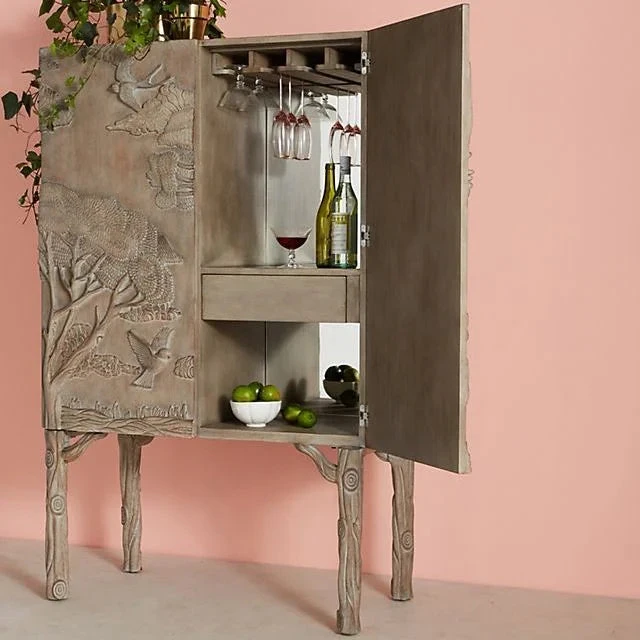
I’ve always believed that the furniture we bring into our homes says something about who we are. For me, a bar cabinet was one of those things I thought only people with big houses and fancy lifestyles owned. I saw this handcarved wooden bar cabinet, however, placed in a corner of my friend's living room when I was visiting her home. Even though it wasn't very huge, I was instantly attracted to the wood's detailing. In contrast to the smooth, factory-made furniture which most of us are used to, the carved structure felt raw and textured when I ran my fingers over it. That small incident made me realize that a bar cabinet does more than just carry bottles; it upgrades a room's atmosphere.
Why Bar Cabinets Have Become Popular?
Let’s be honest. We all like the idea of hosting friends, pouring a drink, or simply having a neat place to keep our glasses. Before, people would shove bottles into kitchen cupboards or leave them on open shelves. Now, with homes getting smaller but design getting smarter, furniture has to do more than one job. A good bar cabinet does exactly that—it stores, organizes, and decorates all at once.
The beauty of a bar cabinet is that it doesn’t scream “bar” unless you want it to. I’ve seen people use them as sideboards, mini libraries, or even as plant stands when they’re not entertaining. However, when should we open it up? All of a sudden, you're the perfect host, with everything at your fingertips.
What Makes Handcarved Wooden Ones Unique?
The issue is that the wood feels alive when it is carved by hand, even though it is already beautiful. You can practically feel the craftsman using tools that have been handed down through the years to carefully shape the design, line by line. A handcarved wooden bar cabinet is not stamped out of a machine. That means no two pieces are ever exactly the same.
I'll give you an example. The doors of the cabinet I eventually ordered had designs with flowers, but after closer inspection, one blossom was slightly deeper cut than the others. I thought at first it was a mistake. That's the appeal, I realized later. That's why it's mine and mine only.
Styles That Work in Different Homes
I feel that these cabinets' diversity is one of the reasons why they have become so popular
.
- Pick something with intricate carvings, featuring geometric latticework, floral vines, or mandala patterns, if you want traditional, royal-style design for your home. These clearly evoke the emotion of a "heritage home."
- Modern apartments do not need detailed carvings. Without overpowering the place, a simple, minimalist design with certain details creates class.
- You should choose cabinets with raw wood finishes if you like a rustic look. They go great with earthy shades, exposed brick walls, or even a relaxed Vintage arrangement.
- And for those of us who mix and match, there are fusion designs—classic carving on a sleek, minimalist frame. Honestly, that’s the route I took because it felt like the best of both worlds.
Beyond Looks: The Practical Side
Okay, style is great, but let’s talk practicality. These cabinets are seriously useful:
- Storage: Most have compartments, racks, and little drawers. I no longer have wine glasses rattling around with coffee mugs in the kitchen.
- Durability: Solid wood lasts. My grandmother still has a teak cabinet from the 1970s, and it looks better today than when it was new.
- Sustainability: Real wood, when sourced responsibly, is much better for the planet compared to particle board or plastic.
- Multi-purpose: When I’m not entertaining, I sometimes use the top of my cabinet to display candles, books, or even a small speaker.
It’s one of those investments where the longer you use it, the more sense it makes.
How to Pick the Right One?
Shopping for a handcarved wooden bar cabinet can be exciting but also a little overwhelming. Here are a few lessons I learned the hard way:
- Measure your space. I almost bought a cabinet that would’ve blocked my balcony door—thankfully, I rechecked before ordering.
- Match your vibe. If your home is mostly modern and minimal, a super-heavy carved design might look out of place.
- Pay attention to the wood. Mango wood is lighter and affordable, while teak or rosewood have deeper tones and are sturdier.
- Don’t forget maintenance. Carvings do collect dust, but a quick wipe every week keeps them fresh. Once in a while, polish helps restore the shine.
Why People Keep Talking About Them?
Here’s what I’ve noticed: whenever friends come over, they always end up near the bar cabinet. Someone will trace the carvings with their hand and ask where I got it. It sparks conversations—not just about drinks, but about craft, heritage, and even travel stories about places where similar furniture was made.
That’s something flat-pack furniture will never give you. It doesn’t invite curiosity. A handcarved piece, on the other hand, has character. It feels less like an object and more like part of the family.
Conclusion
In the end, the purpose of a handcarved wooden bar cabinet goes beyond just holding bottles. It's about creating an atmosphere that feels great. It blends art with daily use, flair with functionality. Consider this piece if you would like to add character, complexity, and personalization to your living area.
When I realized I was buying more than just furniture when I ultimately carried mine home. I had introduced a bit of culture and a human touch that machines never replicate. Brands like Lakecity Handicrafts offer the perfect cabinets to add a unique touch to your home for anyone who values that kind of craftsmanship.