
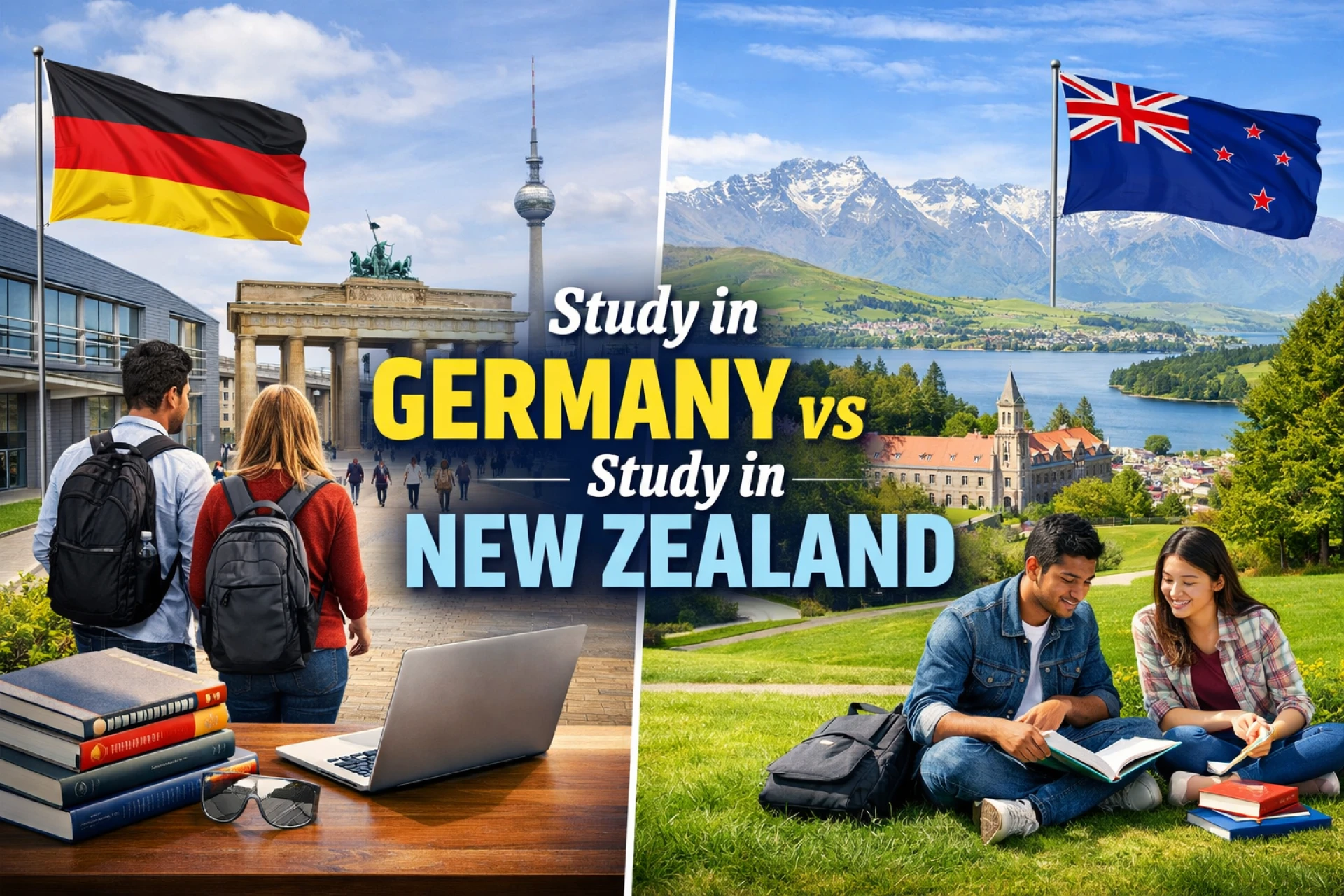
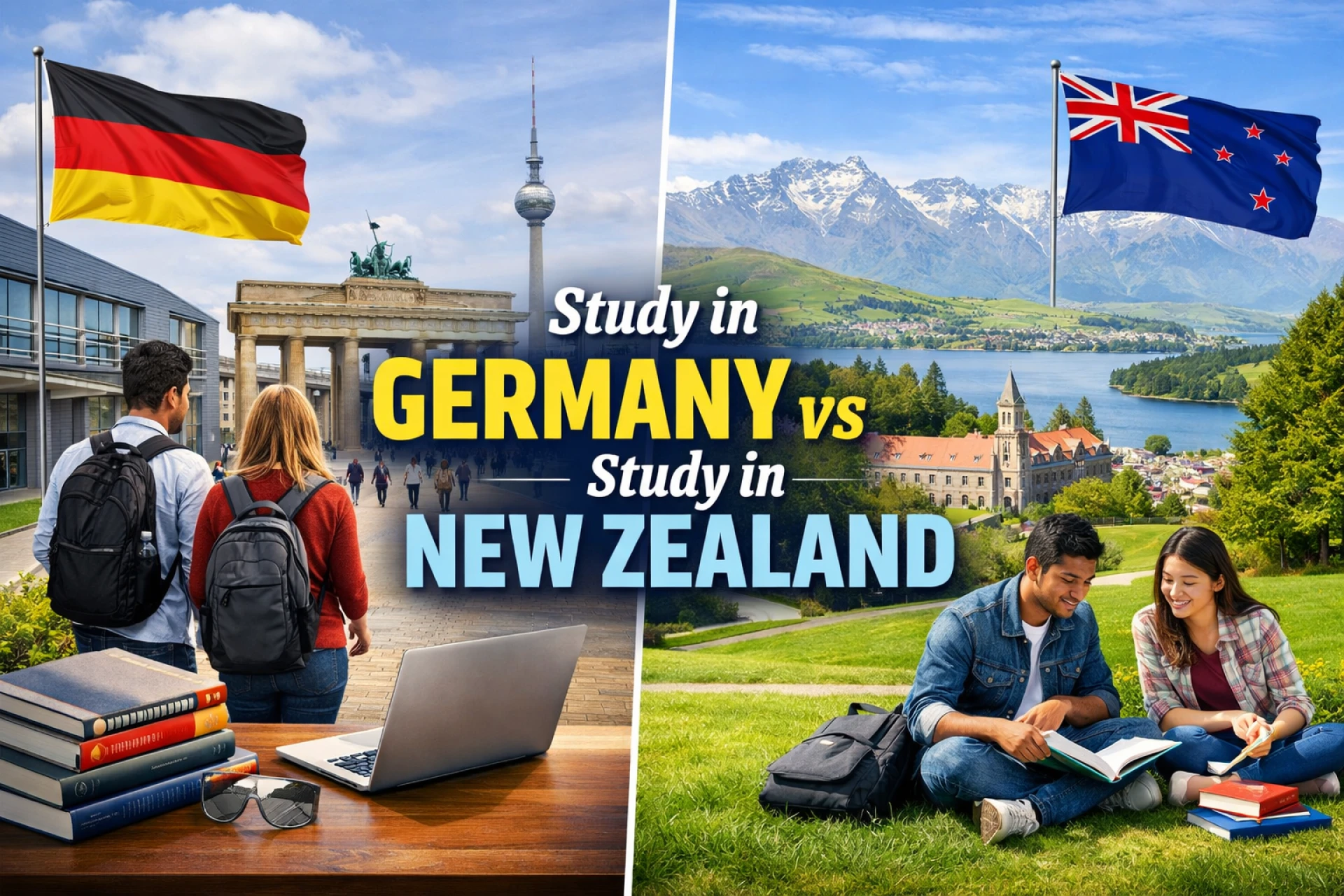
Picking the right country for higher studies is a big deal for Indian students. Germany and New Zealand both attract a lot of attention, and honestly, for good reasons. You get solid education, degrees that people around the world respect, and decent career prospects in both places. Germany is famous for almost-free tuition and top-notch engineering and tech programs. New Zealand, meanwhile, draws students in with its English-taught courses, student-friendly environment, and clear pathways for working after graduation. Let’s break down what it’s actually like to study in Germany versus New Zealand—looking at cost, education quality, job opportunities, and what your future could look like—so you can figure out what fits you best.
1. Education Quality & Global Recognition
Germany’s public universities have a global reputation, especially if you’re into engineering, tech, IT, or research. Their degrees carry a lot of weight, and the focus really leans toward hands-on research and industry experience. If you’re an Indian student thinking long-term about STEM or technical fields, Germany gives you an edge.
New Zealand isn’t far behind. Their universities regularly rank well worldwide and are known for teaching that’s practical and matched to what employers want. International students get strong academic and personal support, and degrees from New Zealand open doors in places like Australia, the UK, and Canada. Bottom line: both countries are globally recognized. Germany is the go-to for technical and research-heavy careers; New Zealand is great if you want practical, job-ready skills.
2. Tuition Fees & Cost of Living
One huge perk with Germany is that most public universities charge little or nothing for tuition. You just pay a small semester fee, which usually covers admin stuff and public transport. No wonder so many students ask Germany visa consultants in Jalandhar about studying in Germany it’s light on the wallet.
New Zealand costs more for tuition, but you get flexible courses, shorter programs, and it’s often easier to get in. When you look at living costs, Germany comes out cheaper, especially if you don’t mind smaller cities. New Zealand tends to be pricier for rent, food, and getting around.From a budget point of view, Germany is more economical, while New Zealand suits students who can invest more for a smoother study experience.
3. Language Requirements & Ease of Admission
If you’re looking at Germany, you’ll find a good mix of English- and German-taught programs. A lot of master’s courses are in English, especially if you’re into technical fields. Still, picking up some basic German really helps with day-to-day life and finding part-time work. The admission process in Germany isn’t exactly a walk in the park—it’s strict about academics and paperwork. But with the right guidance from a good Schengen visa consultant in Jalandhar, you can handle it.
New Zealand, on the other hand, is all about English. The entire education system runs in English, which makes things a lot smoother for Indian students. Most universities ask for an IELTS score somewhere between 6.0 and 6.5. The whole admission process is quicker and a lot less complicated than Germany’s.
So, if you’re looking for an easier path for both language and getting in, New Zealand wins. Germany just takes a bit more planning and effort.
4. Work Opportunities During & After Studies
In Germany, international students can work up to 20 hours a week during the semester and full-time during holidays. Once you graduate, you can stick around to hunt for a job. If you land one, you can apply for the EU Blue Card, which gives you a shot at long-term career growth and even permanent residency. There’s a big demand in Germany for skilled folks in engineering, IT, healthcare, and research.
New Zealand also lets students work 20 hours a week during classes, and full-time during breaks. After you finish your studies, you can get a post-study work visa, which helps you gain local experience. There’s steady demand for jobs in IT, healthcare, construction, and business services.
Both countries offer solid career options. Germany is the go-to if you’re looking to build a career in technical or research-based areas. New Zealand is better if you want practical, hands-on work experience and clear career growth.
5. PR & Long-Term Settlement Options
Germany gives international students a strong shot at settling down long term. After your studies, you can go for the EU Blue Card, live and work in Germany, and apply for permanent residency in just a few years. Plus, with PR in Germany, you get access to jobs across Europe—not just in one country. If you’re aiming for a long-term career in Europe, Germany’s a great pick.
New Zealand takes a step-by-step approach. After graduation, you work in New Zealand, get the right experience, and then apply for PR through skilled migrant pathways. A lot of students turn to New Zealand visa consultants in Jalandhar to figure out occupation lists and PR points. The process is clear, fair, and especially friendly for those in high-demand fields.
In short, Germany is best for students who want opportunities all over Europe, while New Zealand is ideal if you’re after a straightforward and supportive PR route.
Conclusion
Both Germany and New Zealand are excellent study destinations for Indian students, but the right choice depends on individual goals. Germany is ideal for students looking for low-cost education, strong technical fields, and long-term opportunities in Europe. New Zealand is better suited for students who prefer English-only education, simpler admissions, practical learning, and a smoother PR process. By understanding factors like cost, language, work options, and settlement pathways, Indian students can confidently choose the country that aligns best with their education and career plans.