Launching an AI product is exciting. You spend weeks or months building features, improving design, testing workflows, and solving real problems. Then you launch and expect users to arrive.
But for many founders, that does not happen.
The internet is crowded. New tools appear every day. Even great products can stay invisible if nobody knows where to find them. This is why many founders turn to paid ads too early. They run campaigns, spend money, get some clicks, and then wonder why growth disappears once the budget runs out.
There is a smarter path.
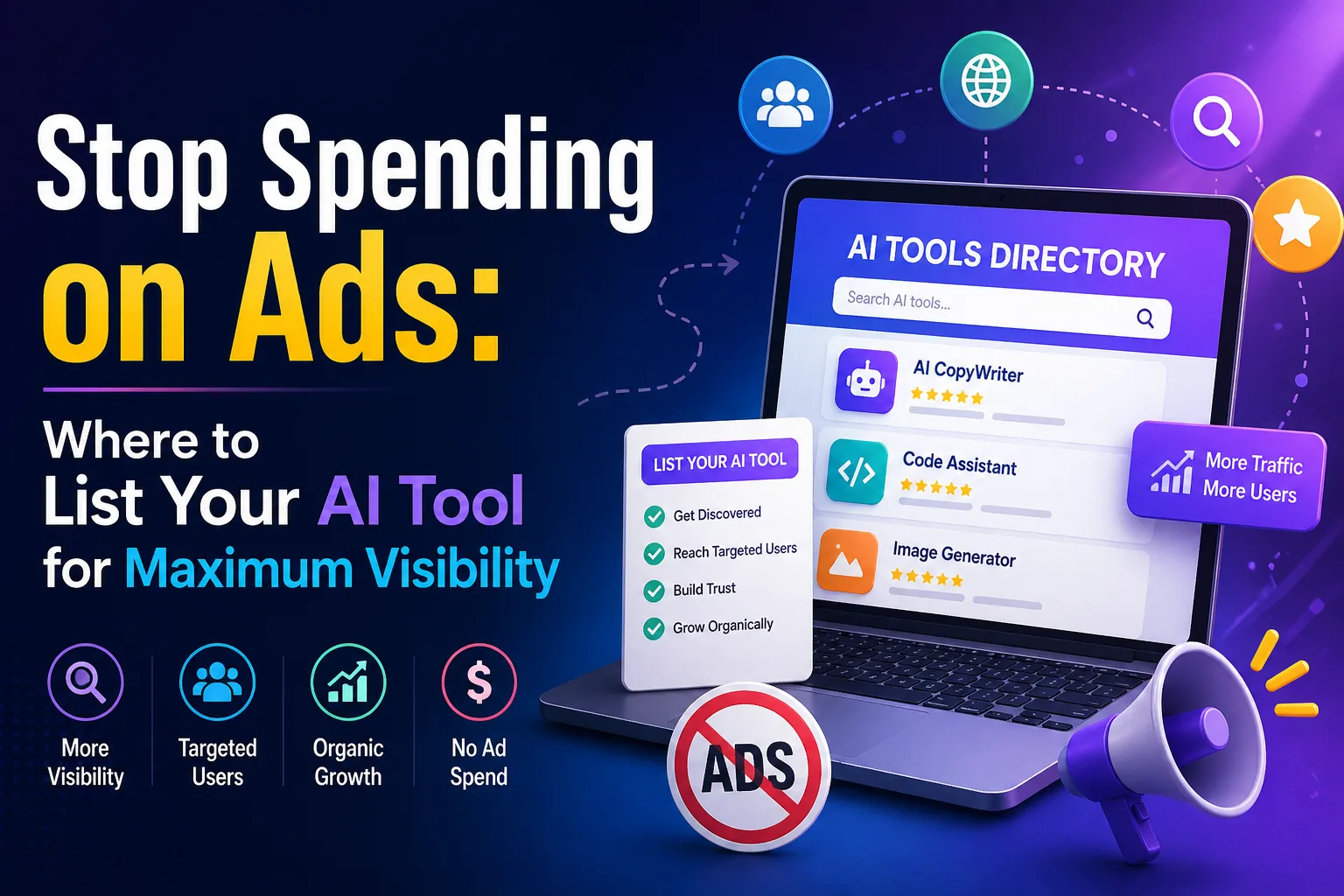
Instead of depending only on ads, you can build long-term visibility by placing your product where users are already searching. This includes directories, communities, search engines, review platforms, and niche websites.
If you want steady traffic and real users, learning where to list your AI startup matters more than chasing temporary clicks.
This guide explains how to grow visibility without wasting budget, using practical methods that continue working long after an ad campaign ends.
Why Paid Ads Are Not Always the Best First Step
Ads can be useful, but they are often expensive for early-stage founders.
Common problems include:
- High cost per click
- Low sign-up quality
- Weak retention
- Short-term traffic only
- Hard competition from bigger companies
- Limited trust from first-time visitors
If someone clicks an ad and has never heard of your tool, they may leave quickly. New products usually need trust, education, and proof before conversion happens.
That is why many successful founders focus first on discoverability.
Why Organic Listings Work Better Over Time
When users visit directories or search for tools, they already have intent. They are actively looking for solutions.
That makes listings powerful because:
- Users are already searching
- Traffic can continue for months
- Listings help with backlinks
- Reviews build trust
- Search engines index category pages
- Costs are low compared to ads
Instead of renting attention, you build assets that keep working.
1. Use an AI Tools Directory
One of the best starting points is an AI tools directory.
These websites organize tools into categories so users can compare options quickly. Many people do not want to search random websites. They want a clean place where tools are grouped by purpose.
Examples of categories include:
- Writing
- Coding
- Design
- Marketing
- SEO
- Video editing
- Productivity
- Automation
A growing example is Ai skynet tools, where founders can discover categories, submit products, and reach people exploring new software. Used naturally as part of a wider strategy, platforms like this can help visibility.
When creating your listing:
- Write a clear title
- Explain the main use case
- Add screenshots
- Use the right category
- Keep your link updated
- Avoid exaggerated claims
Simple, clear listings usually outperform flashy marketing language.
2. Get Found Through Niche Categories
Not all traffic is equal.
If your product helps bloggers, writers, agencies, or marketers, then appearing in pages related to AI writing tools can send highly relevant visitors.
If your tool helps developers, then pages focused on AI coding assistants may convert better than broad traffic.
Think about the exact audience you serve.
Examples:
- Resume tool → career communities
- Coding tool → developer platforms
- Copywriting tool → content marketing blogs
- Analytics tool → SaaS growth communities
Specific traffic often converts better than general traffic.
3. Launch on Discovery Platforms
There are platforms where users actively explore new products every day.
These launch sites can bring:
- Early feedback
- Reviews
- Beta testers
- Social proof
- Referral traffic
To improve results:
- Use strong screenshots
- Explain the problem clearly
- Be active in comments
- Ask users for honest feedback
- Share your launch with your network
Even short traffic bursts can lead to useful backlinks and awareness.
4. Write Guest Blogs on Relevant Websites
Guest blogging remains one of the strongest growth methods when done well.
You contribute a helpful article to another website. In return, you gain authority, visibility, and often a link back to your product.
Good topics include:
- How AI saves time for freelancers
- Best AI workflows for small teams
- Mistakes founders make when launching tools
- How creators use automation daily
Focus on helping readers first. Avoid sounding like an ad.
When readers trust your ideas, they naturally become curious about your product.
5. Create Search-Friendly Content
Many users search things like:
- Best AI tools for bloggers
- AI apps for startups
- Alternatives to popular tools
- AI software for agencies
If you create content around these topics, you attract people already looking for solutions.
This includes:
- Comparison pages
- Tutorials
- Case studies
- Problem-solving guides
- Industry-specific lists
Strong content compounds over time.
6. Join Communities the Right Way
Communities are underrated.
Places like founder forums, Reddit groups, Discord communities, and niche Slack groups often contain your future users.
But do not join only to drop links.
Better approach:
- Answer questions
- Share lessons learned
- Give useful tips
- Ask for feedback
- Help others solve problems
Trust built in communities often converts better than ad clicks.
7. Use Video Demonstrations
People like seeing tools before trying them.
Short demo videos can work well on:
- YouTube
- X
- Instagram Reels
- TikTok
Create videos showing:
- Problem before your tool
- Solution using your tool
- Time saved
- Real workflow examples
Visual proof reduces hesitation.
8. Build Social Search Presence
Social media is no longer only about followers. Many users now search directly inside platforms.
That means searchable content matters.
Examples:
- Best prompts for writers
- AI productivity tips
- New tools for developers
- Automation ideas for teams
Useful posts can bring profile visits and website traffic for months.
9. Collect Real Reviews
Reviews build confidence.
If users like your product, ask politely for honest feedback.
Where reviews help:
- Software review websites
- Directory profiles
- Community recommendations
- Social proof on landing pages
Never buy fake reviews. Real trust always wins long-term.
10. Build Your Own Audience
Traffic sources can change. Algorithms can change. Communities can slow down.
That is why building your own audience matters.
Create:
- Email newsletter
- Waitlist
- Telegram group
- User community
- Update list
Even a small audience gives you launch power later.
How to Write Listings That Get Clicks
Weak example:
“Revolutionary AI platform changing everything.”
Better example:
“Tool that turns meeting recordings into notes and action items.”
Use this formula:
What it does + who it helps + result
Examples:
- Writing tool for bloggers who need faster drafts
- Automation tool for agencies reducing manual work
- Coding assistant for developers fixing repetitive tasks
Clear language wins.
Common Mistakes to Avoid
Listing Everywhere Without Focus
Choose relevant sites first.
Generic Descriptions
If your copy sounds like everyone else, users skip it.
Ignoring Categories
Choose targeted categories such as AI writing tools or AI coding assistants if they match your product.
No Follow-Up Funnel
Traffic means nothing if the landing page is confusing.
No Proof
Use screenshots, testimonials, or examples.
Where Ai skynet tools Fits Naturally
As more tools launch daily, people need easier discovery systems. That is why platforms like Ai skynet tools can be useful within a broader organic strategy.
Instead of relying on one traffic source, founders can use directories, content, communities, and niche platforms together. If you need to list your AI startup, adding it to relevant directories can be one practical step.
The key is balance. No single channel should carry everything.
Long-Term Growth Beats Short-Term Clicks
Imagine two founders.
Founder A keeps paying for ads every month.
Founder B builds search traffic, directory listings, reviews, content, and community trust.
Months later:
Founder A must continue paying.
Founder B may still receive traffic daily.
That is the power of compounding visibility.
Final Thoughts
Ads can work, but they should not be the only plan.
If your budget is limited, focus first on channels where users are already searching. Submit to directories, create useful content, build trust in communities, collect reviews, and optimize for search.
Use relevant placements such as an AI tools directory, category pages for AI writing tools, or communities interested in AI coding assistants if those match your audience.
When people are already looking for solutions, your job is simple:
Make sure they can find you.
FAQ
Should I stop ads completely?
No. Ads can help testing and launches. Just do not depend only on them.
Where should I list first?
Start with quality directories, niche websites, and communities.
How many listings do I need?
Focus on 10 to 30 relevant platforms first.
How long does organic growth take?
Usually weeks to months depending on competition.
Is it worth it to list your AI startup in directories?
Yes, especially when the directory has relevant users and indexed pages.