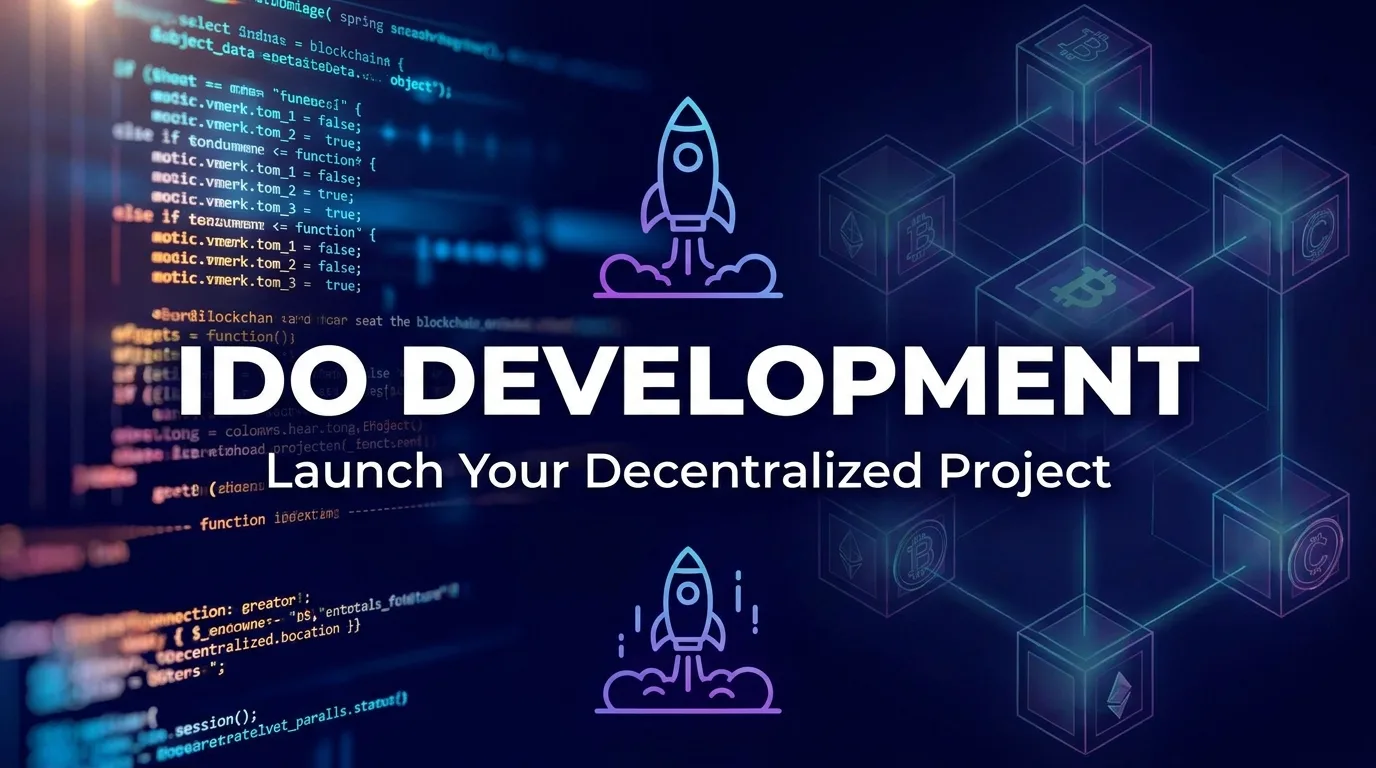
Initial DEX Offerings, commonly known as IDOs, have become one of the most accessible fundraising models in the Web3 economy. Unlike traditional fundraising routes, where startups depend on venture capital firms, centralized exchanges, or lengthy approval processes, an IDO allows a blockchain project to raise capital through a decentralized exchange or launchpad. In simple terms, investors participate directly from their crypto wallets, smart contracts manage allocation and token distribution, and liquidity is usually created soon after the token generation event. Binance Academy defines an IDO as a token sale conducted on a decentralized exchange, where users subscribe through self-custody wallets and receive tokens on-chain. It also notes that IDOs often provide immediate liquidity by allocating part of the raised funds to trading pools.
The appeal of IDOs lies in their speed, openness, and global accessibility. A retail participant in India, Nigeria, Brazil, or the United States can potentially join the same sale as anyone else, provided they meet the launchpad’s eligibility rules. This global nature matters because crypto adoption is no longer limited to a handful of developed markets. Chainalysis’ 2025 Global Crypto Adoption Index measured activity across 151 countries and ranked countries using on-chain and off-chain data, including transaction volumes and web traffic patterns. At the same time, decentralized finance remains a meaningful market layer: DeFiLlama showed roughly $91.7 billion in total value locked in DeFi and about $35.7 billion in seven-day DEX volume as of the latest available dashboard snapshot. These figures help explain why IDOs continue to attract founders and investors, even though the model carries serious financial, technical, and regulatory risks.
The Strategic Role of Professional IDO Development
Why an IDO Development Company Matters
Before discussing how an investor buys tokens, it is important to understand why IDO infrastructure must be carefully built. A professional IDO Development Company does far more than create a landing page and token sale contract. It designs the fundraising architecture, integrates wallet connectivity, configures smart contracts, structures vesting, supports KYC or allowlist logic where required, and helps projects launch in a way that is technically stable and user-friendly. This matters because IDO participants are not simply buying from a website; they are interacting with smart contracts that may control funds, token allocation, liquidity pools, and post-sale claims.
A weak IDO platform can damage both investors and project owners. If the sale contract is poorly written, users may face failed transactions, incorrect allocations, claim errors, or even permanent loss of funds. If tokenomics are badly designed, early buyers may dump tokens immediately, causing price instability and reputational damage. If liquidity is not locked or clearly disclosed, the project may be suspected of rug-pull behavior even when the founders have legitimate intentions. In short, IDO development is not just a technical service; it is a trust-building mechanism.
Core IDO Development Services
High-quality IDO Development Services typically include token creation, launchpad development, smart contract development, liquidity pool integration, vesting modules, staking or tier-based participation systems, admin dashboards, audit support, and compliance-oriented features. Modern IDO launchpads often use allowlists, staking requirements, reputation systems, or lottery-based allocation models to reduce bot participation and improve fairness. Binance Academy notes that many IDOs use allowlists or tier systems, while vesting schedules are common to reduce immediate sell pressure and align incentives between the project and early buyers.
Real-world launchpad activity shows how large these systems can become. DAO Maker, for example, states on its platform that it has supported over $90 million in total raises, over 315,000 KYCed users, and more than 1.1 million connected wallets. Such numbers show that launchpad infrastructure must handle more than token transfers. It must manage identity checks, user segmentation, campaign timing, network congestion, claim periods, refunds, investor communication, and analytics. For a serious Web3 startup, choosing strong development support can be the difference between a chaotic launch and a professional token sale.
End-to-End IDO Development Solutions
Comprehensive IDO Development Solutions are especially valuable for projects that want to move from concept to fundraising without stitching together multiple disconnected vendors. An end-to-end solution may include whitepaper consultation, tokenomics modeling, smart contract engineering, launchpad deployment, security testing, wallet integration, marketing dashboards, community management tools, and post-launch liquidity support. This is important because IDO success is not determined only on sale day. It depends on what happens before the sale, during the token generation event, and after buyers begin claiming or trading their tokens.
Step 1: Understand the IDO Before You Invest
The first step for any participant is not wallet setup; it is education. An IDO may look simple from the outside, but it combines venture-style early investment risk with DeFi execution risk. You are usually buying a token before the project has achieved full market validation. The token may represent access, governance rights, utility within an ecosystem, or sometimes only a speculative asset with uncertain future demand. Unlike shares in a regulated company, IDO tokens usually do not provide ownership in a legal entity or guaranteed revenue rights.
Investors should begin by asking what the token actually does. Does it unlock product features? Is it required for transaction fees? Does it govern protocol decisions? Is demand tied to real usage or only to hype? Next, examine the vesting schedule. A project with a small public sale but large private investor allocations may face heavy sell pressure when insider tokens unlock. DeFiLlama even tracks upcoming unlocks as a market-relevant metric, highlighting how token release schedules can affect supply conditions.
The most disciplined IDO participants read the whitepaper, tokenomics document, audit reports, roadmap, team history, and community channels before connecting their wallet. They also compare the project’s claims with independent sources. If a project promises guaranteed returns, hides its team, avoids technical documentation, or pressures users to buy immediately, those are warning signs.
Step 2: Choose and Secure a Crypto Wallet
Once you understand the IDO, the next step is creating or preparing a wallet. Most IDOs require a self-custody wallet such as MetaMask, Trust Wallet, Rabby, Phantom, or another chain-compatible wallet. Self-custody means you control the private keys, not a centralized exchange. This gives you direct access to decentralized applications, but it also means there is no customer-support desk that can reverse a mistaken transaction.
Wallet setup usually begins with downloading the wallet from the official website or verified app store listing. After installation, the wallet generates a Secret Recovery Phrase, sometimes called a seed phrase. MetaMask explains that this phrase is generated when the wallet is first set up and allows users to recover their wallet and funds. It also warns that Secret Recovery Phrases and private keys must never be shared.
Security is the most important part of wallet setup. Write the recovery phrase offline, store it somewhere safe, and never save it in cloud storage, email, screenshots, or messaging apps. MetaMask specifically warns against storing the phrase in easily hacked locations such as cloud documents or emails. For larger holdings, consider using a hardware wallet. Ledger notes that anyone with access to a secret recovery phrase can access every account protected by that wallet, meaning even hardware-wallet users must protect the recovery phrase carefully.
Step 3: Fund the Wallet on the Correct Network
After securing the wallet, you need funds for both the token purchase and transaction fees. This usually means buying stablecoins such as USDT or USDC, or the native asset of the network, such as ETH, BNB, SOL, MATIC, or AVAX. The exact asset depends on the launchpad and blockchain. Sending funds to the wrong chain is one of the most common beginner mistakes. For example, USDC on Ethereum is not the same operational asset as USDC on BNB Chain, Base, Arbitrum, or Solana, even if the ticker looks identical.
A cautious approach is to send a small test transaction first. Once it arrives, transfer the remaining amount. You should also keep extra native tokens for gas fees. Many users prepare only the contribution amount and forget that every approval, staking action, subscription, claim, or swap requires network fees. During crowded launches, gas fees can rise quickly, so maintaining a buffer is sensible.
Step 4: Research the Launchpad and Project
A good launchpad does not eliminate risk, but it can reduce some operational uncertainty. Strong launchpads usually publish sale details clearly: token price, hard cap, vesting schedule, accepted currency, sale time, claim rules, refund process, and eligibility requirements. They may also require project vetting, community governance, or KYC depending on jurisdiction and sale structure. Binance Academy notes that launchpads commonly review teams, tokenomics, and technical fundamentals before a project goes live.
Research should include both qualitative and quantitative checks. Qualitatively, assess whether the team has relevant experience, whether the roadmap is realistic, and whether the product solves a real problem. Quantitatively, examine circulating supply at launch, fully diluted valuation, market cap, vesting cliffs, liquidity depth, and comparable projects. A token launching at an unrealistic valuation may struggle even if the product is promising.
Regulatory risk also deserves attention. The SEC has warned that virtual tokens may, depending on facts and circumstances, be securities and may need registration or an exemption. It also cautions that crypto offerings can involve fraud, hacks, technical glitches, and limited investor recovery in cases of theft or misconduct. Even if you are outside the United States, this illustrates a broader point: token sales exist in a changing legal environment, and participants should understand local rules before investing.
Step 5: Complete Allowlist, KYC, or Staking Requirements
Many IDOs do not allow anyone to buy instantly. Instead, users may need to join an allowlist, complete identity verification, hold or stake the launchpad’s native token, or qualify through a lottery. This process is designed to control demand, reduce bots, and reward committed community members. However, it can also introduce opportunity cost. If you must buy and stake a launchpad token to qualify, you are exposed to that token’s price movements before you even participate in the IDO.
Always verify deadlines. Launchpads usually publish separate windows for registration, KYC, staking snapshots, allocation announcements, subscription, token generation, and claims. Missing one window may make you ineligible. Equally important, use only official links. Fake IDO websites often copy branding, countdown timers, and wallet-connect buttons to trick users into signing malicious approvals.
Step 6: Connect Wallet and Commit Funds
When the subscription window opens, visit the official launchpad page, connect your wallet, and verify that the displayed network matches the required blockchain. You may need to approve the spending token before committing funds. This approval gives the smart contract permission to use a specific token from your wallet, so check the amount and avoid unlimited approvals unless you fully trust the contract.
After approval, confirm the contribution transaction. The launchpad will usually show your committed amount, allocation, or pending status. In oversubscribed sales, you may receive only a partial allocation and get the unused balance refunded. In lottery systems, you may not receive an allocation at all. Do not assume that sending funds guarantees tokens unless the sale rules clearly state so.
Step 7: Claim, Track Vesting, and Manage the Token
After the token generation event, participants may claim tokens immediately or according to a vesting schedule. Vesting is now common because it reduces launch-day dumping and aligns early investors with long-term project growth. A typical structure might unlock 20% at TGE and release the rest monthly over several months, though every project differs.
Once tokens are claimed, add the official contract address to your wallet if the token does not appear automatically. Never rely on random contract addresses posted in unofficial Telegram groups or X replies. After claiming, decide whether to hold, trade, stake, or provide liquidity. This decision should be based on your original investment thesis, not only on short-term price movement.
Risk Controls Every IDO Participant Should Follow
The most important risk control is position sizing. IDOs are high-risk opportunities, and even legitimate projects can fail because of poor execution, weak market timing, bad tokenomics, security incidents, or lack of user adoption. Never invest funds you cannot afford to lose. Avoid borrowing to participate, and do not chase a sale only because influencers are promoting it.
Second, review smart contract approvals regularly and revoke permissions you no longer need. Third, separate wallets by purpose: one cold wallet for long-term storage, one active wallet for DeFi and IDOs, and possibly a burner wallet for high-risk interactions. Fourth, document every transaction for tax and accounting purposes. Finally, remember that speed is not the same as opportunity. The best IDO participants are patient, skeptical, and process-driven.
Conclusion
A successful IDO journey begins long before the purchase transaction. It starts with understanding the fundraising model, evaluating the project, securing a wallet, choosing the right network, completing launchpad requirements, committing funds carefully, and managing claims and vesting after the sale. For investors, the goal is disciplined participation rather than emotional speculation. For founders, the goal is a secure, transparent, and scalable launch infrastructure that earns community trust. Businesses that want expert support for token sale architecture, launchpad creation, smart contract development, wallet integration, and post-launch growth can rely on Blockchain App Factory, which provides the best services for end-to-end IDO development and helps Web3 projects move from idea to market-ready execution with confidence.