The bridal banarasi saree represents perhaps the most significant textile purchase in many women's lives—a garment embodying cultural heritage, family tradition, and personal style. Selecting the ideal banarasi silk saree for wedding ceremonies requires systematic evaluation of craftsmanship, aesthetic preferences, and practical considerations.
Step 1: Determine Ceremony Context
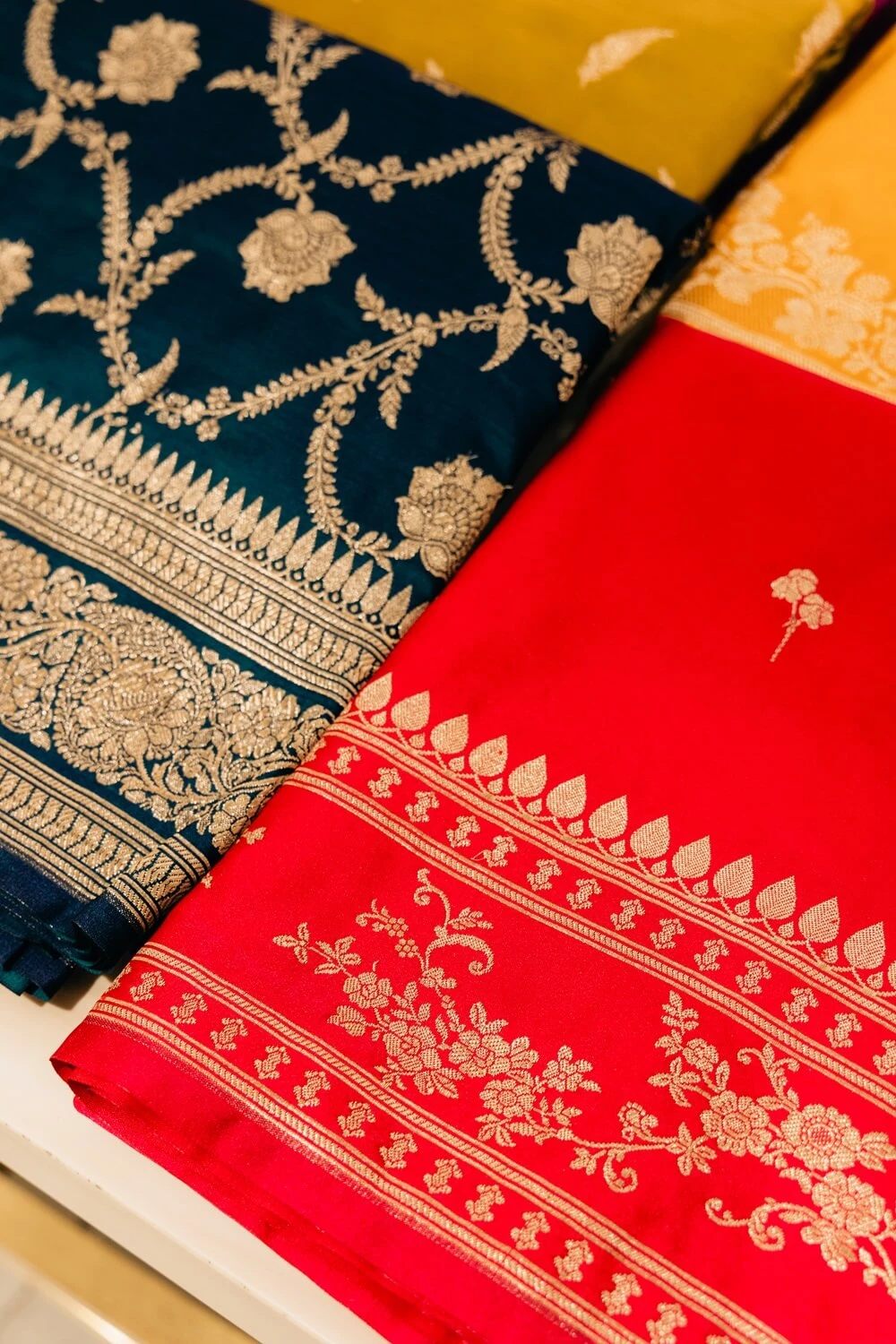
Different wedding events demand distinct approaches. A bridal banarasi saree for the main ceremony traditionally features heavy zari work and deep, auspicious colors—reds, maroons, and golds. Secondary functions might employ lighter banarasi silk saree for wedding variations in pastels or contemporary hues, balancing tradition with personal expression.
Step 2: Assess Weaving Technique
Understanding construction informs quality evaluation. Kadwa technique—where each motif is individually woven with discontinuous threads—produces the finest bridal banarasi saree with cleaner reverse sides and superior drape. This meticulous method distinguishes premium banarasi silk saree for wedding purchases from mass-produced alternatives where continuous threads create inferior finish.
Step 3: Verify Material Authenticity
Genuine bridal banarasi saree employs pure silk and authentic zari. The burn test (pure silk smells like burnt hair and produces brittle ash) validates silk content, while rubbing zari against rough surfaces reveals genuine metal core versus synthetic coating. This verification protects significant investment in banarasi silk saree for wedding ceremonies.
Step 4: Evaluate Zari Composition
Traditional bridal banarasi saree utilizes pure zari—silver threads electroplated with gold. Contemporary alternatives employ tested zari (lower silver content) or imitation metallic threads. While pure zari commands premium pricing, its non-tarnishing properties and heirloom potential justify investment for primary banarasi silk saree for wedding ceremonies.
Step 5: Consider Body Type and Draping
Heavier bridal banarasi saree suits taller frames, while petite brides benefit from lighter tissue or georgette bases. The substantial weight of traditional banarasi silk saree for wedding ceremonies—often 800-1200 grams—requires physical comfort assessment, especially for day-long ceremonies. Pre-draping consultation ensures confident, comfortable wear.
Step 6: Examine Border and Pallu Intricacy
The border width and pallu design define bridal banarasi saree's visual impact. Borders ranging 4-12 inches and pallus featuring elaborate figurative or floral work create statement pieces photographing magnificently. For banarasi silk saree for wedding use, pallu intricacy often justifies significant price differential.
Step 7: Color Selection Beyond Tradition
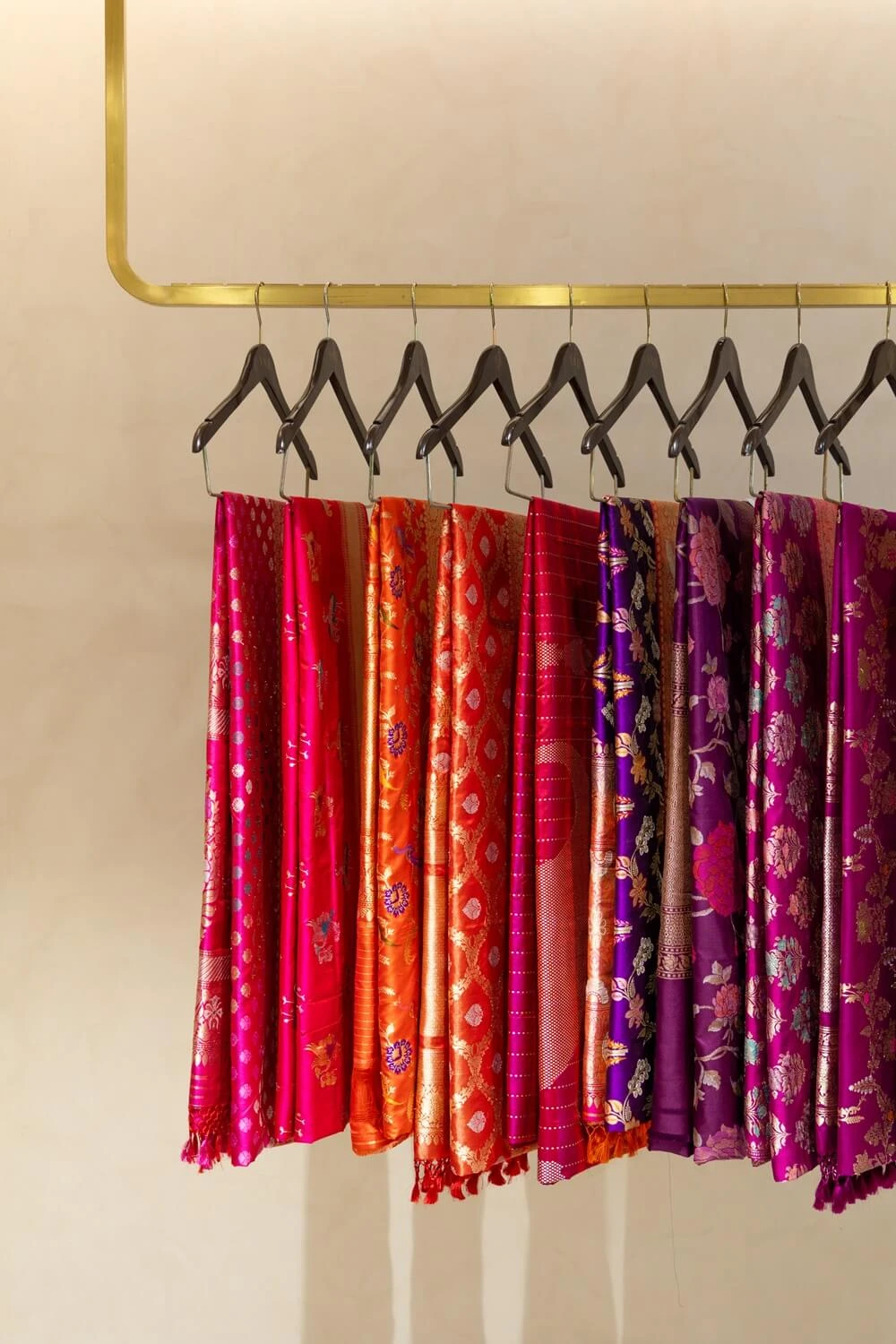
While red remains traditional, modern brides increasingly explore burgundy, wine, royal blue, or even pastels for their bridal banarasi saree. This personalization maintains cultural connection through craft while expressing individual aesthetic. Secondary banarasi silk saree for wedding functions offer particular freedom for color experimentation.
Step 8: Budget Allocation and Value Assessment
Quality bridal banarasi saree represents substantial investment—₹50,000 to ₹5,00,000+ depending on craftsmanship and materials. Allocating appropriate budget for primary ceremony banarasi silk saree for wedding while considering more accessible options for secondary events ensures appropriate resource distribution across trousseau requirements.
Step 9: Source Verification
Purchasing bridal banarasi saree from certified Varanasi weavers or reputable retailers ensures authenticity and geographical indication compliance. This sourcing diligence for banarasi silk saree for wedding purposes protects against counterfeit products while supporting traditional craft communities.
Selecting the perfect bridal banarasi saree combines objective quality assessment with personal aesthetic preferences—a process demanding both emotional connection and informed evaluation to ensure this significant investment delivers lasting satisfaction and multi-generational value.