Becoming a Project Management Professional (PMP) is a transformative career move that validates your ability to lead projects in any industry. In 2026, the certification heavily emphasizes Agile, Hybrid, and Predictive methodologies, reflecting modern project environments.
Here is your comprehensive, step-by-step guide to navigating the PMP training and certification process.
Phase 1: Verify Your Eligibility
Before investing in training, ensure you meet the Project Management Institute (PMI) requirements. Your path depends on your educational background:
CategoryEducationPM ExperienceTraining RequiredOption A4-Year University Degree36 Months (3 Years)35 Contact HoursOption BHigh School / Assoc. Degree60 Months (5 Years)35 Contact HoursOption CGAC Accredited Degree24 Months (2 Years)35 Contact Hours
Note: If you hold a CAPM certification, the 35-hour training requirement is waived.
Phase 2: Complete Your 35-Hour Training
You must complete 35 "contact hours" of formal project management education. This is the core of your "PMP Training."
- Choose a Provider: Look for PMI Authorized Training Partners (ATPs). They use official PMI-developed content, ensuring you learn exactly what is on the exam.
- Format Options:
- Live Virtual Bootcamps: Best for fast-paced learning and interaction.
- On-Demand Courses: Best for self-paced learners (popular on platforms like Udemy or Coursera).
- In-Person Classrooms: Best for networking and structured focus.
- Key Focus Areas: Ensure the training covers the three 2026 exam domains: People (42%), Process (50%), and Business Environment (8%).
Phase 3: The Application Process
Once you have your 35 hours and experience documented, it’s time to apply.
- Create a PMI Account: Register at PMI.org.
- Submit the Application: You will need to detail your project experience (role, responsibilities, and deliverables) and training.
- The Audit (Potential): About 5-10% of applications are randomly selected for an audit. If selected, you’ll need to provide copies of your degree and training certificates.
- Pay the Fee: * PMI Member: ~$405 USD (Membership costs $139/year but pays for itself via the exam discount).
- Non-Member: ~$555 USD.
Phase 4: Exam Preparation & Strategy
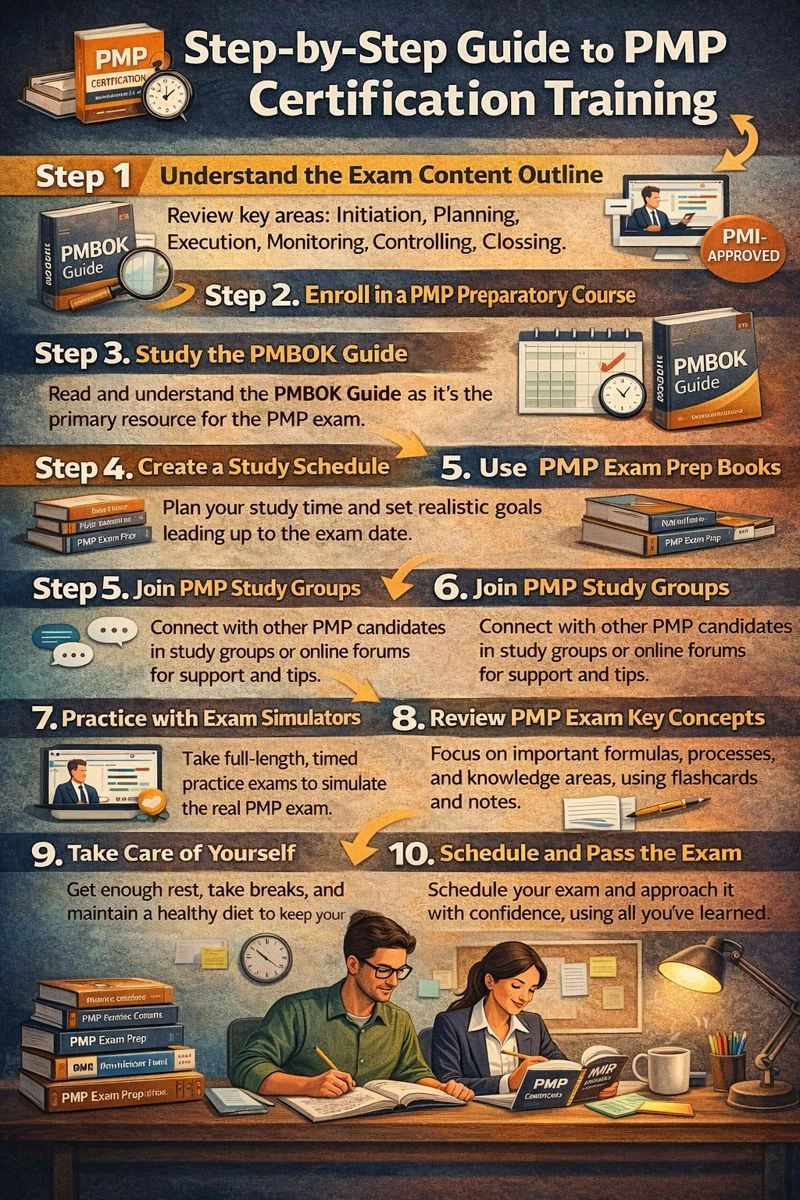
Training alone isn't enough; you need a dedicated study plan (usually 2-4 months).
- Master the Resources: Study the PMBOK® Guide (7th Edition) and the Agile Practice Guide.
- Use Simulators: Tools like PMI Study Hall or PM PrepCast are vital. Aim for scores of 75-80% on full-length mock exams before scheduling your test.
- Understand the Format: The exam consists of 180 questions to be completed in 230 minutes, with two 10-minute breaks.
Phase 5: Pass the Exam & Maintain
After passing, you are officially a PMP! However, the journey doesn't end there.
- CCR Program: You must earn 60 Professional Development Units (PDUs) every three years to maintain your certification.
- Ways to Earn PDUs: Attending webinars, volunteering, reading PM books, or simply working as a practitioner.