Strong buildings shape safe work and steady growth across many industries today. Many builders now choose steel because it stands firm and lasts long. A steel structure contractor plans and builds frames that hold factories, warehouses, and plants with precision. These experts guide each step with clear plans and steady hands on busy sites. They also help teams avoid waste and delays during complex construction phases. As a result, work moves with ease and speed from start to finish.
This blog explores how steel frames support large sites, how builders use them, and why many teams trust them for strong results in modern construction.
Understanding Steel Structures in Modern Construction
Steel frames form the bones of many large buildings used across industries today. These frames use beams, columns, and joints that fit like a puzzle with accuracy. Each piece locks in place and builds a strong shape that holds heavy loads well. Builders favour steel because it resists heat, wind, and wear over long periods. It also bends less than wood and cracks less than concrete under stress. As a result, buildings stay safe for years without frequent repair needs.
Steel also allows wide spaces inside buildings without many support columns. This helps machines, trucks, and workers move with ease across the floor. Therefore, many industries choose steel for large work areas that need flexibility.
Role Of A Steel Structure Contractor
A steel structure contractor plans, designs, and builds steel frames for many large structures. These experts read drawings and shape each beam with care using tools. They guide teams on-site and keep work on track every day.
They also check safety rules and ensure each joint fits well and stays secure. Because of this, the building stands firm and steady under heavy use.
Moreover, they solve problems that arise during work without delay or confusion. They adjust plans and guide teams with clear steps during changes. This keeps the project smooth and steady from start to finish.
Key Duties of Contractors
- Plan steel frame layouts with clear design steps for strong structure balance.
- Check material quality to ensure the strength and long life of structures.
- Guide workers on-site to follow safe and correct building methods.
- Ensure safety rules to protect workers and maintain a smooth workflow.
- Solve design issues quickly to avoid delays and maintain project progress.
Each duty plays a key role in building strong structures that last longer.
Why Steel Works Well for Industrial Buildings
Steel suits large work sites where strength and space both matter greatly. It holds heavy loads and spans wide areas without extra support columns. This makes it ideal for factories and storage units with large operations. Steel also speeds up work because parts arrive ready for quick assembly. Builders shape parts in factories and bring them ready to fit on site. Then, teams join parts on-site with less delay and better efficiency.
In the middle of many industrial building projects, steel saves time and effort for teams. It allows teams to focus on other tasks while frames rise fast and safely.
Benefits Of Steel Frames
Strong and long-lasting material that supports heavy loads with ease
Quick to build, which helps projects finish faster and reduces delays.
Easy to expand when future growth requires more space or a design change.
Fire-resistant materials, which improve safety in busy industrial working conditions
Recyclable material that supports sustainable building practices and reduces waste
These benefits help builders create safe and useful spaces for many industries.
Steps in Steel Structure Construction
Building with steel follows clear steps that guide each stage of work. Each step builds on the last one to form a complete, strong structure.
Planning And Design
Teams draw clear plans and measure each part with accuracy and proper checks. They decide sizes, shapes, and load limits for strong and safe buildings.
Fabrication
Workers shape steel in factories using machines that cut and weld parts precisely. They cut, weld, and prepare each part for easy assembly on site.
Transportation
Trucks carry parts to the site with care to avoid damage or bending. Teams handle each piece with care during the loading and unloading processes.
Assembly
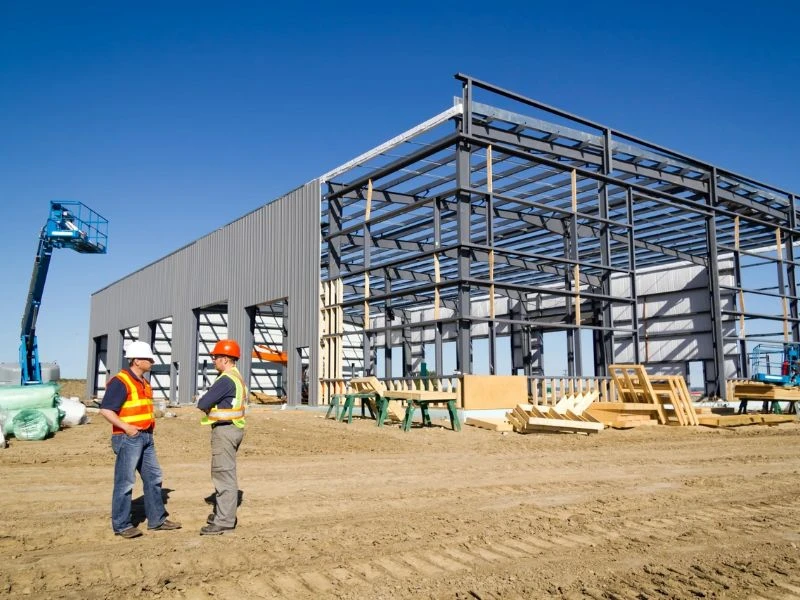
Workers lift and join parts using cranes and secure tools on site carefully. They secure each joint to form the frame that holds the structure.
Inspection
Experts check each section to ensure proper fit and strong connections. They ensure strength and safety before the building moves to the next phase.
These steps ensure the building stands firm and safe for long use.
Safety in Steel Construction
Safety remains a key focus in all industrial building projects involving steel structures. Workers wear gear such as helmets and gloves during work on-site. They also use harnesses when they work at height to prevent accidents.
Contractors train teams to follow rules and maintain safe working conditions always. They check tools and machines before use to ensure safe operations. This reduces risk and keeps work steady throughout the project timeline.
Clear signs and barriers also guide workers across the site safely. These steps protect both workers and the structure during each stage.
Challenges in Steel Construction
Steelwork brings some challenges that require planning and skilled teams. Builders must handle heavy parts with care to avoid damage or risk. They also need skilled workers for welding and fitting each joint correctly. The weather can affect work on site during lifting and assembly operations. Rain and wind slow down lifting tasks and create safety concerns. Therefore, teams plan work around weather changes to reduce delays and risk.
Cost control also needs focus during the planning and execution of projects. Teams must manage material use and avoid waste to stay within limits.
Ways To Overcome Challenges
- Use skilled workers who understand steel work and follow proper building methods.
- Plan work in stages to manage time and reduce risk during construction.
- Check weather reports to avoid delays and ensure safe working conditions.
- Maintain tools well to prevent breakdowns and ensure smooth workflow.
- Follow clear designs to avoid errors and improve construction accuracy.
These steps help teams handle issues with ease and maintain steady progress.
Choosing The Right Contractor
Choosing the right expert ensures success in steel construction projects. A skilled steel structure contractor brings knowledge and clear planning for strong results. Look for experience, safety focus, and strong teamwork when selecting contractors. These traits help complete projects with ease and reduce risks.
Good contractors also communicate well with teams and project managers clearly. They keep teams informed and solve problems quickly during work.
Conclusion
Steel frames shape modern industry with strength and speed across many sectors. They support large spaces and handle heavy loads with ease and reliability. Builders trust steel because it lasts long and adapts well to change. A skilled steel structure contractor guides each stage with care and skill. This ensures safe and steady results in complex building projects. As industries grow, steel structures will continue to support progress worldwide. They will shape strong buildings that meet future needs and demands. With clear planning and strong materials, steel construction will remain a key part of modern building work for years ahead.
FAQs
What Does A Steel Structure Contractor Do?
A contractor plans, builds, and checks steel frames for large buildings.
Why Is Steel Used In Industrial Buildings?
Steel provides strength, speed, and wide open spaces for work.
Are Steel Structures Safe?
Yes, they resist fire, wind, and heavy loads when built properly.
Can Steel Buildings Last Long?
Yes, steel buildings last many years with proper care and maintenance.