Spend some time in a fabrication yard, and you may hear different opinions on blasting methods. One supervisor still prefers the old sand method. Another won’t touch anything but metallic media. Both want clean, ready-to-coat surfaces, yet they land on very different answers. Although both methods prepare surfaces for coating, Steel Blasting and sandblasting work differently once the blasting process begins. At Orient Industries, we often get questions about how these two blasting methods differ, so it is worth looking at what sets them apart.
How Steel Blasting Works?
Think about the last time you scrubbed a burnt pan. A soft sponge does nothing. Steel wool, though, finally lifts the crust. That’s roughly the logic here. Steel Blasting throws hardened metallic particles at a surface with serious force, and each particle strikes, cleans, and leaves a controlled profile behind.
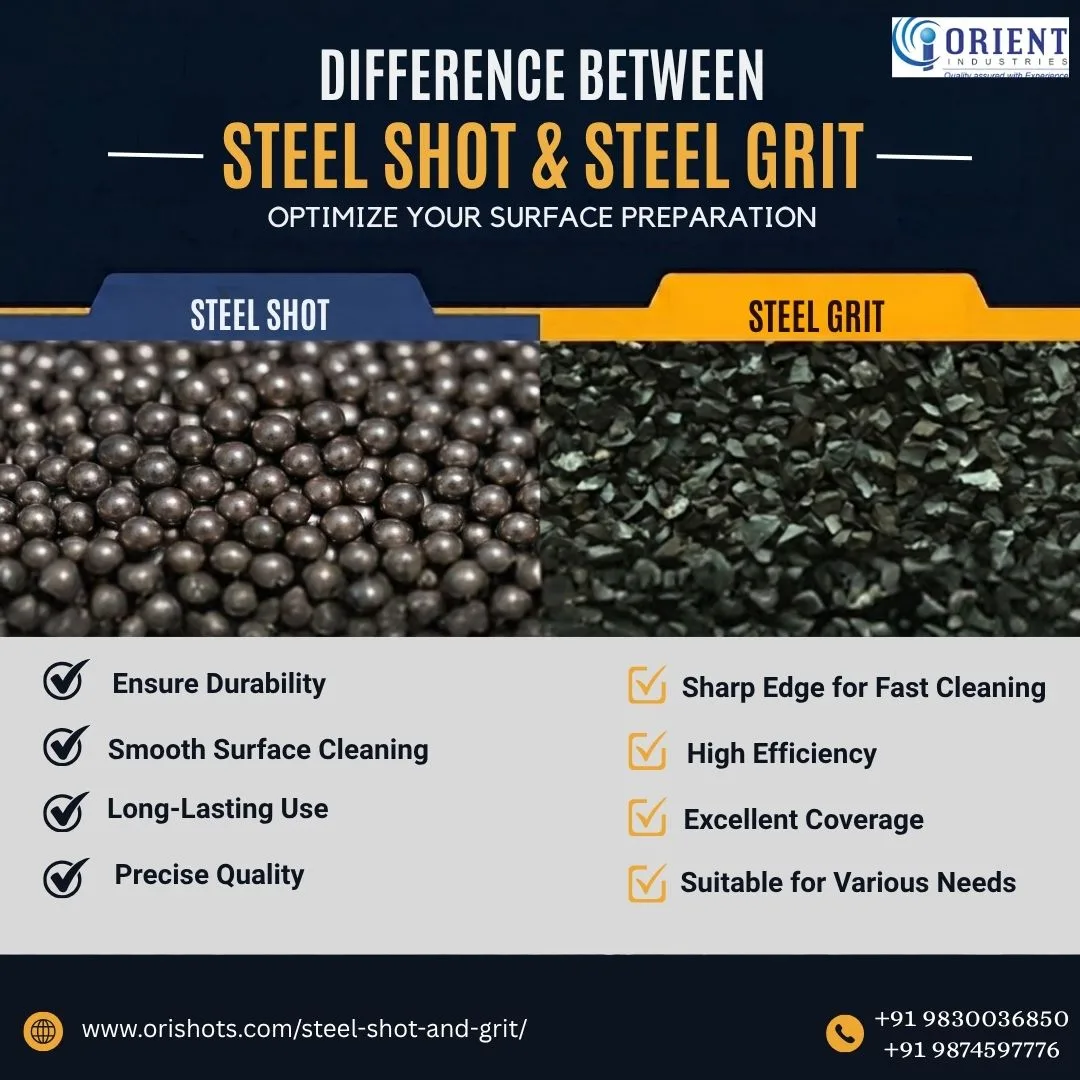
The media is usually available as steel shot and grit. Round particles are used for peening and cleaning, while angular ones cut into the surface to remove scale and create a profile that helps paint or coating adhere. Many plants run a blend to get both results in the same cycle.
Wheel-based machines and air-fed cabinets rely on this media, which is why you’ll find it in foundries, shipyards, rail workshops and structural fabrication alike. The same material that cleans a casting can also prepare a bridge girder for primer.
The real advantage is reuse. Metallic media can be collected, cleaned, and sent through the machine again, which cuts down on waste and repeated media purchases. Orient Industries supplies media suited for repeated use, helping plants reduce frequent refills and keep production moving.
Where Sandblasting Has Limitations?
Sandblasting has a long history, and nobody’s pretending otherwise. It’s cheap upfront, easy to find, and simple enough for a small crew to pick up. For some light-duty cleaning jobs, it may still be suitable, depending on the abrasive used and the required finish. Not every job demands heavy media, and an honest comparison has to say so.
The problem becomes more noticeable on demanding jobs. Sand breaks up on impact, and this limits the amount of sand that can be reused. It can also produce fine dust. Silica-containing sand can pose a serious health risk because of the fine dust it releases. Rules on silica sandblasting vary by location, and the cleanup and disposal can add to the overall cost.
Sand also lacks the weight to handle thick mill scale or stubborn old coatings. Compared with steel shot and grit, silica sand may be less suitable for removing stubborn mill scale or thick coatings in demanding industrial applications. The right choice depends on the surface condition, abrasive specifications, and required finish.
Steel Blasting vs. Sandblasting: Key Differences
Lay them next to each other, and the gaps show up fast. Operators who have run both usually bring up the same points:
● Media that bounces back. Metal particles go through the machine again and again, while sand shatters and heads for the waste bin.
● A finish you can predict. Steel gives an even, repeatable profile. Sand tends to vary from batch to batch.
● Cleaner air on the floor. Less fine dust to deal with, and no silica worry hanging over the crew.
● Fewer passes. Heavier particles lift scale faster, so the job wraps up sooner.
● Cost that makes sense later. Sand looks cheap on the invoice, but steel pays back across months of steady use.
During blasting, operators may need suitable respiratory protection, depending on the abrasive, exposure levels, and site controls. Using metallic media with a reclaim system can reduce media waste and improve process efficiency.
Sand may cost less to buy, but disposal, replacement media, and extra time on the job can push up the overall cost. Customers at Orient Industries often tell us the same thing, which is why Steel Blasting makes more sense for shops handling a steady volume of work.
Choosing the Right Blasting Media With Orient
Choosing the right blasting media depends on the job. Hardness, particle size, and shape all affect how the surface is cleaned and the profile it receives. A mismatch can overwork the machine or leave a surface that coating just won’t grip.
When people reach out to Orient Industries, the conversation usually starts with the part itself, not the product. What metal is it? What’s on it now? What finish is needed afterward? From there, the right size and hardness fall into place. A few questions are worth settling before any order:
● What material and thickness is being treated?
● Is the aim to remove surface deposits, peen the metal, or prepare it for coating?
● Which machine, wheel, or air type will run the media?
● How much volume moves through the line each week?
● Is dust control or reclaim a priority on your site?
Orient Industries supports foundries, fabricators, and automotive suppliers in selecting suitable media for their requirements. As production needs change, the media mix may also need adjustment to maintain consistent results. Good abrasives aren’t about the cheapest option. They’re about consistent results, batch after batch. With the right media, Steel Blasting becomes a more predictable part of the finishing process.
Conclusion
For occasional jobs, sandblasting may still be suitable. But when consistent results matter, Steel Blasting has clear advantages. The media can be reused, the surface profile is easier to control, and a well-maintained reclaim system can reduce waste and help keep the work moving. Sandblasting simply can’t match that consistency once volumes grow or coating standards tighten.
The right abrasives depend on the parts being treated, the machine being used, and the finish needed, not just the price. With dependable media and practical guidance, Orient Industries helps plants move from trial and error to steady, predictable results.
If you’re reviewing your current process, compare the full cost, not just the price per bag, and let Steel Blasting prove itself on your next batch.