
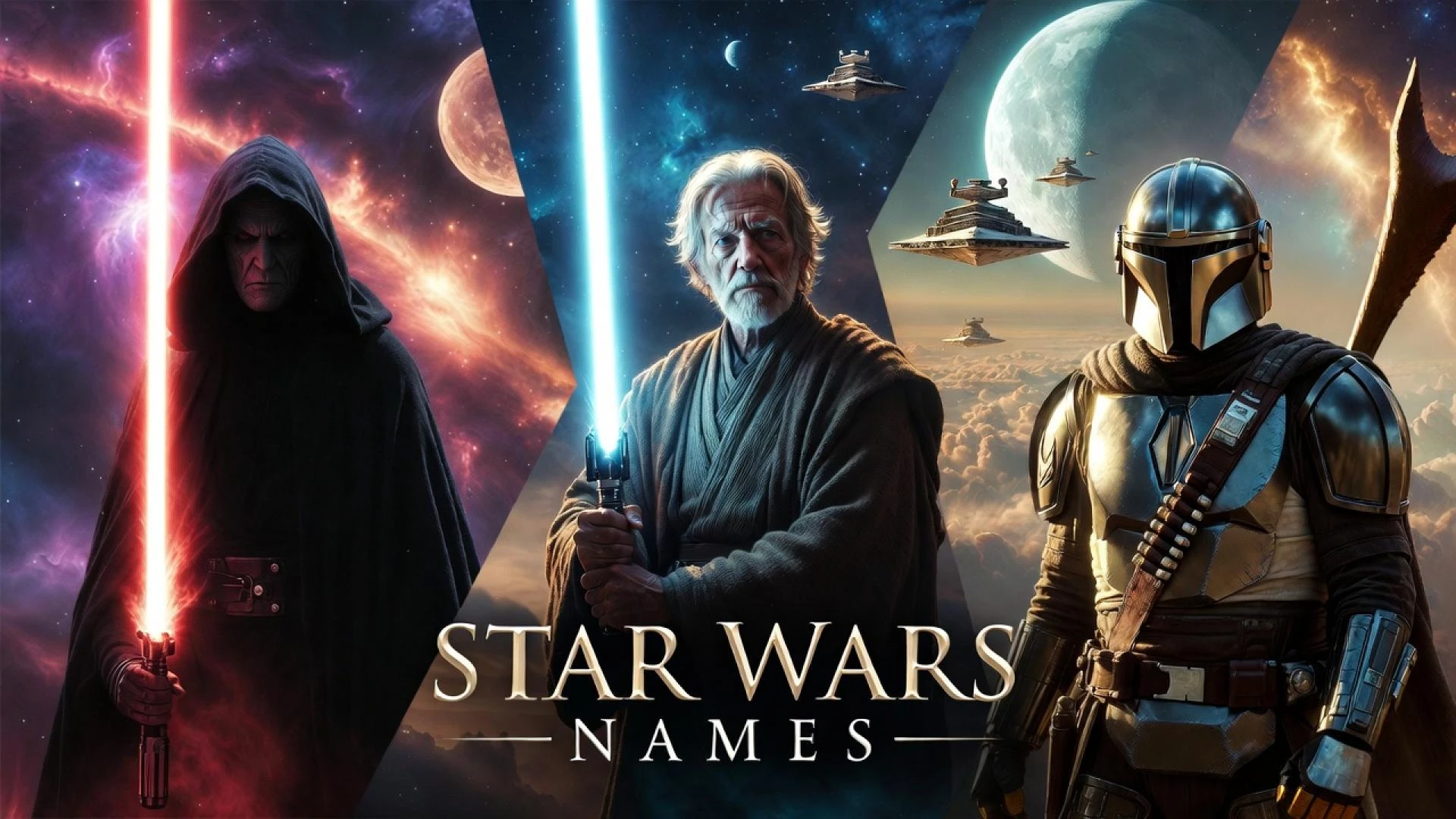
Few fictional universes have produced as many memorable names as Star Wars. From the haunting syllables of "Darth Vader" to the playful bounce of "BB-8," names in the Star Wars galaxy do far more than identify characters — they communicate culture, allegiance, and destiny. Whether you're writing fan fiction, building a character for a tabletop game, or crafting the perfect online alias, understanding how Star Wars names work opens up a universe of creative possibility.
For fans who want to explore that universe further, a dedicated Star Wars name generator can help you craft authentic-sounding names rooted in the lore of the films, shows, and expanded universe.
Understanding Star Wars Naming Traditions
George Lucas didn't pull names out of thin air. From the very beginning, Star Wars names were crafted with intention — drawing on real-world linguistics, mythology, and cultural archetypes to create a sense of deep history.
Several patterns emerge across the saga:
- Euphonic alienness: Names like Obi-Wan Kenobi and Qui-Gon Jinn sound exotic yet remain easy to pronounce — a deliberate design choice to feel otherworldly without being inaccessible.
- Linguistic roots: Many names borrow from real languages. "Vader" echoes the Dutch word for "father." "Leia" is a variation of a Hebrew name meaning "weary." These roots give names subtle meaning without being on-the-nose.
- Faction identity: Names signal cultural belonging. A name immediately telegraphs whether a character is a Jedi, a Sith, a Mandalorian, or something else entirely.
- Symbolism: Names often foreshadow character arcs. Anakin Skywalker — a man destined to fall from the light — literally walks beneath the sky before crashing down.
For a deeper dive into these patterns, the complete Star Wars naming guide breaks down the linguistic and cultural principles that make Star Wars character names feel authentic and resonant.
Sith Names and the Dark Side
Perhaps no naming tradition in Star Wars is more recognizable — or more theatrical — than the Sith naming system. Sith Lords abandon their birth names upon falling to the dark side, replacing them with a title and a new identity: the "Darth" name.
The word "Darth" likely functions as a corruption of "dark" and "death," though its in-universe etymology is deliberately murky. What matters is what it signals: transformation, power, and the severing of one's former self. Darth Sidious. Darth Maul. Darth Revan. Each name is chosen to evoke fear and dominance — short, hard consonants that hit like a blade.
Beyond the "Darth" prefix, Sith names follow their own internal logic:
- They tend to be monosyllabic or bisyllabic — punchy and memorable
- They evoke dark imagery: Plagueis (plague), Nihilus (nihilism), Tyranus (tyrant)
- They reflect the persona the Sith wants to project, not who they were
This naming philosophy is central to the Rule of Two — each Sith name is a statement of intent, a declaration of what they intend to become. The ultimate Sith names guide explores this tradition in full, covering both canon and Legends characters.
Jedi Names and the Philosophy of the Force
Where Sith names are designed to intimidate, Jedi names tend toward the flowing, the balanced, and the harmonious. Look at the Jedi Masters of the prequel era: Mace Windu, Ki-Adi-Mundi, Aayla Secura, Plo Koon. These names have a meditative quality — consonants and vowels arranged to feel calm and grounded.
This is no accident. Jedi naming often reflects the philosophy of the Force itself:
- Balance: Many Jedi names contain repeated sounds or syllables, suggesting harmony
- Serenity: Soft consonants (m, l, n) dominate, creating names that feel peaceful
- Wisdom without rigidity: Names are distinctive but never aggressive
Jedi younglings come from many species and homeworlds, which is why Jedi names span a broad linguistic range — from the human-sounding Anakin Skywalker to the clearly alien Kit Fisto. What unifies them is a sense of calm purpose. For those building Jedi characters in games or fan fiction, the best Jedi names guide offers extensive inspiration grounded in canon naming conventions.
Mandalorian Names and Clan Culture
Mandalorian culture is defined by one thing above all else: the Clan. The Mando'a language — a constructed language developed for the expanded universe — gives Mandalorian names their distinctive rhythm. Names like Boba Fett, Sabine Wren, Bo-Katan Kryze, and Din Djarin (the Mandalorian) all carry a warrior's directness.
Key features of Mandalorian naming:
- Clan names function like surnames, carrying enormous weight and honor. To be stripped of your clan name is a profound punishment.
- Names are earned: Mandalorians may acquire honorifics or nicknames through combat and deeds
- Mando'a roots: Many names draw from the constructed Mandalorian language, giving them a consistent phonetic identity
- Gender neutrality: Mandalorian names often work across gender lines, reflecting an egalitarian warrior culture
The clan system means that a Mandalorian's full name tells a story: who they are, where they come from, and what they've done. The Mandalorian names and clans guide explores both the naming conventions and the cultural context behind them.
Bounty Hunter Names in the Galaxy
Bounty hunters occupy a unique space in Star Wars naming. Unlike Jedi or Sith, they don't follow a formal tradition — yet their names are often the most deliberately crafted of all. A bounty hunter's name is a brand.
Consider the roll call: Boba Fett. Bossk. IG-88. Cad Bane. Aurra Sing. These names are built to be remembered and feared. The pattern:
- Short and percussive: Easy to say, impossible to forget
- Often monosyllabic or sharply bisyllabic: Fett, Bane, Bossk
- Sometimes dehumanizing: Droid bounty hunters like IG-88 lean into their machine nature
- Reputation-driven: The name becomes inseparable from the legend
In a galaxy where information travels fast and reputations precede people, a bounty hunter's name is their most valuable asset. The bounty hunter names ideas guide is a great resource for anyone crafting morally complex characters who live outside the law.
Clone Trooper Naming: From Numbers to Nicknames
Clone troopers present one of the most fascinating naming arcs in Star Wars. Created in the cloning facilities of Kamino, they were initially designated by alphanumeric codes — CT-7567, CC-2224, CT-5555. Clinical, impersonal, and by design.
But clones are people. And people name themselves.
Over the course of the Clone Wars, troopers began adopting nicknames that reflected their personalities, their skills, or memorable moments in battle:
- CT-7567 became Rex — a name that projects leadership and confidence
- CC-2224 became Cody — approachable, reliable
- CT-5555 became Fives — a reference to his own designation, reclaimed with pride
This evolution from designation to nickname is one of the most quietly powerful storytelling devices in Star Wars. It's a story about individuality asserting itself against a system designed to erase it. The clone trooper names guide covers the full spectrum of clone naming conventions, from official designations to beloved nicknames.
Female Names in the Star Wars Universe
The Star Wars universe has given us some of science fiction's most iconic female characters — and their names are as powerful as their roles. Leia Organa. Padmé Amidala. Ahsoka Tano. Rey. Hera Syndulla. Fennec Shand.
What unites these names?
- Strength without hardness: Female names in Star Wars often balance strong consonants with flowing vowels
- Cultural specificity: Padmé's name reflects Naboo's South Asian-influenced culture; Hera's name nods to Greek mythology and leadership
- Memorability: These names are designed to stick — brief enough to say quickly, distinctive enough to be unforgettable
Female characters in Star Wars have consistently been leaders, warriors, diplomats, and rebels. Their names reflect that — they carry authority without needing to borrow from masculine naming conventions. For character creators and writers, the Star Wars female names guide offers a comprehensive look at how these names work and how to craft new ones in the same tradition.
SWTOR Names and the Influence of Gaming Culture
Star Wars: The Old Republic (SWTOR) expanded the Star Wars naming universe in significant ways. Set thousands of years before the films, the game introduced entirely new factions, species, and cultures — each with their own naming conventions.
SWTOR also created a community of millions of players, each crafting their own characters and names. This had a genuine influence on fan naming culture:
- Players developed naming conventions for Sith Warriors vs. Sith Inquisitors
- Species like the Zabrak, Twi'lek, and Chiss developed richer naming traditions in-game
- The Old Republic era names feel slightly more archaic — fitting for a galaxy thousands of years in the past
The roleplaying community around SWTOR is one of the most creative in gaming, with players carefully constructing names that fit both the era and the character class. The SWTOR name generator guide is an essential resource for anyone building characters in that era of Star Wars lore.
Creating Star Wars Usernames
Beyond characters in games and stories, Star Wars inspires one of the most popular categories of online identity: the Star Wars username. Across gaming platforms, social media, and forums, millions of fans have crafted usernames rooted in the galaxy far, far away.
The most effective Star Wars usernames share a few qualities:
- They reference specific lore: "DarthNihilus99" signals knowledge beyond the films
- They use phonetic patterns from the universe: Even invented names can feel like Star Wars
- They blend personal identity with faction identity: A username that says something about you while anchoring you in the universe
- They're unique but recognizable: Distinctive enough to stand out, Star Wars enough to be immediately placed
The Star Wars username generator guide walks through the process of building usernames that feel authentic to the lore while expressing individual personality.
Conclusion: Why Names Matter in a Galaxy Far, Far Away
Names in Star Wars are never arbitrary. From the mechanical menace of Darth Vader to the humble heroism of Luke Skywalker, every name carries weight — cultural, linguistic, and narrative. The richness of Star Wars naming traditions is part of what makes the universe feel alive, populated by real peoples with real histories.
Whether you're building a Jedi character for a tabletop RPG, crafting a Sith antagonist for your fan fiction, creating a Mandalorian warrior for SWTOR, or simply looking for the perfect username — understanding how Star Wars names work gives you the tools to create something that genuinely belongs in the galaxy.
The Force may be mysterious, but the art of naming? That's something any fan can master.