Every superyacht carries some form of boarding equipment, and the material choice comes up during almost every refit conversation. Carbon fibre is the new alternative that yards and captains must hold up and compare to it, in their choice; the variables include, weight, durability, appearance, as well as the environment the kit is to be installed.
Where a stainless step ladder still makes sense on a modern yacht
A stainless step ladder delivers proven performance for applications that have changed little over the years. Structural strength meets marine ratings without special engineering, and the material handles impact loads that flexible constructions struggle with. Repair is straightforward on any yard floor — a welder with marine-grade rod restores geometry after a heavy contact.
The visible finish carries a specific aesthetic that suits certain vessels. A polished stainless step ladder matches the classic yacht style where exposed metalwork is part of the design language. On a traditional motor yacht or a heritage sailing vessel, that finish looks correct in a way that composite construction never quite matches.
Cost sits favourably on smaller units. For a two-step tender ladder or a simple engine room access step, stainless remains competitive on price when the weight penalty doesn't matter much and the crew handles the unit rarely. Volume production of standard sizes keeps the unit cost down and the availability up.
The downsides show up on larger units and daily-use equipment. Weight grows steeply with size, and a full boarding ladder in stainless demands two crew for deployment on any vessel above 20 metres. Corrosion appears at welds after years of exposure, requiring polishing cycles that eat crew time.
Side boarding ladder built from carbon fibre — the alternative that changed the market
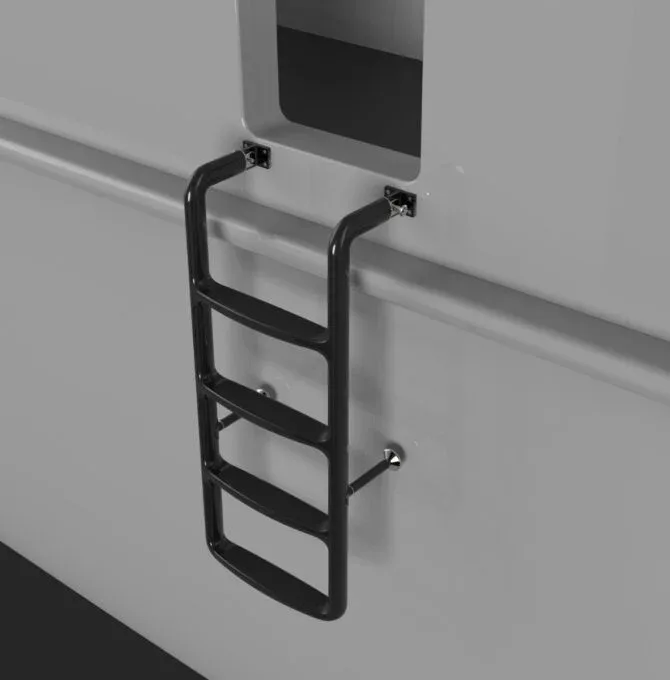
A side boarding ladder in carbon fibre solves the weight problem before crew handling even begins. A carbon structure of the same strength rating weighs a fraction of a stainless equivalent, and one crew member handles deployment on units that previously required two. That reduction removes a persistent point of daily friction from the crew workflow across a full charter season.
Single-piece construction changes the aesthetic profile. A side boarding ladder built as one carbon body — rather than welded from tubes and brackets — removes the visual clutter that dates a vessel quickly. The result is refined, light, safe, and easy to store, matching the clean lines that modern superyacht design pursues.
Salt water tolerance sits high in the material's favour. Carbon fibre with a proper resin system doesn't corrode, and the surface finish stays consistent across seasons rather than requiring the polishing cycle that stainless demands to keep its appearance. That reduction in maintenance time compounds across the working life of the equipment.
Rung profile matters more than most owners consider. Wide, flat rungs handle a wet foot better than round tubing, and non-skid surface on each rung reduces the slip risk when guests step off wet from the sea.
Finish options span clear-coat exposed weave and painted finishes matching the vessel's colour scheme. Whichever route the owner chooses, the finish quality has to match the rest of the deck fittings — resin marks, uneven weave alignment, or a rough clear coat all undermine the aesthetic value of what should be a premium component.
Documentation on custom composite equipment follows the pattern that captains and management companies now expect. Load ratings, material certifications, and installation instructions travel with the ladder through to installation, giving surveyors and insurers the paperwork they need at inspection time.
i3 Composites builds custom boarding solutions in carbon fibre from Palma, working with captains, owners, and yacht management teams across superyacht and racing yacht programmes across the western Mediterranean market.