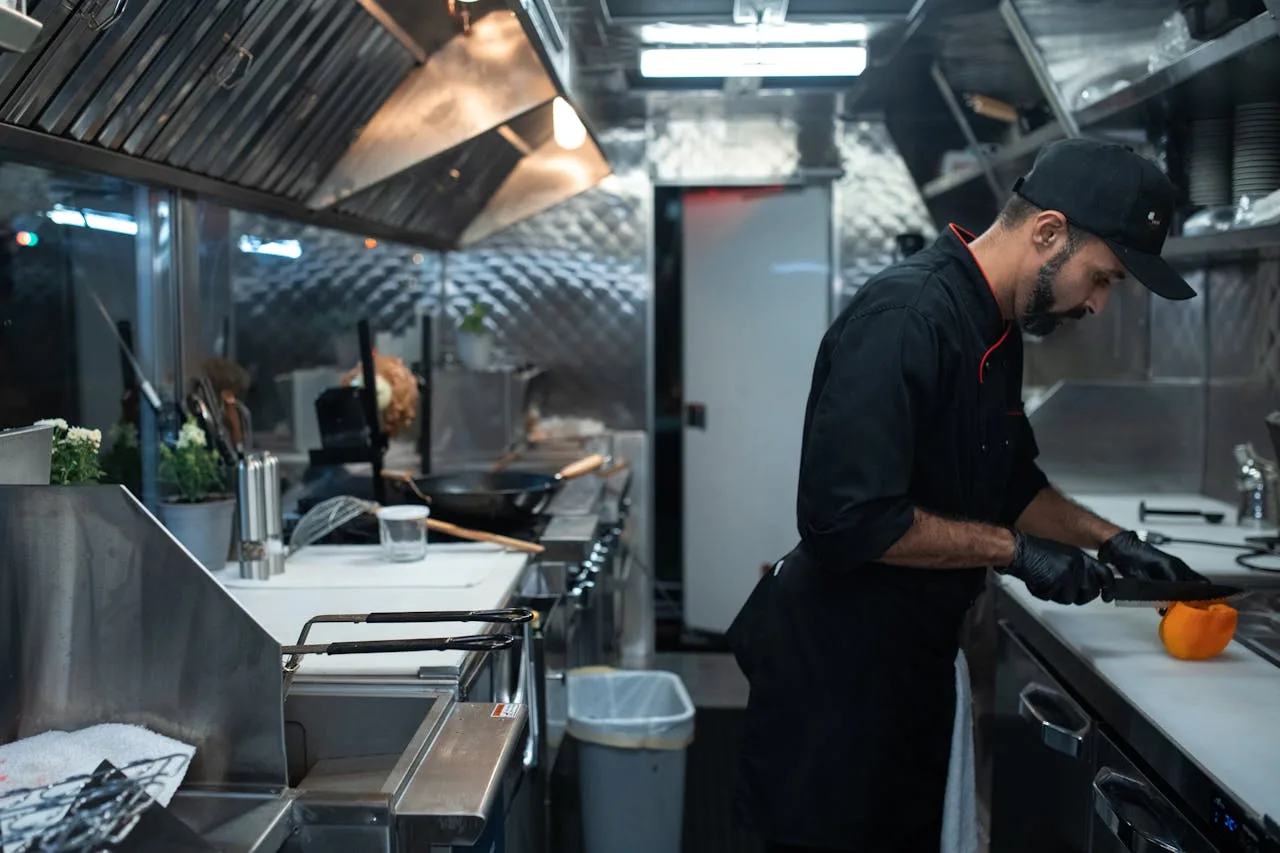
For decades, stainless steel has been the backbone of commercial kitchens, trusted for its durability, cleanliness, and ability to keep up with the pace of professional food service. But today, stainless steel is serving a much larger role in restaurants than ever before. Modern restaurant owners are taking this proven material beyond prep tables and appliances and using it to shape dining rooms, façades, bars, patios, and brand-forward architectural features.
This shift reflects a broader trend in hospitality design: materials once reserved purely for function are now celebrated as part of the guest experience. Stainless steel delivers not only the performance restaurants require, but also a refined, contemporary aesthetic that aligns with evolving expectations for restaurant spaces.
A Material Designed for High‑Demand Environments
Few materials are as well suited to restaurant operations as stainless steel. It was engineered to handle heat, moisture, impact, and constant use — and these are conditions that define commercial food service. Its non‑porous surface resists stains, odors, and bacteria, making it a natural fit for environments where cleanliness and safety are non‑negotiable.
For restaurant owners, this durability translates into fewer repairs, longer lifespans, and lower long‑term maintenance costs. Stainless steel doesn’t chip, crack, or warp, and it holds up under cleaning chemicals and high‑frequency sanitation routines. Beyond the kitchen, these same qualities make it ideal for bars, service counters, restrooms, and high‑traffic public areas.
Expanding Stainless Steel Beyond the Kitchen
While stainless steel remains essential in back‑of‑house operations, its role in front‑of‑house design has expanded significantly. Restaurant owners are increasingly incorporating stainless steel into countertops, bar tops, shelving, and service stations to create cohesive transitions between prep and presentation.
Improved fabrication techniques allow for custom edges, brushed or matte finishes, and seamless welds that feel polished rather than industrial. When balanced with warmer elements like wood, stone, or textured finishes, stainless steel brings a sense of professionalism and intentionality without making a space feel cold or sterile.
Bars in particular benefit from stainless steel surfaces that resist spills, citrus acids, heat, and frequent cleaning. The result is a workspace that looks sharp during service and stays that way long after closing time.
Enhancing Outdoor and Patio Dining Areas
Outdoor dining has become a permanent fixture for many restaurants, and stainless steel plays a crucial role in making these spaces reliable year‑round. Weather‑resistant stainless steel components are commonly used for outdoor kitchens, bars, counter surfaces, railings, and built‑in fixtures.
Unlike many materials, stainless steel doesn’t fade in direct sunlight or degrade with exposure to moisture. In coastal or high‑humidity environments, corrosion‑resistant grades ensure longevity while maintaining appearance. Investing in stainless steel for patios and terraces allows restaurant owners to expand seating capacity with confidence, knowing the materials will perform as reliably outdoors as they do inside.
Architectural Elements That Define Brand Identity
Modern restaurant design is increasingly about creating memorable spaces that reinforce brand identity, and stainless steel has become a powerful architectural tool. Beyond flat surfaces, it can be shaped, perforated, textured, and layered to create distinctive visual features that are both functional and striking.
This is where custom perforated panels have gained popularity in restaurant settings. These panels allow owners to introduce pattern, depth, and airflow control while maintaining the durability stainless steel is known for. Perforated panels can be used as decorative wall features, bar backdrops, privacy screens between seating areas, or exterior façade elements that catch light and attention.
Functionally, perforated stainless steel helps with ventilation, light diffusion, and acoustic management, which are important to consider in busy dining spaces. Visually, the customization options allow restaurants to incorporate logos, geometric patterns, or organic designs that turn architectural details into signature branding moments.
Sustainability and Long‑Term Value for Hospitality Spaces
Sustainability has become a meaningful consideration for many restaurant owners, both from an environmental and a financial perspective. Stainless steel stands out as a responsible choice because it is fully recyclable and often contains recycled content. Even after decades of use, it retains its integrity and value.
Durability also plays a role in sustainability. Materials that don’t need frequent replacement reduce waste, downtime, and renovation costs. Choosing stainless steel for fixtures, surfaces, and architectural elements allows restaurant operators to invest once and benefit for years, rather than cycling through materials that show wear quickly.
Meeting Health Standards Without Sacrificing Design
Health codes and inspection requirements are a reality of the restaurant industry, and stainless steel makes compliance easier. Its smooth, non‑absorbent surface supports consistent sanitation and reduces the risk of contamination. For owners, this means fewer concerns during inspections and greater peace of mind during daily operations.
Importantly, modern design approaches prove that compliance doesn’t require sacrificing aesthetics. Stainless steel can look refined, welcoming, and intentional when incorporated thoughtfully, supporting both operational needs and guest perception.
Conclusion
Stainless steel’s role in restaurants has evolved from purely functional to strategically essential. Today’s restaurant owners are using this material not only to meet operational demands, but also to enhance design, durability, and brand expression across their spaces. From kitchens and bars to patios, façades, and custom architectural features, stainless steel offers unmatched versatility.
By investing in materials that perform under pressure while elevating the guest experience, restaurant owners can create spaces that are efficient, visually compelling, and built to last. Stainless steel isn’t just a kitchen staple anymore; rather, it’s a design asset that supports both the business and the brand.