In today’s competitive manufacturing landscape, aluminium is increasingly replacing steel in automotive, aerospace, and industrial applications due to its lightweight properties, corrosion resistance, and strength-to-weight ratio. However, welding aluminium especially via spot welding poses unique challenges compared to traditional steel. Understanding the principles, applications, and best practices of spot weld aluminium is crucial for manufacturing engineers, OEMs, and automation integrators looking to optimize production efficiency and joint quality.
Heron Welder, a global leader in resistance welding and metal-joining solutions, offers advanced equipment and automation systems designed specifically for high-quality aluminium spot welding.
What is Spot Welding Aluminium?
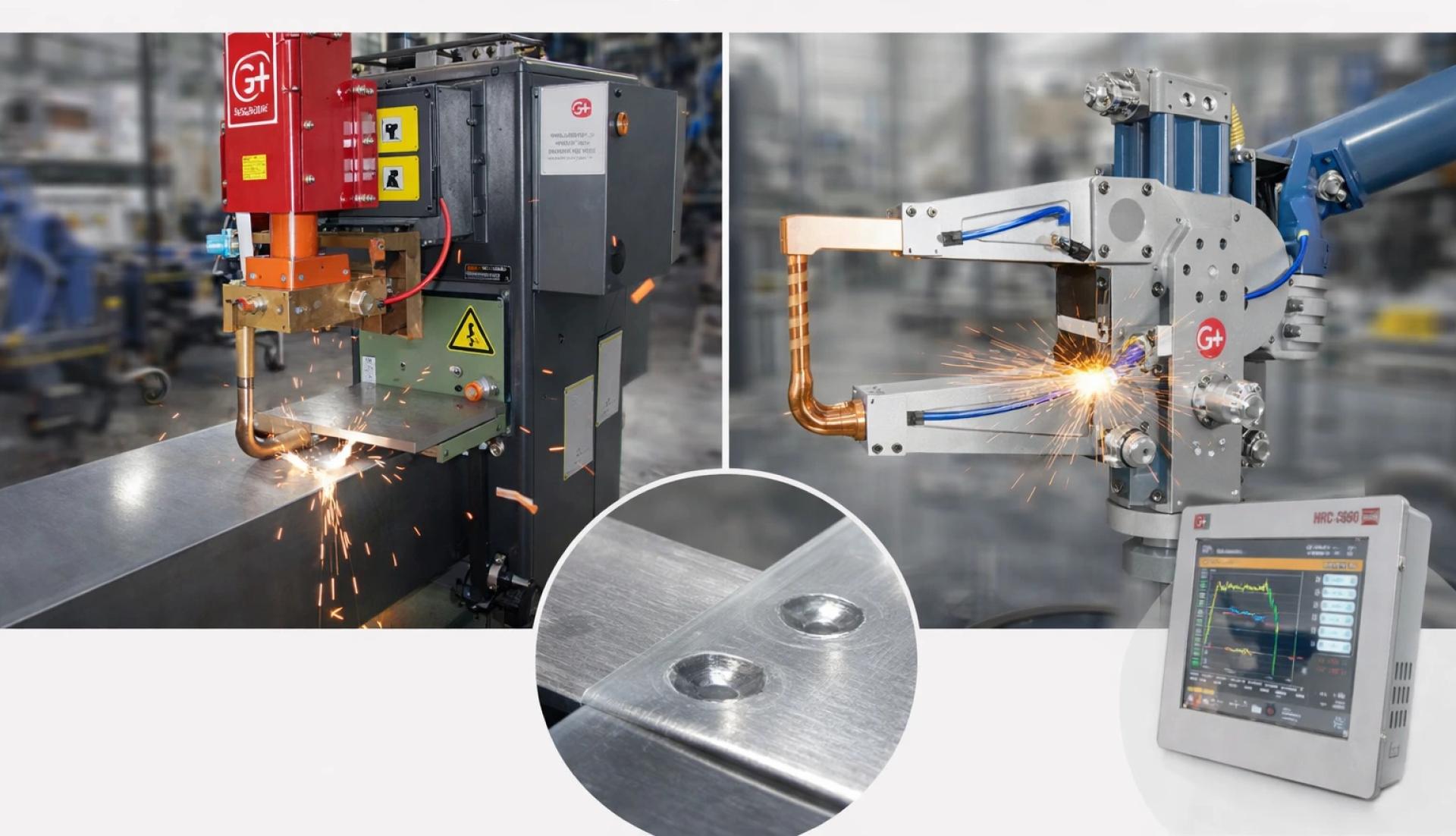
Spot welding is a resistance welding process where two overlapping metal sheets are joined by applying pressure and passing an electric current through the contact point. The heat generated melts the metal locally, forming a weld nugget as it cools.
When working with aluminium, spot welding differs from steel due to aluminium’s higher thermal conductivity and lower electrical resistivity. These properties cause rapid heat dissipation, making it challenging to form strong, consistent welds without specialized equipment and process control.
Key Challenges in Aluminium Spot Welding
Aluminium’s characteristics require careful consideration:
- High thermal conductivity: Aluminium dissipates heat quickly, often requiring higher currents or longer weld times.
- Oxide layer formation: Aluminium naturally forms a tough oxide layer that can prevent proper fusion if not addressed.
- Soft material: Excessive electrode force can cause indentation or sheet deformation, reducing joint quality.
- Electrode wear: Aluminium can adhere to electrodes, requiring advanced electrode designs and maintenance practices.
Heron’s MFDC and capacitor discharge welding machines are engineered to tackle these challenges, delivering precise, repeatable welds with minimal electrode wear.
Applications of Spot Weld Aluminium
Spot weld aluminium is widely used across multiple industries, including:
- Automotive manufacturing: Lightweight aluminium body panels, chassis components, and battery enclosures benefit from spot welding for strength and efficiency.
- Aerospace and aviation: Aluminium fuselage panels and structural components require high-quality, controlled welds.
- Consumer electronics: Thin aluminium sheets for housings and frames rely on micro spot welding for durability.
- Industrial fabrication: Machinery casings, HVAC panels, and transport equipment use aluminium spot welding for structural integrity and speed.
Heron provides fully automated welding solutions that integrate with robotic arms and conveyor systems, enabling high-volume production while maintaining strict quality standards.
Best Practices for Spot Welding Aluminium
To achieve consistent, high-quality welds, manufacturers should follow these best practices:
1. Surface Preparation
Remove contaminants and oxides using mechanical cleaning or chemical treatments. This ensures proper electrical contact and nugget formation.
2. Optimal Electrode Selection
Use electrodes with low wear rates and high thermal conductivity. Heron’s proprietary electrode designs minimize sticking and prolong operational life.
3. Precise Current Control
Aluminium requires carefully tuned current and weld time. MFDC and capacitor discharge welders provide rapid, accurate current pulses to create strong joints without overheating.
4. Controlled Force Application
Correct electrode force prevents material deformation while ensuring proper contact. Automated welding systems from Heron allow programmable force adjustments for repeatability.
5. Process Monitoring
Real-time monitoring of weld parameters helps detect inconsistencies, ensuring quality and reducing scrap. Heron’s controllers provide advanced data logging and process analysis.
Spot Welding Aluminium vs. Steel
Understanding the differences between aluminium and steel spot welding can guide equipment and process decisions:
FeatureAluminiumSteelElectrical ResistivityLowerHigherThermal ConductivityHigh (dissipates heat quickly)LowerOxide LayerForms rapidly, toughMinimalWeld CurrentHigher, shorter pulsesLower, longer pulsesElectrode WearHigherLower
Heron Welder machines are specifically configured for these aluminium-specific requirements, ensuring superior weld quality and minimal maintenance.
Why Choose Heron for Aluminium Spot Welding
Heron Welder is recognized globally for its expertise in industrial welding automation. Key advantages include:
- Advanced MFDC and capacitor discharge welding systems for precise, repeatable aluminium welds.
- Robust electrode technology designed for high-volume production without frequent replacement.
- Automated integration capabilities with robotic arms, conveyors, and quality inspection systems.
- Tailored solutions for OEMs, automation integrators, and factory production lines.
Whether you are spot welding thin aluminium sheets for electronics or structural automotive components, Heron provides the equipment and expertise to optimize your production process.
Frequently Asked Questions
1. Can all types of aluminium be spot welded?
Most aluminium alloys can be spot welded, but alloy composition, thickness, and surface treatment will affect weld quality. Heron provides customized parameter settings for specific materials.
2. How does MFDC welding help with aluminium?
MFDC (Medium-Frequency Direct Current) provides precise, short-duration current pulses that reduce heat loss and prevent electrode sticking, ideal for aluminium’s thermal properties.
3. What is the typical electrode life for aluminium welding?
Electrode life depends on material thickness, current, and process parameters. With Heron’s proprietary electrodes and process control, operational life is maximized while minimizing maintenance.
4. Can spot welding aluminium be automated?
Yes. Heron’s systems integrate seamlessly with robotic arms, conveyors, and vision systems for fully automated, high-volume aluminium welding.
5. How do I ensure consistent weld quality?
Monitoring current, force, and weld time in real-time, along with proper surface preparation, ensures uniform weld nuggets and minimal defects. Heron’s controllers simplify this process with programmable profiles and reporting.
Conclusion
Spot welding aluminium presents unique challenges, but with the right equipment, electrodes, and process control, manufacturers can achieve strong, reliable, and efficient welds. Heron Welder’s advanced MFDC and capacitor discharge welding machines, coupled with automation solutions, make it easier than ever to optimize aluminium spot welding in industrial production lines.
Request a quote today or consult with Heron’s experts to design a customized aluminium welding solution tailored to your factory’s specific needs.