A South Indian wedding in Thailand follows the same sacred order as a ceremony at home: an early morning muhurtham fixed by your priest, the thali tied at that exact moment, and a banana leaf feast to finish. With the right priest, venue and kitchen, Thailand hosts it faithfully.
What happens before the wedding day?
Before the wedding day comes nichayathartham, the engagement ceremony where both families agree to the marriage. A priest performs a Ganesh puja and reads the lagna pathirikai, announcing the date and muhurtham. Both family heads sign it, and the wedding stands fixed. Many families hold it at home in India first; others hold it at the venue a day ahead.
How does the wedding morning begin?
The wedding morning begins before sunrise with mangala snaanam, a purifying bath for bride and groom. Then comes kashi yatra. The groom picks up an umbrella, a walking stick and a fan, and walks away as if leaving for Kashi to become a renunciate. The bride's father stops him, offers him his daughter, and the groom agrees to return to the mandap.
What are malai maatral and oonjal?
Malai maatral is the exchange of garlands between the bride and groom, and oonjal is the swing ceremony that follows it. The couple exchange garlands three times as the bride enters the mandap. They then sit on a decorated swing. The married women offer them milk and banana, sing traditional songs, and throw coloured rice balls to ward off evil.
What happens at the muhurtham?
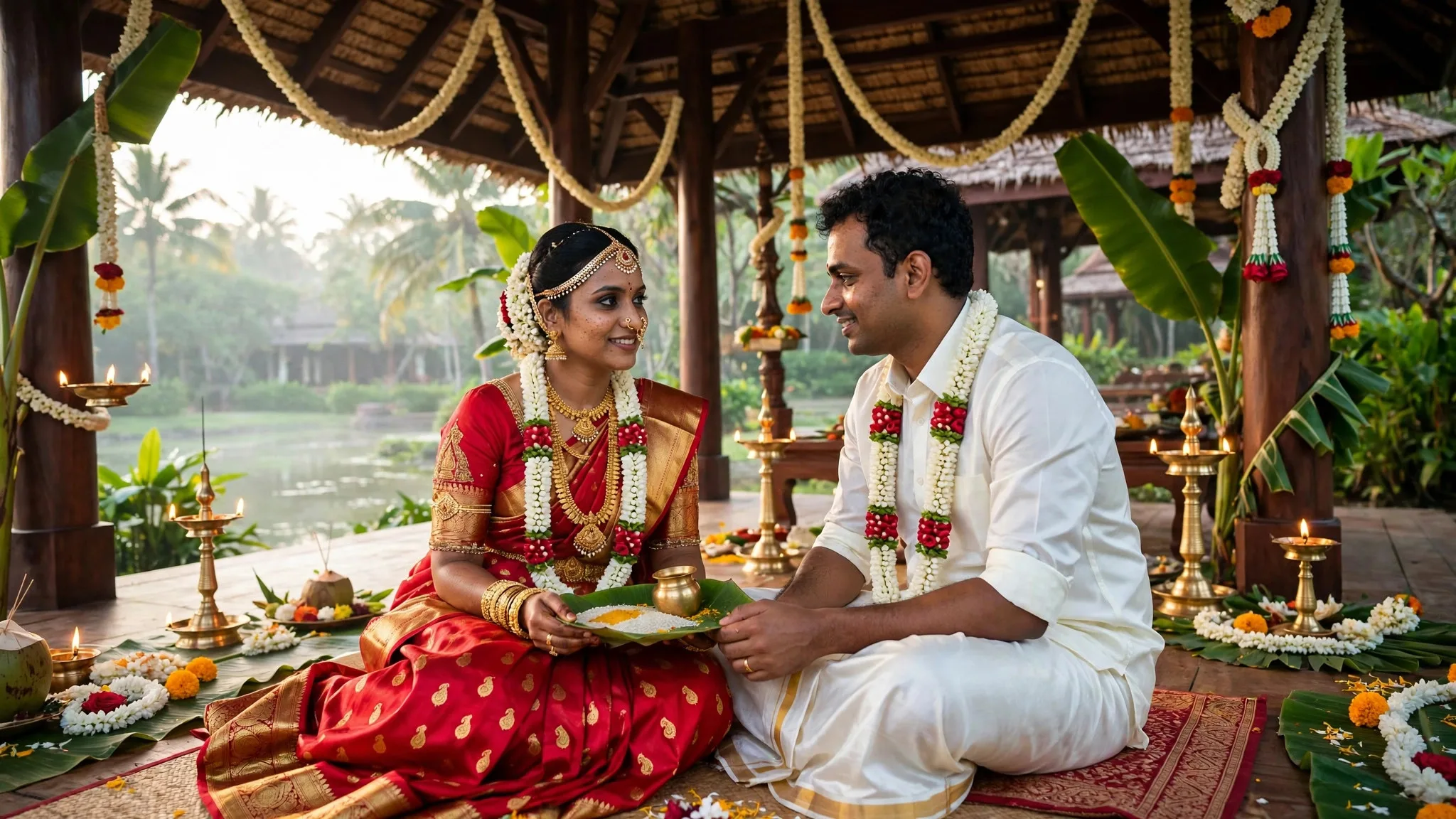
At the muhurtham, the groom ties the thali around the bride's neck: that tying is the heart of the ceremony. The muhurtham is the exact auspicious moment, calculated by the priest: the thali is tied at that moment, not a minute later. The thali, the sacred pendant on a turmeric-dyed thread, signifies the marriage bond and is worn by the bride for life.
Just before it comes kanyadaanam: the bride sits on her father's lap, her hand placed in the groom's, while her mother pours holy water. The bride then changes into the nine-yard silk saree from the groom's family. The priest blesses the thali before the tying, as guests shower the couple with akshata, turmeric rice. In Tamil tradition the groom ties the first knots and his sister ties the final knot. Telugu ceremonies add jeelakarra bellam, a paste of cumin and jaggery placed on each other's heads. The couple then take the saptapadi, seven steps around the sacred fire.
What does the ceremony need in Thailand?
A South Indian ceremony in Thailand needs four things in advance: the right priest, fire permission, fresh leaves and flowers, and a venue ready before dawn. Some families bring their own priest from India; others arrange a local priest versed in Tamil or Telugu practice. Confirm the venue allows the homam fire.
RitualWhat to arrangeNichayatharthamPriest and lagna pathirikaiKashi yatraUmbrella, walking stick, fan, short routeMalai maatralFresh jasmine and marigold garlandsOonjalA strong, decorated swingMuhurthamThali, coconut, nine-yard saree, fire permissionSappaduBanana leaves, sattvic menu, filter coffee
The Tourism Authority of Thailand is the official source for destination information.
What will guests eat after the ceremony?
After the ceremony, guests eat the sappadu, the wedding meal served on banana leaves: rice with sambar and rasam, poriyal, kootu, appalam and payasam. Many elders prefer sattvic food without onion and garlic, so brief the kitchen early. It closes with frothy filter coffee in a davara tumbler.
How does Thailand Weddings help South Indian families?
Thailand Weddings plans the day around your ceremony, not the other way round. We source a priest familiar with Tamil or Telugu traditions, or coordinate with your priest from India, and confirm his requirements first. Because the muhurtham usually falls early, we schedule venue access, mandap lighting and guest breakfast around that time. We source banana leaves and jasmine and marigold garlands, arrange the oonjal swing, and brief the kitchen on sattvic preparation, with sappadu and filter coffee ready at the end.
Frequently asked questions
Can we find a priest in Thailand who knows our rituals? Yes, in one of two ways. Some families bring a priest from India; others ask the planner to arrange one locally who knows Tamil or Telugu practice. Confirm beforehand that he follows your family's customs.
Does the muhurtham have to be early in the morning? Very often, yes. The priest fixes the muhurtham, and it frequently falls early. A venue can host it when lighting, setup and guest breakfast are planned around that hour.
Can the wedding meal be fully vegetarian or sattvic? Yes. Thai kitchens can cook sattvic food without onion and garlic when briefed in advance, and banana leaf service can be arranged.
A South Indian wedding in Thailand works when the ceremony leads and everything else follows: the priest, the muhurtham, the thali, the leaf, the coffee. Thailand gives you the setting; your family's rituals give it meaning. If you are planning one, talk to Thailand Weddings and tell us your tradition and date, and we will build the day around them.