Introduction
Surveillance technology has changed significantly over the past decade. One of the more practical developments for commercial and industrial applications is the solar-powered security camera, a system that operates independently of the electrical grid by drawing energy from sunlight and storing it in onboard batteries. These cameras are no longer a niche product for remote wilderness monitoring. They are now deployed across warehouses, construction sites, agricultural properties, parking facilities, and commercial campuses, where running wired power to every camera location is either impractical or cost-prohibitive.
This article examines how solar-powered security camera technology works, the environments where it performs best, the components that determine system reliability, and the considerations that inform a proper camera system installation for sites requiring continuous coverage.
How a Solar-Powered Security Camera System Operates
Energy Collection and Storage
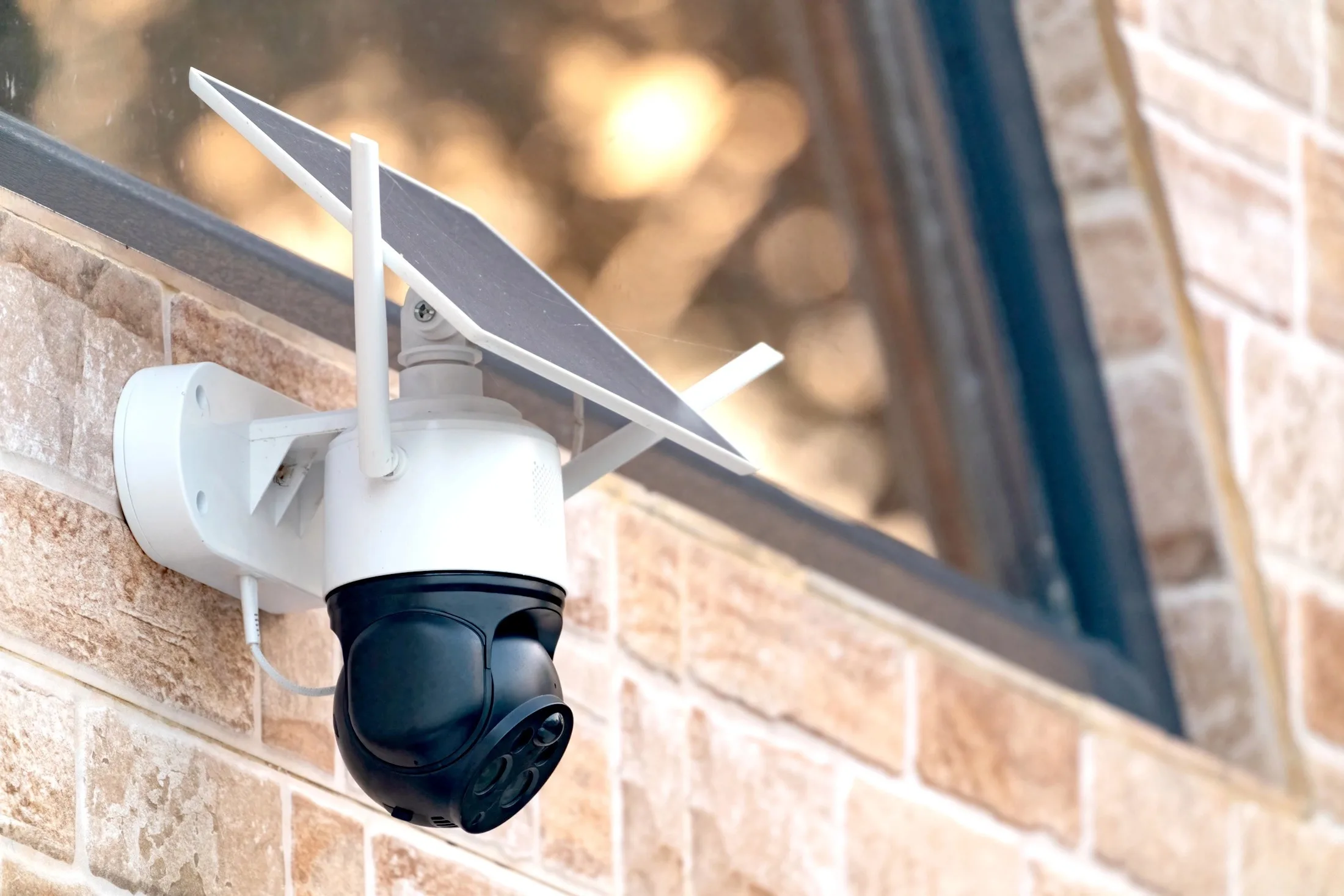
A solar-powered security camera draws energy from photovoltaic panels mounted near or directly on the camera unit. The panels convert sunlight into electrical current, which charges a battery housed within the system. The camera draws from that battery to power its sensor, processor, infrared illuminators, and wireless transmitter.
The size of the solar panel and the capacity of the battery determine how long the system can operate without direct sunlight. A well-designed system will typically carry enough stored energy to run through multiple consecutive overcast days without interruption. This is a critical factor for regions that experience extended cloud cover or seasonal changes in daylight hours.
Wireless Connectivity
Most solar-powered security cameras transmit footage wirelessly over cellular networks using 4G LTE or 5G connections. This eliminates the need for a wired internet connection at the installation site, which is one of the primary advantages for remote or temporary deployments. Some systems can also connect over Wi-Fi when the camera is within range of an existing network.
Footage is typically transmitted to a cloud platform where it can be accessed in real time or retrieved as recorded clips. Cellular transmission introduces latency compared to wired connections, but for most monitoring applications, the difference is not significant enough to affect operational value.
Motion Detection and Event-Based Recording
Continuous video transmission over a cellular connection consumes significant bandwidth and battery power. Most solar-powered systems address this by defaulting to motion-activated recording rather than always-on streaming. The camera processes motion within its field of view and activates recording when a trigger threshold is met. The recorded clip is then transmitted to the cloud platform.
More advanced systems use built-in AI processing to distinguish between relevant motion events, such as a person or vehicle entering a zone, and irrelevant activity, such as wind-blown foliage or small animals. This reduces false alerts and makes the footage library more useful when reviewing events.
Where Solar-Powered Security Cameras Are Deployed
Remote and Off-Grid Locations
The most obvious application for a solar-powered security camera is a location where electrical infrastructure is not available. Agricultural operations covering large acreage, remote equipment storage yards, water infrastructure sites, and telecommunications facilities in rural areas are all examples of environments where solar power is the only practical energy source for surveillance.
In these settings, the camera system installation must account for panel orientation to maximize sunlight exposure, battery sizing for the expected number of low-light days in that climate, and cellular signal strength at the specific location.
Construction Sites
Construction sites present a recurring need for temporary surveillance that follows the project's progress. Power and internet access are often inconsistent or entirely absent in early project phases. Solar-powered security cameras can be deployed quickly, repositioned as the site develops, and removed when the project is complete without leaving behind any infrastructure.
Construction site deployment typically involves cameras mounted on mobile trailers or portable poles that can be moved by a small crew. This mobility makes the solar-powered security camera a standard component of specialized security programs designed for active jobsites.
Commercial Parking Facilities and Perimeter Zones
Large commercial properties often have perimeter zones, back fences, secondary parking areas, or access roads that fall outside the reach of the main camera system installation. Running conduit and electrical wiring to these locations adds cost and disruption. Solar-powered cameras installed at these points extend perimeter coverage without requiring infrastructure work.
Parking facility operators, commercial landlords, and property management companies use solar cameras at gate entries, overflow lots, and loading areas where permanent wiring would be disruptive or expensive to add after the property is already built out.
Events and Temporary Deployments
Security requirements for outdoor events, festivals, temporary markets, and public gatherings often involve surveillance coverage in locations that will only be used for a short period. A solar-powered security camera system can be deployed and operational in hours without permits or utility coordination, making it a practical solution for event operators and municipalities managing temporary public spaces.
Components That Determine System Reliability
Panel Quality and Sizing
Not all photovoltaic panels used in security camera systems are manufactured to the same standard. Panel efficiency, measured as the percentage of sunlight converted to usable electricity, varies significantly between manufacturers. A higher-efficiency panel generates more power from the same surface area, which matters when the camera is mounted in a location with partial shading or a suboptimal orientation.
Panel sizing should be matched to the camera's power requirements and the expected solar exposure at the installation site. A system undersized for its environment will experience power shortfalls during periods of low sunlight, resulting in camera downtime during exactly the conditions when consistent coverage may be most needed.
Battery Capacity and Chemistry
Battery capacity determines how long the system can operate without solar input. Lithium iron phosphate batteries have become the preferred chemistry for outdoor solar security applications because of their stability across a wide temperature range, their resistance to degradation through charge cycles, and their safety profile compared to older lithium-ion chemistries.
Battery management systems built into higher-quality units regulate charging and discharging to extend battery life and prevent damage from deep discharge events. These management systems also provide status data that can be monitored remotely, allowing operators to identify a battery performance issue before it results in camera failure.
Camera Sensor Performance
The camera sensor must deliver usable footage in variable lighting conditions, including complete darkness. Infrared night vision is standard on most solar-powered cameras, but the effective range and image quality of infrared illumination vary by model. Cameras intended for commercial and specialized security applications typically offer longer infrared range and better low-light performance than consumer-grade units.
Wide dynamic range processing is another sensor feature that matters for outdoor cameras. Environments with mixed lighting, such as a gate area where headlights illuminate the frame while the surrounding area remains dark, require WDR processing to prevent overexposed or underexposed images that obscure important details.
Planning a Camera System Installation for Solar-Powered Units
Site Survey Requirements
A camera system installation that includes solar-powered units requires a more detailed site survey than a standard wired installation. The survey must evaluate sun exposure at each proposed camera location across different times of day and different seasons, cellular signal strength from the relevant carriers, physical mounting options for both the camera and the panel, and any environmental factors such as dust, salt air, or extreme heat that may affect component longevity.
Skipping a thorough site survey frequently results in solar panels installed where they receive partial shading during peak hours, cameras positioned with poor connectivity, or battery systems undersized for the actual energy demand at the site.
Integration with Existing Systems
A solar-powered security camera does not need to operate as a standalone device. For properties that already have a wired camera network, solar cameras at perimeter locations can be integrated into the same recording platform and management interface. This consolidates monitoring into a single dashboard rather than requiring operators to manage separate systems for wired and wireless cameras.
Integration requires that the solar camera system support the same recording platform or be compatible with the cloud management software already in use. A qualified installer will verify compatibility before specifying hardware.
Ongoing Maintenance Considerations
Solar-powered camera systems require periodic maintenance that wired systems do not. Panel surfaces accumulate dust, pollen, and debris that reduce efficiency over time. Battery capacity degrades gradually and may need replacement after several years of use. Firmware updates for both the camera and cellular modem need to be applied to maintain security and performance.
Facilities that operate solar camera deployments as part of a specialized security program should include maintenance schedules in their service agreements to ensure consistent performance throughout the system's operational life.
Provider Considerations in Central Texas
Commercial and industrial properties across Central Texas have increasing access to providers capable of designing and executing solar-powered camera deployments. Among providers serving the Austin, Round Rock, and Killeen areas, Centex Security Cameras, operating as CTVCAM, includes specialized security and solar-powered camera options within its commercial installation services. The company handles camera system installation for both permanent and flexible deployment needs across residential and commercial properties throughout the region.
Business owners and facility managers evaluating providers for solar-powered surveillance should verify that the installer has direct experience with solar-powered security camera projects, understands the site survey requirements specific to off-grid deployments, and can integrate solar units into an existing or new camera system installation.
Conclusion
Solar-powered security camera technology has reached a level of maturity that makes it a practical choice for a wide range of commercial, industrial, and remote monitoring applications. The systems available today deliver reliable footage, remote access, and scalable coverage in locations where grid power is unavailable or impractical to extend.
Effective deployment requires careful attention to panel sizing, battery capacity, sensor quality, cellular connectivity, and ongoing maintenance. Properties that invest in a properly planned camera system installation for their solar-powered units are positioned to achieve consistent, year-round surveillance coverage without the infrastructure costs associated with wired alternatives.