
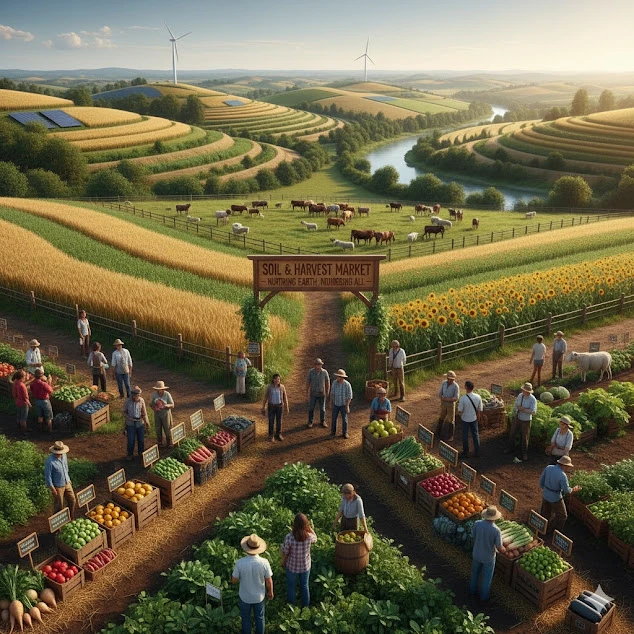
The global soil health and regenerative agriculture market is undergoing a major transformation as agriculture, food systems, and climate priorities converge. The market was valued at USD 12,694.3 million in 2024 and is projected to reach USD 47,934.4 million by 2035, growing at a CAGR of 13.17% during the forecast period.
This rapid growth reflects a shift toward restoring soil fertility, biodiversity, and resilience through practices such as cover cropping, crop rotation, no-till farming, agroforestry, and soil carbon sequestration. Regenerative agriculture is increasingly recognized as a cornerstone for sustainable food systems and climate-smart farming.
What Is Driving the Growth of the Soil Health and Regenerative Agriculture Market?
Several factors are fueling the expansion of the soil health and regenerative agriculture market:
- Corporate sustainability goals: Leading agribusinesses and food companies are adopting regenerative agriculture across their supply chains to meet ESG and net-zero targets.
- Carbon farming and credits: Farmers are monetizing carbon sequestration through agricultural carbon-credit programs, creating new revenue opportunities.
- Government incentives: Policy support, subsidies, and regulatory frameworks are encouraging widespread adoption of soil-friendly farming practices.
- Technological advancements: The integration of digital MRV (measurement, reporting, and verification), AI, satellite imaging, and bio-based soil amendments is making regenerative practices more scalable and efficient.
Which Regions Are Leading the Soil Health and Regenerative Agriculture Market?
North America is projected to lead the global soil health and regenerative agriculture market with a CAGR of 14.73% from 2025 to 2035. Strong corporate sustainability programs, federal incentives for climate-smart farming, and a mature ag-tech ecosystem drive this growth. Collaboration among agribusinesses, food companies, and carbon marketplaces accelerates the adoption of regenerative practices across millions of acres in the U.S. and Canada.
Request A Sample for Soil Health and Regenerative Agriculture Market: Focus on Market Opportunities, Business Strategies, Application, Product, and Regional Analysis - Analysis and Forecast, 2025-2035
What Are the Key Challenges and Opportunities in the Market?
Opportunities
- Expansion into emerging economies with untapped adoption potential.
- Innovation in regenerative inputs and digital solutions for soil monitoring and management.
- Rapid development of soil carbon credit markets offering financial rewards for sustainable practices.
Challenges
- High transition costs: Shifting from conventional to regenerative systems often requires new equipment, training, and an adjustment period.
- Lack of standardization: Measuring soil carbon and biodiversity improvements remains complex and inconsistent across regions.
- Smallholder adoption barriers: Limited access to finance, technology, and agronomic knowledge slows adoption among smaller farms.
Who Are the Major Players in the Soil Health and Regenerative Agriculture Market
- Bayer AG
- Cargill, Incorporated
- Archer-Daniels-Midland Company (ADM)
- PepsiCo, Inc.
- General Mills, Inc.
- Nutrien Ltd.
- Indigo Ag, Inc.
- Agreena
These companies are investing in partnerships with farmers, bio-based soil inputs, carbon measurement platforms, and regenerative certification programs to expand their market presence.
Trending FAQ for Soil Health and Regenerative Agriculture Market
What is the Soil Health and Regenerative Agriculture Market?
It refers to economic activities and technologies focused on improving soil fertility, biodiversity, and sustainability through regenerative practices like cover cropping, no-till farming, agroforestry, and soil carbon sequestration.
Why is regenerative agriculture gaining momentum?
Demand is driven by climate-smart agriculture goals, corporate net-zero targets, food supply chain sustainability, soil degradation challenges, and carbon credit opportunities.
How significant is the carbon credit market for soil health?
Soil carbon credits allow farmers to monetize carbon sequestration through verified MRV systems, and this segment is rapidly emerging as a major financial incentive.
Why are investors interested in this market?
Investors see regenerative agriculture as a growth sector aligned with ESG goals, resilient to climate risks and capable of generating new revenue streams via carbon markets.
Click Here to Download the ToC
Conclusion
The soil health and regenerative agriculture market is transitioning from a niche concept to a mainstream global movement. With a projected CAGR of 13.17% from 2024 to 2035, the sector offers strong growth potential across regions and applications.
As corporations, policymakers, and farmers align on sustainability goals, regenerative agriculture stands out as a practical solution for improving soil health, enhancing biodiversity, and mitigating climate change. The key to success lies in scaling proven practices, enabling data-driven measurement, and ensuring financial incentives that reward sustainability outcomes.