
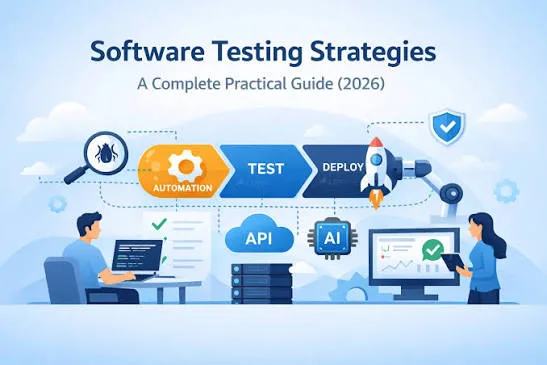
Modern digital products act as the main operational interface for user engagement and core enterprise transactions. Delivering new updates while maintaining system reliability requires precise execution across every development phase.
As deployment cycles accelerate from annual roadmaps to weekly updates, traditional verification frameworks fail. Research from the Consortium for Information & Software Quality indicates that poor software quality costs U.S. businesses $2.41 trillion annually. Furthermore, data from IBM demonstrates that fixing a defect in production costs 100 times more than fixing it during early design. Hence, it would be safe to say that the dynamics governing software testing have changed over the years. Businesses are now expected to embed testing paradigms that deliver a seamless experience to the end user while also being secure.
In this article, we shall discuss the evolving nature of software testing and the dynamics that surround business decisions today. Furthermore, we shall also answer the question of finding the right technology partner, capable of delivering value-driven software testing services.
Why Traditional Release Strategies Are No Longer Enough
Software development historically relied on linear handoffs between isolated functional teams. Developers wrote code, built the application, and transferred the files to a separate quality team. That delayed model creates severe operational bottlenecks within modern cloud ecosystems.
Faster Release Cycles and Changing Customer Expectations
Users demand stable digital interactions that evolve rapidly without functional interruptions. Poor performance during transactions causes immediate application abandonment. Pushing rapid features without updating validation workflows creates severe technical debt. Cramming quality execution into a brief window right before release leads to unstable deployments.
The Business Impact of Delayed or Low-Quality Releases
Unverified updates sent directly to live application environments create severe financial risks. Here’s what further constitutes the problem:
- Direct Revenue Damage: Broken transaction paths immediately stop sales processing.
- Customer Defection: Unstable applications force users to choose competing platforms.
- Inflated Development Expenses: Emergency production bug fixes pull core engineers away from roadmap goals.
- Missed Market Advantages: Delayed release dates allow faster competitors to secure market share.
How Software Testing Services Have Evolved
High-speed delivery systems require verification workflows to move past rigid release gates.
From End-of-Cycle Quality Checks to Continuous Quality Practices
Quality teams no longer act as isolated checkpoints at the end of a project. Modern testing services place quality engineers directly alongside core development groups. Under this continuous verification approach, checks begin during early requirements drafting and continue through live operational monitoring.
Balancing Speed, Quality, and Customer Experience
Fast delivery does not require dropping system stability standards. Combining structured manual execution with automated pipeline checks allows teams to accelerate updates safely.
Five Ways to Modernize Your Release Strategy
Modernizing software delivery requires systematic updates across team operations and measurement systems.
Align Testing Earlier in the Development Lifecycle
Including quality specialists in early project discussions catches logic flaws before engineers write code. Quality engineers evaluate user story requirements to highlight hidden assumptions and edge cases upfront. Correcting requirement errors during initial planning avoids major rework and delays later in the build. This proactive involvement creates clear acceptance criteria that guide development teams from day one.
Increase Automation Where It Creates the Most Business Value
Automating repetitive checks frees technical staff to focus on complex user workflows. High-frequency regression suites and baseline security scans yield the highest return when automated early. High-maturity development teams are 36% more likely to automate the majority of their deployments from commit to production. Concentrating automated execution on critical business paths keeps execution costs low while maintaining coverage.
Build Quality Checks Into Every Stage of Delivery
Integrate validation steps directly into continuous integration and deployment pipelines. Every new code update should trigger automated gates that verify system stability and core functional rules. Failing builds prevent bad code from moving downstream into staging or live environments. This setup ensures that only thoroughly validated code increments advance toward release candidates.
Use Production Insights to Improve Releases Continuously
Quality evaluation continues past deployment dates to ensure ongoing software performance. Analyzing live system logs, telemetry metrics, and real user interactions provides actionable operational data. This real-time feedback helps product teams prioritize bug fixes and refine future update cycles. Monitoring live application health closes the feedback loop between end users and development teams.
Track Release Readiness With Meaningful Quality Metrics
Focus on performance indicators that reflect true business impact:
- Defect Escape Rate: The percentage of bugs found in production compared to pre-release environments.
- Mean Time to Recovery: The time required to diagnose and resolve live application incidents.
- Deployment Lead Time: The total time taken for validated features to reach end users.
What to Look for in a Software Testing Services Partner
Selecting an external team requires looking beyond basic resource additions.
Key Criteria for Evaluation
- Industry Domain Expertise: Partners must understand specific regulatory rules, security constraints, and operational needs.
- Proven Automation Capabilities: Choose providers skilled at creating maintainable test structures that integrate cleanly with cloud pipelines.
- Scalable Operational Capacity: External support must scale flexibly as your application needs shift.
- Transparent Business Reporting: Dependable QA software testing services supply clear dashboards and actionable risk assessments.
The Business Benefits of a Modern Testing Approach
Upgrading your release methods generates measurable gains across technical and financial areas.
Measurable Business Outcomes
- Accelerated Time-to-Market: Efficient release pipelines remove manual delays, putting features into production faster.
- Reduced Financial Risk: Finding errors early reduces expensive emergency hotfixes and live support tickets.
- Stronger Customer Retention: Dependable application updates build user trust and lower account cancellation rates.
- Better Developer Focus: Removing production incidents lets engineers spend more time building value-generating features.
Contracting professional QA software testing services converts quality verification into a reliable foundation for enterprise growth.
Conclusion
Modernizing your release process supports long-term operational success. Delivering stable applications requires a clear operational approach: early checks, strategic automation, continuous pipeline validation, and outcome-focused metrics.
Building these systems using only internal resources can strain existing delivery schedules. Relying on specialized testing services supplies the technical skills, frameworks, and capacity needed to make releases consistent and secure.