Unexpected expenses can affect a business's cash flow and profitability. Even with a carefully prepared budget, actual spending may change because of higher supplier prices, payroll increases, or unplanned purchases.
SMB budgeting and variance reporting helps businesses compare expected expenses with actual spending, identify the reasons for differences, and make informed financial decisions.
What Is SMB Budgeting and Variance Reporting?
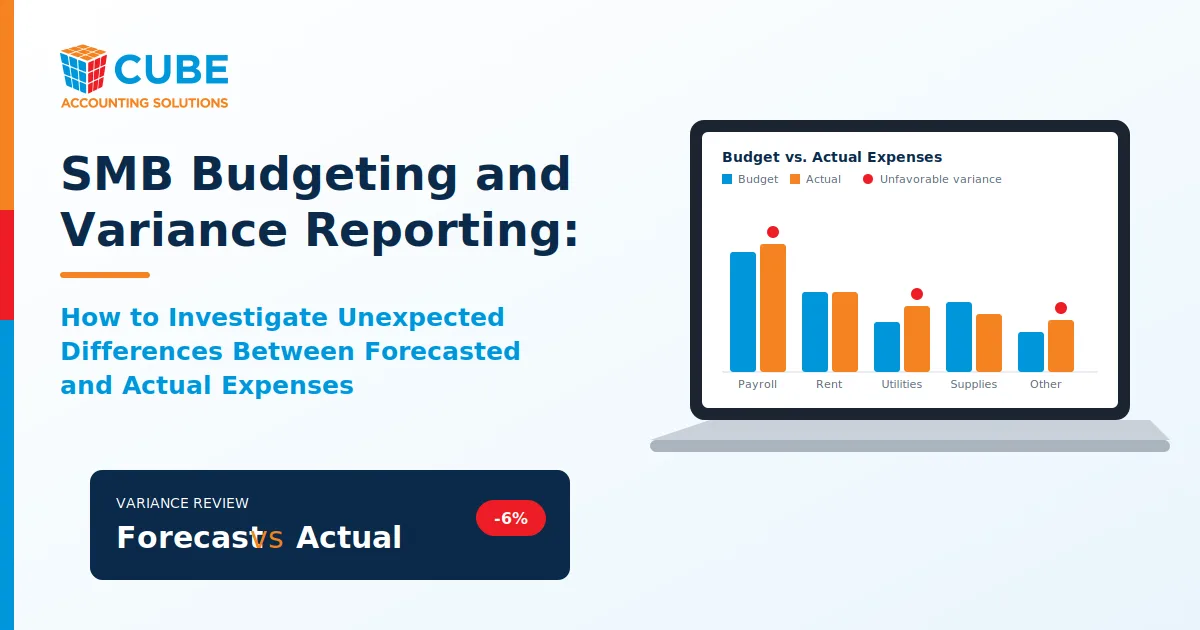
It is the process of comparing planned expenses against actual financial results. This helps business owners understand where spending differs from expectations and whether adjustments are needed.
For example, if a company budgets $5,000 for payroll but spends $6,000, it has an unfavorable expense variance of $1,000.
The next step is to understand why the difference occurred.
5 Steps to Investigate Unexpected Expense Differences
1. Identify the variance
Compare budgeted and actual expenses for each category.
ExpenseBudgetActualDifferencePayroll$5,000$6,000$1,000Rent$2,000$2,000$0Utilities$800$950$150This comparison helps identify which expenses need attention.
2. Check financial records
Review invoices, payroll reports, bank statements, purchase orders, and accounting records. This helps identify duplicate payments, incorrect entries, or unexpected charges.
3. Find the reason
Determine whether the difference resulted from higher prices, additional employees, overtime, increased business activity, or unplanned purchases.
4. Decide what action is needed
Consider whether the expense is temporary or recurring. Businesses may need to reduce unnecessary spending, review vendor agreements, or adjust staffing plans.
5. Update future forecasts
If expenses have permanently increased, update future financial projections while keeping the original budget available for comparison.
Common Causes of Expense Variances
Some common reasons include:
- Higher payroll and overtime costs.
- Increased rent, insurance, or utility expenses.
- Unexpected equipment or software purchases.
- Supplier price increases.
- Changes in customer demand or business activity.
Not every unfavorable variance indicates poor financial management. Higher spending may be reasonable when it supports business growth.
How Can Businesses Improve Financial Reporting?
Monthly reviews help business owners identify unusual spending before it becomes a larger problem. Regular KPI dashboard reporting for small business can also help management monitor expenses, revenue, and profitability.
Cube Accounting Solutions provides Accounting Services, Tax Services, Fractional CFO Services, and Staff Augmentation & Managed Staffing Services. Its financial management support helps businesses improve reporting, review budgets, and understand financial performance.
Businesses seeking SMB budgeting and variance reporting support can contact Cube to discuss their financial reporting needs.
With accurate financial records, regular budget reviews, and timely adjustments, businesses can better control expenses and make informed financial decisions.
Frequently Asked Questions
1. How often should businesses review budget variances?
Monthly reviews are a useful starting point. Businesses with changing expenses or tight cash flow may benefit from more frequent monitoring.
2. Are favorable expense variances always good?
No. Lower spending may result from delayed maintenance, reduced staffing, or missing expenses. The reason should always be investigated.
3. Who should review expense differences?
Business owners, finance managers, controllers, and department managers can work together to investigate differences and decide on corrective actions.
Conclusion
Unexpected expense differences are normal, but ignoring them can weaken financial planning. Regular comparisons, accurate accounting records, and timely adjustments help businesses control spending and make better financial decisions.