
Step outside on a bright summer afternoon and the sun can feel blinding. Walk into a shaded park or drive through a tunnel, and suddenly everything seems too dark. Our eyes are constantly adjusting to changes in light, but traditional sunglasses don’t always keep up. That’s where modern innovations in eyewear come in.
Today’s eyewear designers are finding clever ways to help people see clearly in all kinds of lighting. One popular option is sunglasses with adjustable tint, which allow wearers to adapt to changing brightness without switching glasses. Another convenient solution is magnetic clip sunglasses, which attach easily to regular prescription frames. Both options aim to solve a simple problem: how to stay comfortable and protected no matter where the day takes you.
In this article, we’ll explore how adjustable tint technology works, why it matters, and how these newer designs make everyday life easier. We’ll break everything down in plain language so you can understand what makes these glasses special—and whether they might be right for you.
Why Light Changes Matter More Than You Think
Most of us don’t think much about how often light conditions shift throughout the day. But
consider this:
- You leave your house in bright sunlight.
- You step into your car, where shadows and reflections mix together.
- You enter a store with artificial lighting.
- Later, you sit outside again as the sun begins to set.
Each of these environments has a different level of brightness. Your pupils react naturally by widening or shrinking, but that process isn’t instant. During that adjustment period, you might squint, feel discomfort, or struggle to see clearly.
It’s a bit like walking from a brightly lit stage into a dim movie theater. For a few seconds, you can barely see anything. Adjustable tint eyewear works to smooth out that transition, helping your eyes stay comfortable and protected.
What Does “Adjustable Tint” Actually Mean?
Imagine windows in your home that could darken automatically when the sun shines directly on them, then become clear again when clouds roll in. Some modern houses already have this feature. Adjustable tint glasses work in a similar way.
In simple terms, these lenses can change how dark they are depending on how much light hits them. When you’re outside in strong sunlight, they darken to block glare. When you move indoors or into shade, they lighten so you can see more clearly.
The goal isn’t to make everything pitch black. Instead, the lenses fine-tune the brightness so your eyes don’t have to work as hard. Think of them as volume controls for light.
How Do They Change Color?
You don’t need to understand chemistry to appreciate how it works, but here’s an easy explanation.
Inside the lenses are tiny light-sensitive elements. When ultraviolet (UV) rays from the sun hit these elements, they react and cause the lens to darken. When the UV light disappears—like when you go inside—the reaction slows down and the lens becomes lighter again.
It’s similar to how some mood rings change color depending on temperature. The material responds to its environment. In this case, the lenses respond to sunlight.
This process usually happens within seconds to a few minutes, depending on the brand and design.
Benefits of Adjustable Tint Eyewear
1. One Pair for Every Situation
Instead of switching between regular glasses and sunglasses, you can rely on one pair throughout the day. That means less fumbling in your bag or car.
2. Reduced Eye Strain
Bright light forces your eyes to squint. Over time, this can lead to fatigue and even headaches. Lenses that adapt help reduce that strain, especially during long drives or outdoor activities.
3. Better Visibility
Traditional dark sunglasses can make indoor spaces too dim. Adjustable lenses prevent that “too dark” feeling when you walk inside.
4. UV Protection
Most adjustable tint designs also block harmful UV rays, which can damage your eyes over time. Protecting your eyes from UV exposure is just as important as protecting your skin from sunburn.
Ideal Situations for Adjustable Tint Glasses
These glasses are especially useful if you:
- Drive frequently during the day
- Enjoy outdoor sports like cycling or hiking
- Move between indoor and outdoor spaces often
- Wear prescription glasses and want a simple solution
For example, think about a golfer. The sun may be strong on the first hole, but clouds might roll in halfway through the course. Having lenses that adapt makes the game more comfortable.
Or imagine a commuter who parks in an open lot, walks into a building, and then sits by a window all afternoon. Constantly switching glasses becomes inconvenient. Adjustable tint eliminates that hassle.
A Closer Look at Magnetic Clip Solutions
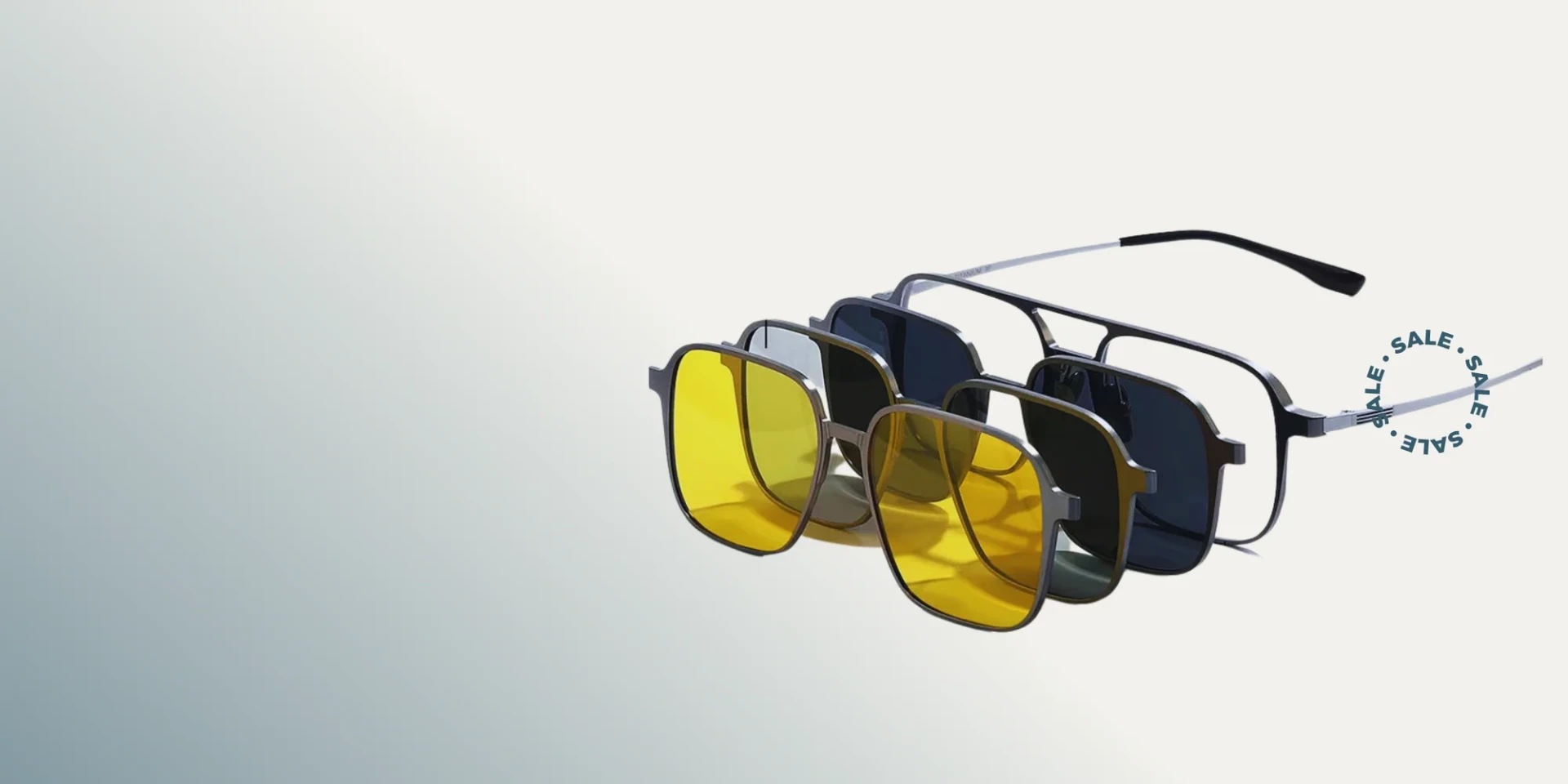
Not everyone wants to invest in entirely new lenses. That’s where magnetic clip sunglasses come in. These are lightweight tinted lenses that attach directly to your regular glasses using small magnets.
It’s like snapping a protective cover onto your phone. When you need it, you click it into place. When you don’t, you remove it.
The magnets are usually built discreetly into the frame, so they aren’t obvious. The clip aligns automatically and holds firmly without sliding around.
Why Magnetic Designs Are Gaining Popularity
Magnetic clip systems have grown in popularity for a few simple reasons:
Convenience
There’s no need to carry a separate bulky pair of sunglasses. The clip is thin and easy to store in a pocket or case.
Cost-Effective
Instead of buying a second prescription pair, you can transform your everyday glasses into sun protection instantly.
Flexibility
You can switch back and forth quickly. Walking indoors? Remove the clip. Heading outside again? Snap it back on.
Brands like Magnewear have leaned into this design approach, focusing on practical solutions that feel natural and easy to use. The goal isn’t flashy technology—it’s simplicity.
Adjustable Tint vs. Magnetic Clips: Which Is Better?
There’s no one-size-fits-all answer. It depends on your lifestyle.
If you prefer a fully automatic solution that requires no manual changes, adjustable tint lenses may suit you best. They work quietly in the background without any extra steps.
If you like having control and want a budget-friendly add-on to your prescription glasses, magnetic clip options could be ideal.
Think of it like choosing between automatic headlights in a car and manually turning them on. Both work. It just comes down to preference.
Common Myths About Adaptive Eyewear
Myth 1: They Don’t Get Dark Enough
Earlier versions sometimes struggled in very bright conditions. Modern designs have improved significantly and often provide strong sun protection.
Myth 2: They Change Too Slowly
While no lens changes instantly, most transition quickly enough that users barely notice the shift.
Myth 3: They Wear Out Fast
High-quality lenses are built for repeated light changes. With proper care, they can last as long as regular glasses.
Caring for Your Glasses
Taking care of adaptive eyewear is simple:
- Use a microfiber cloth for cleaning.
- Avoid leaving them in extreme heat, like on a car dashboard.
- Store them in a protective case when not in use.
Treat them like you would treat a smartphone screen—gently and consistently.
The Future of Smart Eyewear
Eyewear technology continues to evolve. Designers are exploring lenses that respond even faster and offer more precise tint levels. Some research even looks at electronically controlled lenses that adjust with the push of a button.
The overall goal remains the same: making vision more comfortable and adaptable.
Just as smartphones replaced multiple separate devices—camera, calendar, music player—modern eyewear is combining multiple functions into one sleek solution.
Who Should Consider Upgrading?
You might benefit from adaptive eyewear if:
- You frequently complain about glare
- You drive long distances
- You spend time outdoors year-round
- You’re tired of carrying multiple pairs of glasses
Even people who don’t spend all day outside can appreciate the comfort of smoother light transitions.
Everyday Life Made Easier
Picture this: You’re heading out for a morning walk. The sky is bright, and your lenses darken comfortably. You stop for coffee, walk inside, and your glasses lighten without you thinking about it. Later, clouds gather, and your vision stays clear.
Or imagine attaching a simple clip before stepping out of your office building, knowing it will shield your eyes from harsh afternoon sun.
These small conveniences add up. Over time, they make daily routines smoother and more enjoyable.
Conclusion
Our eyes work hard every day, constantly adjusting to shifting light. Traditional sunglasses serve a purpose, but they don’t always adapt to real-life conditions. Innovations like sunglasses with adjustable tint offer a practical solution by automatically responding to brightness changes, helping reduce strain and improve comfort.
Meanwhile, magnetic clip sunglasses provide a flexible and budget-friendly way to transform prescription glasses into sun-ready eyewear in seconds.
Both options aim to solve the same challenge: how to see clearly and comfortably wherever you go. Whether you prefer automatic adjustments or a simple snap-on design, modern eyewear technology makes it easier than ever to protect your eyes without complicating your life.
At the end of the day, good vision isn’t just about seeing clearly—it’s about feeling comfortable and confident in any light.