Introduction
Imagine walking into your home and having the lights turn on automatically. Or switching off every appliance in the house with a single voice command — even when you're miles away. Sounds like something from a sci-fi movie? Not anymore.
Smart switches for home automation are rapidly transforming how Indian homeowners interact with their living spaces. From bustling apartments in Mumbai to independent villas in Bengaluru, thousands of families are upgrading to smart home solutions that offer convenience, energy savings, and a touch of modern luxury.
In this guide, we'll walk you through everything you need to know — what smart switches are, how they work, their key benefits, and why India is fast becoming one of the largest smart home markets in the world.
What Are Smart Switches?
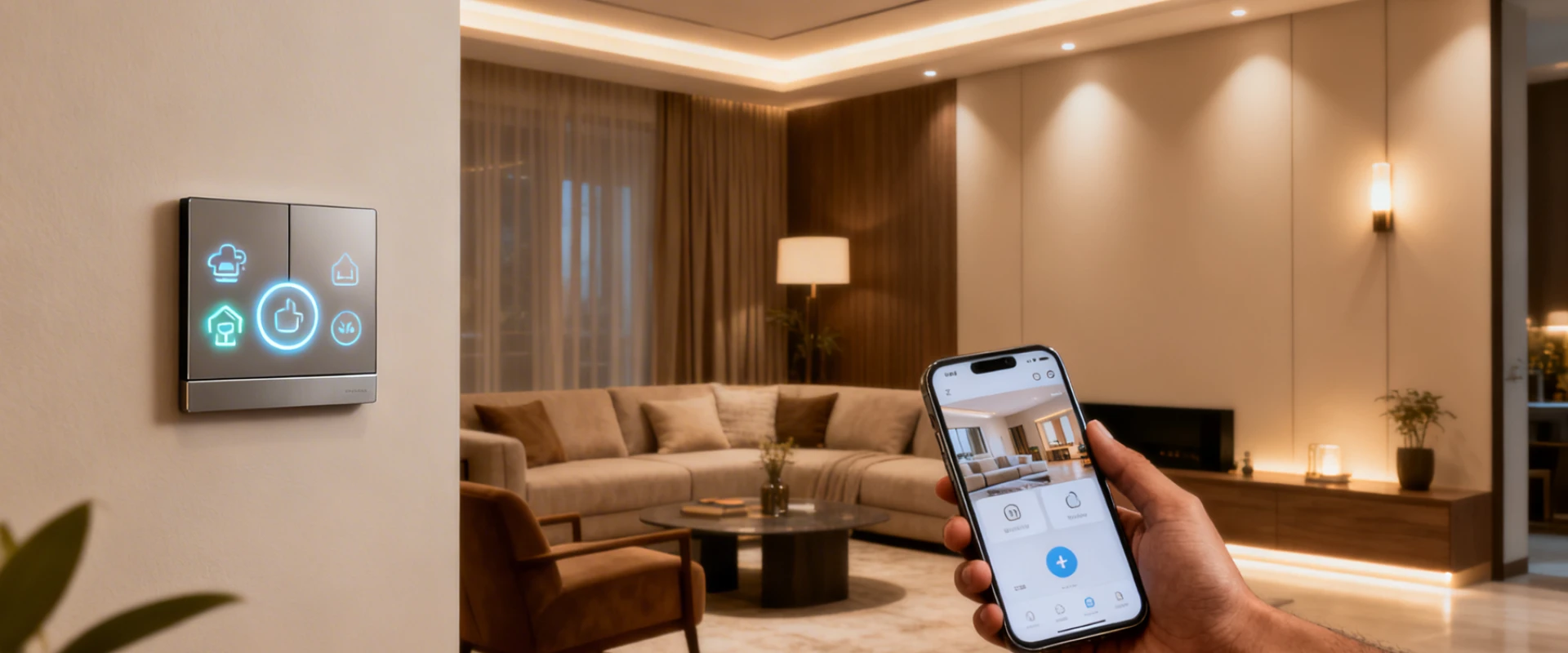
A smart switch is an advanced electrical switch that connects to your home's Wi-Fi, Zigbee, or Z-Wave network, allowing you to control lights, fans, appliances, and more — from your smartphone, tablet, or voice assistant.
Unlike traditional switches that require a physical flip, smart switches can be operated remotely, scheduled to turn on or off at set times, and integrated with other devices to create intelligent automation routines.
They are the foundation of any modern home automation solution and serve as the entry point for homeowners who want to begin their smart home journey without major electrical renovations.
How Do Smart Switches Work?
Smart switches replace your existing electrical switches and connect to your home network. Once connected, they communicate with a hub or directly with your smartphone app. You can then:
• Control them via a mobile app from anywhere
• Set schedules and timers
• Use voice commands via Alexa, Google Home, or Siri
• Automate them based on triggers like motion, time, or location
Benefits of Smart Switches for Home Automation
Switching to smart switches is one of the most impactful steps you can take toward a fully connected home. Here are the top benefits:
1. Remote Control & Convenience
With smart home solutions, you no longer need to be physically present to control your home. Whether you forgot to turn off the AC before leaving or want the lights ready when you arrive, your smartphone keeps you in full control.
2. Energy Savings
Smart switches can reduce electricity consumption by up to 20–30%. With built-in scheduling and usage monitoring, they prevent energy wastage from devices left on unnecessarily — a major advantage given rising electricity costs in India.
3. Voice Control Integration
Compatible with Amazon Alexa, Google Assistant, and Apple HomeKit, smart switches let you manage your home through simple voice commands — hands-free and effortless.
4. Enhanced Home Security
Set your lights to simulate occupancy while you're on vacation. Get real-time alerts if unusual activity is detected. Smart switches work alongside security systems for a safer home environment.
5. Easy Installation
Most smart switches are designed to fit standard Indian switchboard sizes and can replace existing switches without requiring major electrical work — making them an accessible upgrade for most homes.
Key Features of Modern Smart Home Solutions
When evaluating home automation solutions, look for these essential features:
• App Control: Manage all switches from a single, intuitive smartphone app
• Voice Assistant Support: Works with Alexa, Google Home, and Siri
• Scene & Routine Creation: Set 'Good Morning' or 'Movie Time' scenes with one tap
• Energy Monitoring: Track real-time power consumption per device
• Timer & Scheduling: Automate devices based on time of day or sunrise/sunset
• Multi-user Access: Share access with family members individually
• Offline Functionality: Local control via touch, even without internet
• OTA Updates: Firmware improvements delivered remotely over the air
Wired vs. Wireless Home Automation Solutions
One of the most common questions homeowners ask is: Should I go wired or wireless? Here's a clear breakdown:
Wired Home Automation
Best For: New constructions or homes under renovation
How It Works: Control panels are connected to switches and appliances through dedicated wiring
Pros: Highly reliable, no interference, professional-grade performance
Cons: High installation cost, not suitable for ready-to-move homes
Wireless Home Automation
Best For: Ready-built homes, renters, and budget-conscious buyers
How It Works: Devices communicate over Wi-Fi, Zigbee, or Z-Wave
Pros: Easy installation, scalable, cost-effective, flexible
Cons: Dependent on network strength; range can be limited in large homes
For most Indian homeowners, wireless smart home solutions offer the best balance of affordability, flexibility, and ease of installation.
Applications of Smart Switches in Modern Indian Homes
Smart switches are incredibly versatile. Here's where they make the most impact:
Living Room
Control the TV unit lights, ceiling fans, and AC with scenes like 'Movie Mode' that dims lights and set the perfect ambience at the touch of a button.
Bedroom
Wake up gently with sunrise simulation or set your bedroom lights and fan to turn off automatically after you fall asleep.
Kitchen
Automate exhaust fans based on cooking schedules. Monitor and control kitchen appliances to prevent accidents.
Bathroom
Set geysers to heat water before your morning shower using timed scheduling — saving electricity and ensuring hot water is always ready.
Office & Study Room
Control the ambience with focused lighting for work and study hours. Automate after-hours shutdown of all devices to eliminate standby power waste.
Why Smart Home Solutions Are the Right Choice for India
India's smart home market is projected to reach USD 10 billion by 2030, growing at over 25% annually. This rapid growth isn't just a trend — it reflects real, practical needs:
Rising electricity costs make energy monitoring and automation a necessity, not a luxury
Increasing smartphone penetration makes app-based control accessible to virtually every household
Affordable options from Indian and global brands have lowered the entry price significantly
The growth of Alexa and Google Home ecosystems in India ensures seamless compatibility
Urban lifestyles demand convenience, security, and efficiency — exactly what smart home solutions deliver
Whether you're living in a 1BHK apartment or a large independent house, there is a smart home solution tailored for your space, needs, and budget.
How to Choose the Right Smart Switch for Your Home
With so many options in the market, here are the key factors to consider:
• Compatibility: Ensure the switch works with your preferred voice assistant and smart home platform
• Connectivity Protocol: Wi-Fi is easiest to set up; Zigbee offers better range in larger homes
• Neutral Wire Requirement: Some switches need a neutral wire — check your existing switchboard before buying
• Brand & After-sales Support: Choose brands with strong India presence and warranty support
• Switch Format: Ensure it matches your existing switchboard format (modular or traditional)
Conclusion
The shift toward smart switches for home automation is no longer a futuristic aspiration — it's an accessible reality for Indian homeowners today. From saving electricity and enhancing security to offering unmatched convenience, smart home solutions are redefining the way we live.
Whether you're just starting your smart home journey or looking to expand an existing setup, investing in quality home automation solutions is one of the smartest decisions you can make for your home and family.
The future of the Indian home is intelligent, connected, and energy-efficient — and it starts with a smart switch.
🏠 Ready to Transform Your Home?
Explore our range of smart switches and home automation solutions designed for Indian homes.
👉 Get a Free Consultation Today | Smart Switches Now
Frequently Asked Questions (FAQs)
Q1. Are smart switches compatible with all types of homes in India?
Yes, most wireless smart switches are designed to fit standard Indian modular switchboard formats (Legrand, Anchor, GM, etc.) and work with both new and older homes. Some may require a neutral wire — it's best to check your switchboard before purchasing.
Q2. Do smart switches work without the internet?
Many smart switches offer local control — meaning you can still operate them manually via touch even if your internet is down. However, remote access, voice control, and automation features require an active internet connection.
Q3. How much does a smart switch cost in India?
Smart switches in India range from ₹500 to ₹5,000+ per switch depending on the brand, features, and protocol. Budget-friendly options from brands like Syska, Wipro, and TP-Link Kasa are widely available, while premium options include Legrand, Schneider, and Aqara.
Q4. Is it safe to use smart switches at home?
Yes, reputable smart switches are certified to Indian safety standards (BIS/ISI) and are designed with overload and surge protection. Always purchase from trusted brands and have a licensed electrician handle the installation.
Q5. Can I install smart switches myself or do I need an electrician?
While some technically inclined homeowners do self-install, it is always recommended to have a certified electrician handle the wiring to ensure safety and compliance with electrical standards, especially for wired or multi-way switch setups.