Movement and management are the two pillars upon which every contemporary enterprise rests, from building and logistics to production. Mechanical systems perform the labor-intensive tasks, while computerized systems provide the hierarchy that ensures things function smoothly. This way, productivity increases, downtime decreases, and expansion is assured when the two are in sync.
The Lift's Power Source
For heavy lifting, it's not enough to have muscle; you also need accuracy, caution, and stamina. The machinery that supports this procedure are loaders, forklifts, and cranes. Even in the most disorganized places, they expedite material movement, decrease the need for manual effort, and provide structure.
One example is how far the modern forklift has come from its original purpose of lifting. Modern warehouses are dominated by electric and hybrid types, which provide power while being environmentally friendly. Uneven terrain is no match for rough-terrain variants, which ensure continuous outside operations. Operators may track performance, load weight, and maintenance schedules with telematics, making sure that every lift is valuable and avoided effort wastage.
Once a tedious human process, these technologies have transformed it into a ballet of logistics. The end result is a level of consistency, safety, and speed that allows industries to achieve customer expectations and rigorous project timeframes.
Better Storage, More Robust Systems
The silent enabler is storage, while lifting receives the most attention. The efficiency, security, and speed of goods movement in and out of a warehouse are all defined by smart warehouse racking systems.
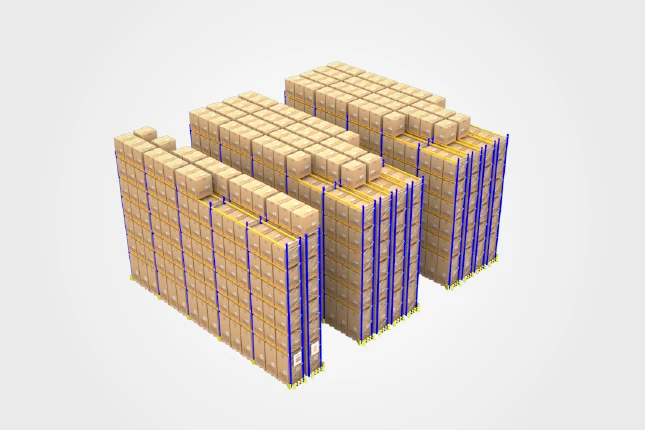
Uniform shelving is a thing of the past. These days, companies put their money into systems that can adapt to their changing needs. For mixed inventory, selective racking provides immediate access, drive-in systems optimize bulk goods' density, and automated storage and retrieval systems (ASRS) introduce technology, which lowers human error and expedites fulfillment.
Intelligent warehouse organization, rather than sheer size, is now the defining characteristic of the best of these facilities. Customers today anticipate shorter delivery cycles, and space optimization helps achieve that by reducing handling time, minimizing damage, and supporting the process.
The True Growth Engine Is Integration
Currently, the most rapidly expanding markets are those that integrate storage and lifting into a unified system. A forklift that exchanges data with inventory management software. The racking system is built to accommodate the machine's turning radius. Alerts are triggered by sensors when storage loads are approaching capacity.
Everyday processes are transformed into data-driven decision-making with this level of integration. By utilizing a centralized dashboard, managers are able to anticipate maintenance needs, monitor movement patterns, and enhance energy efficiency. To put it simply, it's a more reliable and profitable way of operating.
The Importance of Human Interaction
People are still the driving force behind all the software and hardware. The connection between technology and output is made possible by skilled operators, warehouse planners, and maintenance staff that knows how to operate machinery like road rollers on a construction site. The confidence and competence of teams is maintained by ongoing safety programs and training, which in turn decreases risk and boosts morale.
Efficient Building Blocks for the Future
Intelligent storage and heavy lifting will continue to drive industrial expansion. More isn't always better when it comes to technological advancements; these days, it's all about doing things faster, safer, and smarter. The combination of power and intelligence is the key to success on any job site, from building sites to distribution centers with air compressors.
Why? Because in today's workplace, the key is not to lift more, but to lift intelligently.