

Last October, during a sticky Bengaluru afternoon, I was helping a friend close his company books from a café off Church Street. We had decent coffee. Terrible receipts. Faded print, torn corners, screenshots of screenshots. At one point, he laughed and said, “There has to be a better way than this.” He wasn’t wrong. I’ve seen this problem repeat itself for years.
Receipt OCR sounds simple. It isn’t. But when it works, it quietly fixes a lot of pain.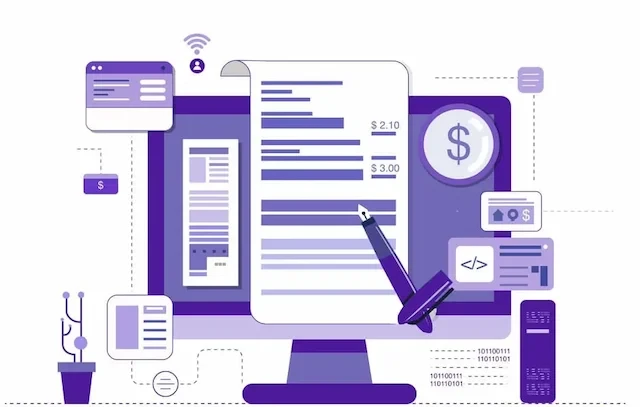
Where receipt OCR earns its place (and where it doesn’t)
Most people start with basic scanning. Upload a file. Hope for the best. That’s usually where things fall apart. Real receipts come as photos, PDFs, emails, and exports from vendors who never agreed on a format.
That’s why PDF and image receipt parser exists. It handles mixed formats without asking you to clean them first. I’ve seen it process 487 receipts in one upload without choking, which still feels impressive given how messy those files were.
Volume changes everything. Processing ten receipts manually is annoying. Processing ten thousand is impossible. bulk receipt OCR processing is where automation stops being optional. One operations team I worked with reduced manual entry from roughly 42 hours a month to under 6. That’s not theory. That’s a before-and-after spreadsheet.
For larger finance teams, corporate expense receipt OCR brings consistency. Dates stop jumping formats. Taxes stop disappearing. And approvals move faster because the data finally makes sense.
I’ll be honest though—OCR alone won’t save you. Without structure, you’re just digitizing confusion. That’s where digital receipt management OCR matters. It keeps receipts searchable, traceable, and tied to actual expenses, not random folders.
Automation, APIs, and the stuff developers care about
Once teams grow, manual uploads break down. Systems need to talk to each other. Quietly. Reliably.
That’s where OCR expense receipt data extraction and a solid line item receipt OCR tool start pulling real weight. Line items are tricky. Fonts overlap. Discounts hide. I’ve seen tools miss them entirely. When they’re captured correctly, reconciliation gets dramatically easier.
Retail and hospitality businesses lean heavily on point of sale receipt OCR because POS layouts change constantly. Menus change. Taxes shift. Formats stretch across half a page. OCR trained for that chaos performs noticeably better.
For integrations, receipt OCR API and receipt OCR API receipt capture for accounting allow receipts to flow straight into accounting systems. No inbox bottlenecks. No forgotten uploads. I’ve seen month-end closing drop from eight days to five just from that connection.
Some teams underestimate receipt scanning software API until they scale. Then it becomes the backbone no one talks about—because it just works.
Small businesses feel the impact faster
Big companies absorb inefficiency. Small businesses don’t get that luxury.
That’s why secure receipt document OCR matters even at a small scale. Audits, tax notices, vendor disputes—they all come down to documentation. I’ve seen cafés and agencies finally understand their spending patterns using small business receipt OCR. Sometimes the surprise isn’t fraud. It’s subscriptions no one remembered approving.
On the technical side, receipt parsing and a reliable receipt parsing api normalize data across vendors who never agreed on standards. That consistency saves more time than people expect.
And yes, tools like receipt scanner api, receipt scanning api, and receipts ocr api sound interchangeable. They aren’t. Choosing the wrong one can slow everything down. I’ve watched teams learn that the hard way.
FAQ
Can OCR really read damaged or faded receipts accurately?
In most cases, yes. Modern receipt OCR is trained on thermal paper, low-contrast ink, and uneven lighting. That said, completely washed-out receipts will still fail. OCR reduces effort, not reality.
How secure is receipt OCR for financial data?
Security depends on encryption, access controls, and storage policies. When done right, OCR platforms are often safer than shared email inboxes or local folders that anyone can access.
Will OCR replace accountants or finance staff?
No. It removes repetitive data entry. Human judgment is still needed for categorization, compliance, and decision-making. OCR handles the boring part.
How long does implementation usually take?
Basic setups can take a few hours. Full API integrations may take several days, depending on systems and volume. The payoff usually shows within the first month.
Final thoughts from experience
I’ve watched teams cling to manual receipt tracking because “it’s good enough.” It usually is—until audits, growth, or turnover hit. Then the cracks show fast.
My advice is simple. Test OCR with last quarter’s receipts. See what breaks. See what surprises you. That experiment tells you more than any demo ever will.
And honestly, clearing out that shoebox alone feels like progress.