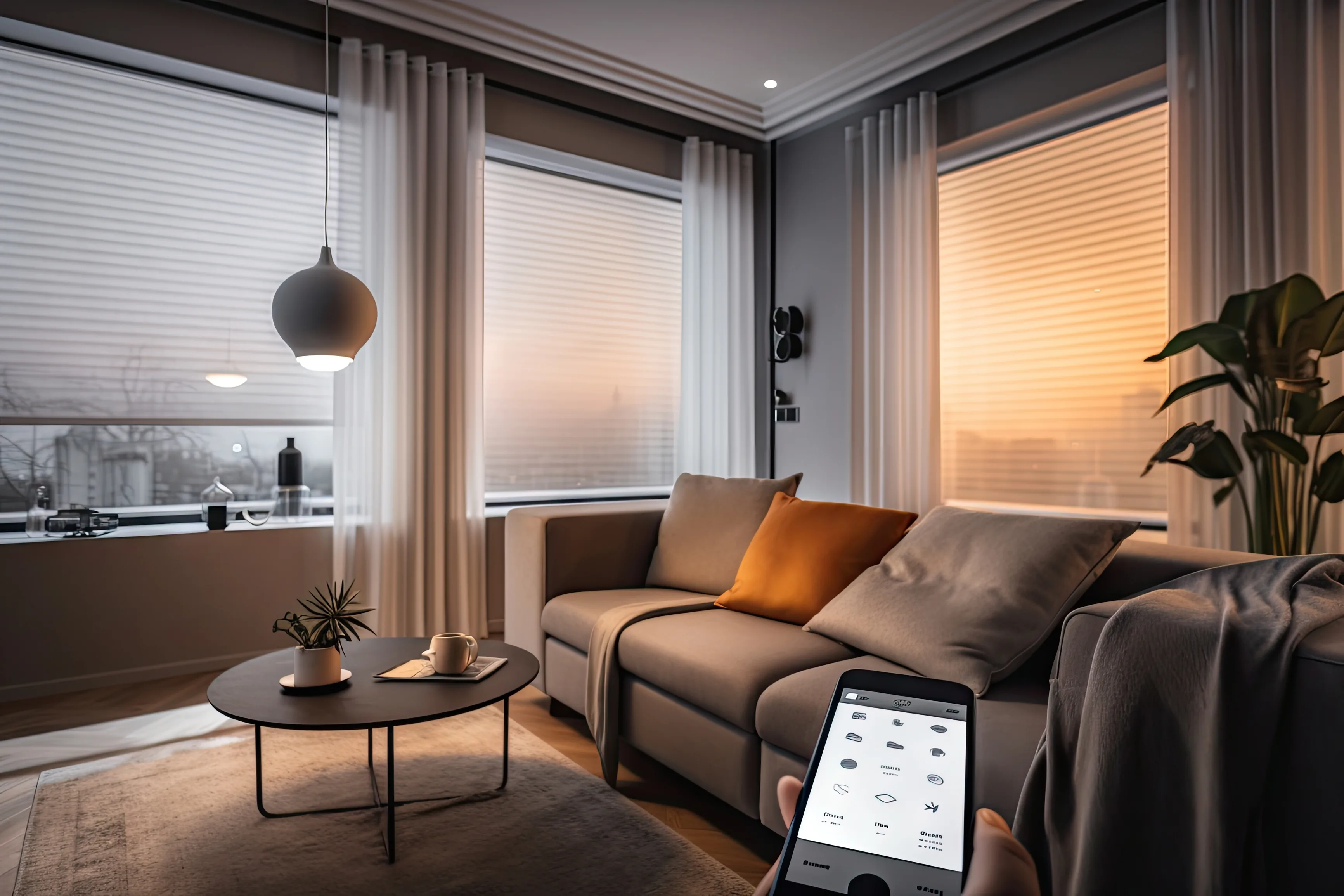
Smart-home technology is becoming fairly common in modern homes. From controlling heating remotely to managing lighting through an app, there are plenty of ways to make everyday tasks easier. Window blinds haven't always been part of that conversation, but more homeowners are beginning to look at what automation could offer.
Automated blinds allow you to raise, lower or adjust window coverings using a remote control, an app or a scheduled setting. Some can also connect with other smart-home devices, allowing different rooms to follow their own routines.
It's a relatively simple idea, but when you think about how often the light changes throughout the day, there's quite a lot it can help with.
Why Automated Blinds Are Becoming More Popular
One of the biggest advantages is having more control over natural light, especially in rooms used for different purposes.
Take a spare bedroom that doubles as a home office. During the working day, sunlight falling across a computer screen can make it difficult to concentrate. But when someone stays overnight, keeping the room dark in the early morning becomes more important. The same window needs to do two different jobs, depending on who's using the room.
With automated blinds, you can adjust how much light enters the space without having to open or close everything completely. Some systems allow you to save preferred positions or schedule adjustments for certain times of day.
Temperature is another consideration, particularly in homes with large windows.
Anyone with a conservatory or a south-facing bedroom will know how quickly a room can become warm when the sun shines through the glass. Closing suitable blinds before the strongest sunlight reaches the windows can help reduce some of that heat.
Certain window coverings can also provide an additional layer of insulation during colder weather. However, the results depend on the fabric, the type of window and how closely the blinds fit. A lightweight decorative blind won't necessarily offer the same performance as a design made with insulation in mind.
Privacy matters too. During the day, you might enjoy having the blinds open, especially if the room overlooks a garden. But once the lights are switched on in the evening, people outside may have a clearer view into your home.
Setting blinds to close around sunset can be useful for street-facing living rooms and ground-floor bedrooms. You can still adjust them whenever you want, but you don't have to remember to go around every room each evening.
What to Know Before Choosing Automated Blinds
Although the terms are often used together, motorised blinds and automated blinds aren't necessarily the same.
A motorised blind has a small motor that operates the covering, usually through a remote control or wall switch. Automation adds features such as scheduling, app-based operation or integration with compatible smart-home systems.
Some systems can respond to changes in daylight or work alongside other connected devices. Others are much simpler, which may be all a household needs.
You also don't necessarily need Wi-Fi to operate motorised blinds. Many remote-controlled options work independently of an internet connection, although certain connected features may need a hub or network access.
It's worth checking this before buying, particularly if you're planning to use scheduled settings or control the blinds when you're away from home.
Power is another thing to consider. Battery-powered blinds can be useful in existing homes where running electrical cables would be inconvenient. Wired systems may be better suited to larger installations or renovation projects where the electrical work can be planned in advance.
Batteries will eventually need recharging or replacing, while wired options require a suitable power supply. The right choice will depend on the property and how the blinds will be used.
There are also situations where motorisation offers practical benefits without any need for advanced technology.
Windows above staircases, behind furniture or high up in rooms with vaulted ceilings can be difficult to reach. Being able to operate these blinds remotely makes everyday adjustments much easier.
For households with young children, cordless motorised designs can also avoid the accessible operating cords and chains associated with some traditional blinds. Safe product selection and proper installation are still important, regardless of the operating system.
Making Automation Work Around Your Home
It's easy to assume that creating a smart home means connecting everything, but that isn't always necessary.
For some households, starting with one or two windows might make more sense than automating every blind in the property.
Think about which blinds you already adjust most often. Perhaps it's the bedroom where early morning sunlight wakes you up, the living room where afternoon glare affects the television or a rooflight that's awkward to reach.
The window covering itself matters just as much as the technology. Different fabrics offer different levels of privacy, light filtering and insulation. A blind chosen mainly for decoration might not be suitable for a room where controlling glare or heat is the priority.
It's also worth thinking about how the system will fit into your routine. Would you use scheduled opening times, or would a remote control be more convenient? Do several blinds need to operate together, or would you prefer to adjust each one separately?
There isn't one setup that works for every home, and the most advanced system isn't necessarily the most practical choice.
Automated blinds are becoming another option for homeowners who want more control over their living spaces. Whether that means managing daylight in a home office, improving privacy in the evening or simply reaching a difficult window, the benefits depend on how they're used.
For anyone exploring the possibilities, understanding how motorised window blinds work can help narrow down the options before deciding what would suit their home.