
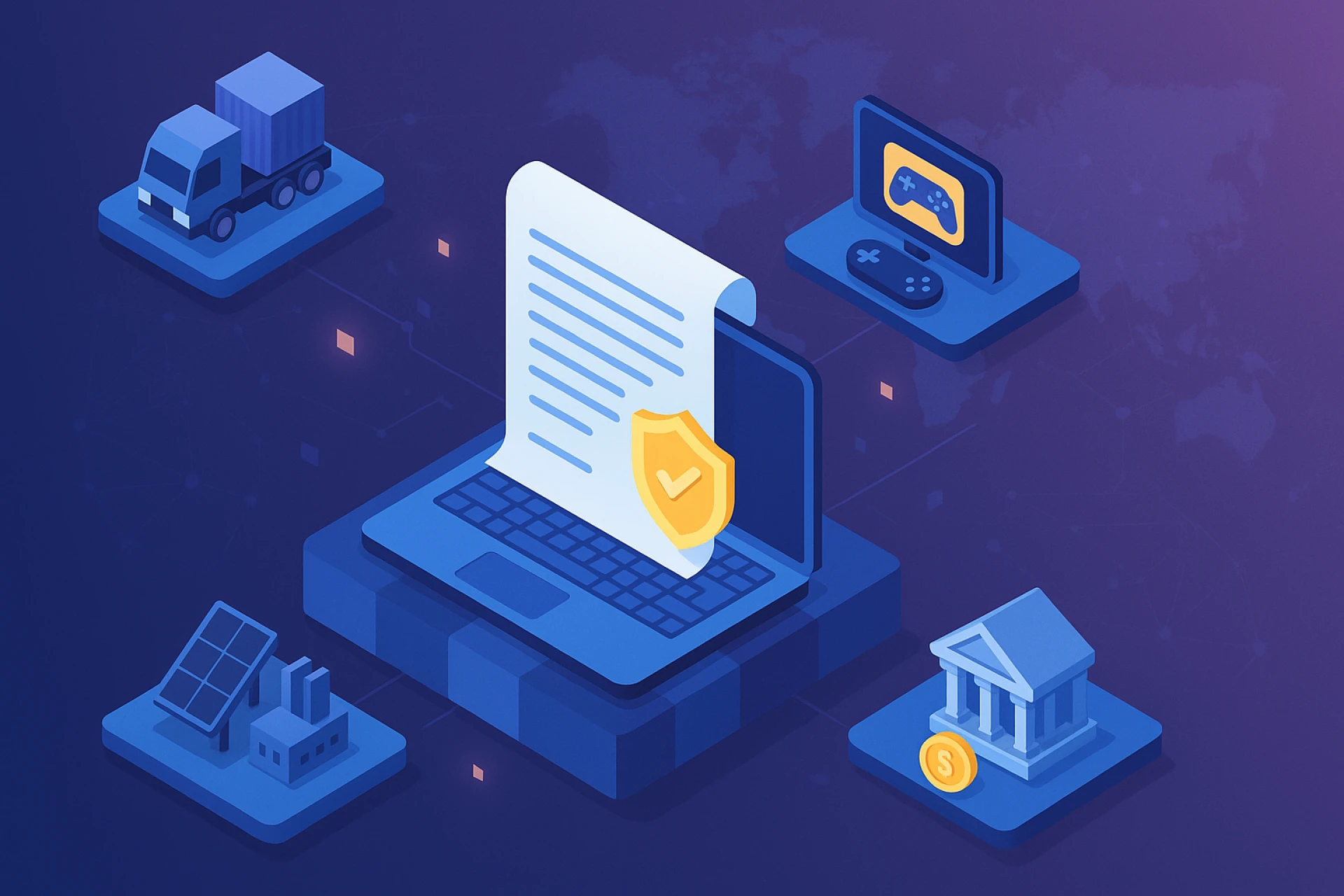
As blockchain technology continues to disrupt industries and redefine trustless systems, smart contracts have emerged as one of the most critical elements of decentralized applications (dApps). These self-executing programs control how digital assets behave, manage transactions, and automate business logic without relying on intermediaries. However, while smart contracts offer transparency and efficiency, they also carry significant risk. Once deployed on a blockchain, smart contracts cannot be altered, making vulnerabilities not just costly but irreversible.
This is where smart contract auditing plays a crucial role. It serves as the quality assurance layer for decentralized applications—helping identify and mitigate security flaws, logical errors, and inefficiencies before the contract goes live. With billions of dollars locked in DeFi protocols, NFT platforms, and DAOs, smart contract auditing has become a non-negotiable step in any serious Web3 development project.
What Is Smart Contract Auditing?
Smart contract auditing is the process of examining a smart contract's source code to detect security vulnerabilities, bugs, and potential exploits. The goal is to ensure the contract functions as intended, cannot be manipulated, and adheres to industry security standards. These audits are typically performed by specialized firms or experienced blockchain developers using a combination of manual code reviews and automated testing tools.
Audits can vary in depth—ranging from simple vulnerability scans to comprehensive multi-stage reviews with threat modeling and formal verification. They are usually conducted before the deployment of the smart contract, but post-deployment audits are also common for contracts already in use.
The Growing Importance of Smart Contract Auditing in Web3
The necessity for smart contract auditing has grown exponentially due to the increasing adoption of decentralized finance (DeFi), tokenized assets, and decentralized governance. In 2024 alone, several high-profile hacks—ranging from flash loan exploits to reentrancy attacks—resulted in losses exceeding hundreds of millions of dollars.
These incidents have made investors, founders, and even regulators more cautious. Whether you're building a DeFi lending protocol, launching an NFT collection, or creating a DAO governance system, smart contract auditing is a key step to gaining trust, securing user funds, and ensuring compliance. In many cases, a third-party audit is now a prerequisite for listings on top-tier DEXs and centralized exchanges.
How the Smart Contract Auditing Process Works
A typical smart contract auditing process follows a structured workflow to ensure thorough analysis:
1. Code Review and Static Analysis
Auditors begin by reviewing the smart contract’s codebase to understand the project’s architecture and logic. Tools like Mythril, Slither, and Solhint are used to detect syntax errors, reentrancy vulnerabilities, integer overflows, and gas inefficiencies.
2. Dynamic Analysis and Testing
Auditors simulate various transaction scenarios to understand how the contract behaves under different conditions. This helps expose hidden flaws that static analysis might miss, such as business logic failures or poor access control.
3. Manual Inspection
A manual code review is conducted by expert auditors to evaluate the logic and catch sophisticated attack vectors. Manual inspection is vital because many vulnerabilities—like price oracle manipulation or front-running opportunities—require human intuition and context to detect.
4. Threat Modeling and Exploit Scenarios
Auditors assess how an attacker might exploit the smart contract, identifying weak points such as poorly implemented time locks, insecure ownership transfers, or upgradable proxies without proper access controls.
5. Audit Report Generation
After all issues are documented, a detailed audit report is generated. This report includes a list of vulnerabilities (classified as critical, high, medium, or low), explanations of how they can be exploited, suggested fixes, and a summary of the overall contract security posture.
6. Fixes and Re-audit
Once the development team applies the recommended fixes, the auditors re-review the contract to verify that the vulnerabilities have been resolved and no new issues were introduced.
Common Vulnerabilities Found in Smart Contract Auditing
Smart contract auditing commonly uncovers the following issues:
Reentrancy attacks: Where an external contract calls back into the original function before it has finished executing.
Integer overflows/underflows: Mathematical operations exceeding the variable storage limit.
Access control flaws: Inadequate restrictions allowing unauthorized users to access privileged functions.
Flash loan exploits: Rapid borrowing and repayment that manipulate contract behavior within a single transaction.
Logic bugs: Errors in conditional logic or token distribution mechanisms.
Gas inefficiencies: Poorly optimized code leading to excessive gas consumption.
By identifying these vulnerabilities before deployment, auditing ensures a more secure, reliable, and scalable blockchain application.
Benefits of Smart Contract Auditing for Crypto Projects
Builds Credibility
A published audit report enhances your project’s reputation and assures investors and users that the protocol has undergone rigorous testing. It increases your chances of listing on reputable launchpads, exchanges, and DEX aggregators.
Prevents Financial Losses
The most apparent benefit of smart contract auditing is the protection of user funds. Preventing exploits before deployment can save millions in potential losses and avoid irreparable damage to your brand.
Ensures Compliance
In an evolving regulatory environment, projects must meet security and risk management standards. An audited smart contract aligns your project with best practices, helping you stay compliant and reducing the risk of legal scrutiny.
Improves Code Quality
Auditing also enhances your codebase by encouraging better documentation, modularity, and readability—ultimately contributing to more maintainable and scalable smart contracts.
Attracts Institutional and Venture Funding
Security is a primary concern for institutional investors and venture capital firms. A well-audited project demonstrates maturity and operational readiness, making it more appealing for large-scale investment.
When Should You Audit a Smart Contract?
While many assume smart contract auditing is a post-development activity, it’s best viewed as an integral part of the development lifecycle. Ideally, you should:
Perform an initial audit before mainnet deployment.
Run a re-audit after major updates or code changes.
Conduct continuous auditing for evolving dApps or smart contracts with upgradable proxies.
Additionally, staging a bug bounty program after the audit phase can crowdsource additional vulnerability detection before full public deployment.
Choosing the Right Smart Contract Auditing Company
Given the high stakes involved, selecting the right auditing partner is crucial. Look for firms that:
Have experience with similar projects or protocols.
Provide both manual and automated testing.
Are transparent with pricing, timelines, and scope.
Offer detailed, well-documented audit reports.
Have a strong track record and client testimonials.
Some of the most respected firms in the space include CertiK, Trail of Bits, Hacken, OpenZeppelin, and ConsenSys Diligence. However, niche or emerging auditing firms can also be valuable, particularly for early-stage projects looking for budget-friendly yet thorough audits.
Real-World Examples of Smart Contract Auditing in Action
Several high-profile projects have demonstrated the importance of thorough auditing:
Uniswap, one of the most widely used decentralized exchanges, conducts multiple smart contract audits before releasing new versions, ensuring each upgrade is secure.
Compound Finance went through multiple audits and formal verifications to establish its reputation as a secure DeFi protocol.
Axie Infinity’s Ronin Bridge hack, which resulted in a loss of over $600 million, underscored the need for constant auditing and real-time monitoring even for established platforms.
These examples highlight how auditing isn't just a best practice—it can be the difference between success and collapse.
The Future of Smart Contract Auditing
As the blockchain industry evolves, smart contract auditing will become more automated, integrated, and standardized. AI-driven code analysis, on-chain monitoring, and formal verification tools are already enhancing the auditor’s toolkit. Auditing will likely become an industry requirement, just like penetration testing in traditional cybersecurity.
Moreover, as cross-chain interoperability, zk-rollups, and Layer-2 solutions introduce new complexities, smart contract auditing will expand beyond Solidity to cover languages like Vyper, Move, and Cairo—addressing the diverse needs of multichain ecosystems.
Conclusion: Make Smart Contract Auditing a Priority
In the blockchain ecosystem, security is not optional—it's foundational. Smart contract auditing ensures that the decentralized systems we trust with our data, assets, and governance are robust, transparent, and resilient. Whether you're a startup launching a DeFi protocol or an enterprise integrating blockchain into your workflow, prioritizing auditing from the beginning is the smartest move you can make.
By investing in smart contract auditing, you're not just securing code—you’re safeguarding users, preserving your brand, and building a future-proof foundation for innovation.