
Choosing the best commercial display is a critical decision for businesses aiming to enhance visibility, communication, and customer engagement. From retail signage to corporate boardrooms, the right display solution can significantly impact how your brand is perceived.
This SEO-optimized, plagiarism-free guide will help you understand how to select the ideal commercial display screen based on your business needs.
What Is a Commercial Display?
A commercial display is a professional-grade screen specifically engineered for business environments. Unlike standard televisions, these displays are built to operate for extended hours, deliver consistent brightness, and support advanced content management systems.
They are widely used in:
- Digital signage displays in retail stores
- Corporate meeting room displays
- Restaurant menu boards
- Healthcare and public information systems
Why Choosing the Right Commercial Display Matters
Investing in the best commercial display for business ensures:
- Better customer engagement
- Higher content visibility
- Long-term durability
- Lower maintenance costs
A poor-quality display can lead to frequent breakdowns and reduced brand impact.
Key Factors to Consider When Buying a Commercial Display
1. Screen Size and Resolution
Selecting the right commercial display size depends on viewing distance and installation area.
- Full HD (1080p): Suitable for basic content
- 4K commercial displays: Ideal for sharp, detailed visuals
- 8K displays: Future-ready but expensive
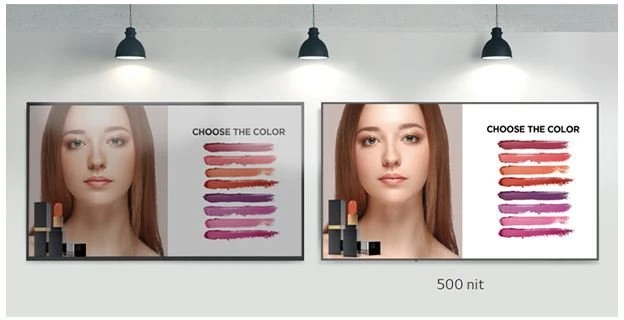
2. Brightness (Nits)
Brightness determines how visible your display is in different lighting conditions.
- 300–500 nits: Indoor office use
- 700–1000 nits: Retail environments2500+ nits: Outdoor digital signage displays
For storefronts, always choose a high brightness commercial display.
3. Display Technology
Understanding display types helps you choose the best fit:
- LED commercial displays: Affordable and reliable
- OLED displays: Best for premium visuals and contrast
- QLED displays: High brightness and color accuracy
Each technology serves different business goals and budgets.
4. Operating Hours (16/7 vs 24/7)
Commercial displays are designed for long usage:
- 16/7 commercial display: For standard business hours
- 24/7 commercial display: For continuous operation
If your business runs all day, investing in a 24/7 digital signage display is essential.
5. Connectivity Options
Modern commercial display screens should support:
- HDMI, USB, DisplayPort
- Wi-Fi and Bluetooth
- Cloud-based CMS integration
Smart connectivity ensures easy content updates and seamless operation.
6. Content Management System (CMS)
A built-in CMS allows businesses to:
- Schedule advertisements
- Update content remotely
- Manage multiple screens
Choosing a display with a digital signage CMS saves time and operational effort.
7. Installation and Orientation
Flexibility is key when installing your display:
- Landscape and portrait modes
- Wall mounting compatibility
- Video wall support
For menus and ads, portrait commercial displays work especially well.
8. Energy Efficiency and Cost Savings
Energy-efficient displays help reduce long-term costs. Look for:
- Low power consumption
- Auto brightness adjustment
- Power scheduling features
This is crucial when managing multiple digital signage displays.
Best Commercial Display Solutions by Industry
Retail Stores
Use high brightness commercial displays to attract foot traffic and showcase offers.
Corporate Offices
Opt for interactive commercial displays with wireless presentation capabilities.
Restaurants & Cafes
Choose digital menu board displays with easy content updates.
Outdoor Advertising
Go for outdoor commercial displays with weather resistance and ultra-high brightness.
Common Mistakes to Avoid
Choosing a consumer TV instead of a commercial display
Ignoring brightness requirements
Overlooking CMS compatibility
Buying based only on price
Avoiding these mistakes ensures you get the best value commercial display.
How to Choose the Best Commercial Display for Your Business
To select the right display:
- Identify your usage (indoor/outdoor)
- Decide on screen size and resolution
- Check brightness requirements
- Ensure CMS compatibility
- Compare warranty and support
This approach helps you find the best commercial display solution tailored to your needs.
Conclusion
Selecting the best commercial display is not just about buying a screen—it’s about investing in a powerful communication tool. By focusing on brightness, resolution, durability, and smart features, businesses can create impactful visual experiences.
Whether you need a digital signage display, a corporate meeting screen, or an outdoor commercial display, making an informed choice will ensure long-term success.