A logistics operator in Jebel Ali replaced two ageing diesel units with a pair of newer compact machines last year. The decision was driven by storage space as much as performance. The facility had grown its racking density but not its floor area. Bigger machines were becoming a liability in the aisles. The swap freed up operational space and cut the daily charge time calculation out of the morning routine entirely. The performance conversation came later. It surprised people.
Compact equipment used to be the compromise choice. Smaller capacity. Lower power. Acceptable where something larger could not fit. That framing has shifted considerably. The machines available now are not simply smaller versions of larger ones. They are purpose-built around the constraints of real working environments, and that distinction is worth paying attention to.
The Forklift Category Is Further Along Than Most People Realise
The Forklift market in the UAE has absorbed a significant amount of change over the past few years. Warehouse density is increasing. Indoor air quality requirements are tightening in climate-controlled facilities. Fuel cost pressure has not gone away.
The electric forklift has answered most of those pressures in a way that the diesel category cannot. Charging infrastructure has become easier to install and manage.
Battery performance under sustained load has improved to the point where shift coverage is reliable without mid-day swaps in most warehouse configurations. Operators who ran the numbers two years ago and decided against electric are finding the numbers look different now.
The remaining question for most operators is the outdoor and heavy-load segment. For yards, container handling, and sustained high-cycle outdoor work, the diesel powertrain still holds its ground. That segment is narrowing, but it has not disappeared.
What Backhoe Wheel Loaders Are Doing Differently
The backhoe wheel loader has always traded on its ability to do two jobs from one machine. That value proposition has not changed. What has changed is the breadth of tasks a single unit can be configured for through improved attachment systems.
Newer backhoe wheel loaders can switch between digging, loading, augering, and breaking within a single shift without the kind of setup time that used to make mid-task transitions uneconomical. On sites where the programme moves fast and the task mix changes day to day, that flexibility has started to look less like a convenience and more like a structural advantage in how the equipment budget gets allocated.
Skid Steer Loaders In Environments That Keep Changing
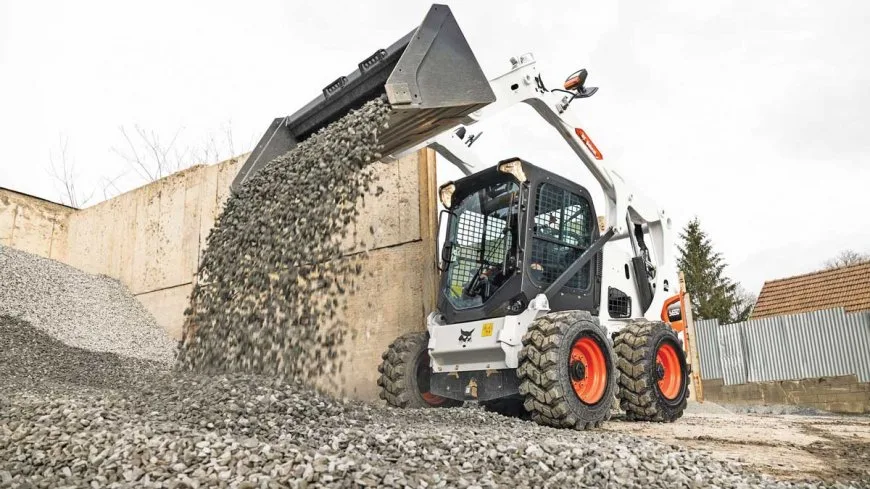
Urban construction in the UAE is not getting simpler. Sites are tighter. Access windows are shorter. Proximity to occupied structures means vibration and noise limits apply more often than they used to. The skidsteer loader fits those conditions in a way that larger equipment cannot replicate.
The skid steer loader category has also benefited from the same attachment evolution that has changed the backhoe market. A machine that can clean, grade, lift, drill, and sweep from the same base unit is solving a different problem from the single-function compact machines of ten years ago. Site managers who have not revisited what a current skid steer can do are working from an outdated reference point.
The Common Thread Across Compact Equipment Categories
Across forklifts, backhoe loaders, and skid steers, the direction of development is the same. More capability per footprint. Better integration with site management and telematics systems. Reduced dependency on fuel in indoor and semi-indoor environments. Faster task transitions through improved attachment design.
None of this is theoretical. These are changes that procurement teams are encountering when they go back to market after a few years away from it. The machines available now are not the machines that were available when the last equipment list was written. Sites that are still specifying from that older reference point are leaving performance and cost efficiency on the table.
The Jebel Ali operator updated the equipment list. The morning routine got simpler. The aisles got safer. The performance held up through the full shift. That outcome was not guaranteed at the time of purchase. It became the expectation within a month of running the new machines.