Slurry pipelines are used to move mixtures of water and solid materials from one place to another. These mixtures can contain sand, minerals, coal, ash, rocks, and other abrasive materials. As the slurry moves through the pipeline, the solid particles continuously rub against the internal surface. Over time, this can cause serious wear.
Slurry pipeline wear plates are used to protect pipeline surfaces from this type of damage. They provide a wear-resistant layer in areas where abrasion is high and help extend the service life of the pipeline system.
For mining, mineral processing, dredging, power plants, and other industries, proper wear protection can help reduce maintenance work and unexpected downtime.
What Are Slurry Pipeline Wear Plates?
Slurry pipeline wear plates are abrasion-resistant plates or liners used to protect pipelines and related equipment from wear caused by slurry.
A slurry can contain hard particles that move at high speed through the pipeline. These particles can gradually remove material from the pipe wall. The problem can become more serious at bends, elbows, reducers, joints, and other areas where the flow changes direction.
Wear plates or liners provide an additional protective surface between the abrasive slurry and the main pipe structure.
Why Do Slurry Pipelines Wear?
Slurry causes wear mainly because of the solid particles carried by the liquid. Sand, gravel, mineral particles, and other hard materials can continuously contact the pipe surface.
The amount of wear depends on several factors, including:
- Particle size
- Particle hardness
- Slurry concentration
- Flow speed
- Pipeline design
- Pipe diameter
- Changes in flow direction
- Operating pressure
- Temperature and chemical conditions
Higher slurry velocity and higher concentrations of abrasive solids can increase wear in many applications.
Where Are Wear Plates Used in Slurry Pipelines?
Wear protection is not always required equally throughout the entire pipeline. Some areas experience much more wear than others.
Pipeline Bends
Bends can experience high wear because the slurry changes direction. Solid particles may hit or slide along the outer or inner areas of the bend depending on the system design.
Wear-resistant liners can help protect these sections.
Elbows
Elbows are common high-wear areas in slurry systems. The change in flow direction can increase contact between solid particles and the pipe wall.
Reducers
Reducers change the internal diameter of the pipeline. Changes in flow conditions can result in increased wear in certain areas.
Pipeline Joints
Joints and connection areas may require additional protection depending on the pipeline design and slurry conditions.
Pump Discharge Lines
The areas around slurry pumps and discharge pipelines can experience high wear because the slurry is moving under pressure and often at high velocity.
Types of Wear-Resistant Materials
Different materials can be used to protect slurry pipelines. The right option depends on the type and severity of wear.
Abrasion Resistant Steel
Abrasion-resistant steel plates are commonly used for applications where good wear resistance and structural strength are required.
They can be fabricated into liners and other protective components according to the pipeline design.
Chromium Carbide Overlay Plates
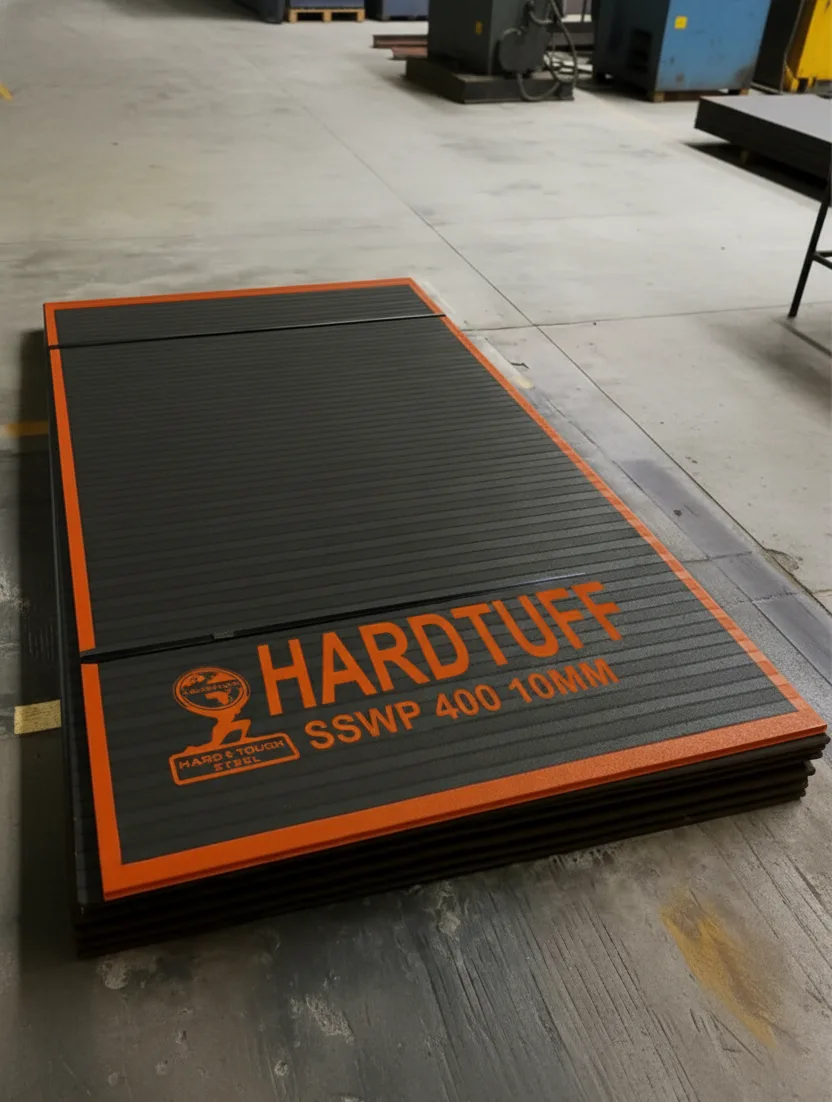
Chromium carbide overlay plates have a hard chromium-carbide-rich wear layer deposited onto a steel base.
These plates are designed for severe abrasion and can be used as liners in suitable slurry handling applications.
Rubber Liners
Rubber liners are also used in some slurry systems, especially where impact and abrasion need to be managed. Their suitability depends on the slurry composition, temperature, particle size, and operating conditions.
Ceramic Liners
Ceramic materials can provide very high hardness and abrasion resistance. They may be suitable for certain severe-wear applications, although installation and impact resistance need to be considered carefully.
Benefits of Slurry Pipeline Wear Plates
Longer Pipeline Service Life
Wear plates and liners help protect the original pipe wall. This can increase the service life of high-wear sections.
Reduced Maintenance
When vulnerable areas are properly protected, the need for frequent repairs can be reduced.
Less Downtime
Pipeline repairs can interrupt production. Wear protection can help reduce unexpected shutdowns caused by excessive wall loss.
Protection of Expensive Equipment
Wear liners can also protect pumps, elbows, chutes, hoppers, and other components connected to the slurry pipeline.
Better Maintenance Planning
Regular inspection of wear liners makes it easier to identify worn areas and plan replacement work before a major failure occurs.
How to Choose Slurry Pipeline Wear Plates
Choosing the right wear plate requires an understanding of the actual working conditions.
1. Know the Slurry Material
Identify what the slurry contains. Sand, coal, iron ore, mineral concentrate, ash, and other materials can have different wear characteristics.
2. Check Particle Size
Large and coarse particles can create different wear conditions compared with fine particles.
3. Consider Slurry Concentration
A higher concentration of solids can increase the amount of abrasive material moving through the pipeline.
4. Check Flow Speed
The velocity of the slurry is an important factor in pipeline wear. Higher velocity can increase surface wear in many systems.
5. Consider Impact
Some sections may experience mainly sliding abrasion, while others may experience a combination of impact and abrasion.
6. Check Temperature and Chemicals
Temperature and chemical conditions should also be considered when selecting the liner material.
7. Consider Installation
The selected wear plate should be suitable for the planned installation method, whether it is welding, bolting, clamping, or another method.
Installation of Slurry Pipeline Wear Plates
Proper installation is important for reliable performance.
Before installing a wear plate or liner, the pipeline surface should be cleaned and prepared properly. The liner should be cut and fitted according to the pipeline dimensions.
For welded liners, the welding procedure should match the material and manufacturer's recommendations. Incorrect welding can cause cracking or other problems.
For bolted or mechanically fixed liners, the fasteners should be properly selected and tightened.
The joints between liners should also be checked carefully because poorly fitted joints can become high-wear areas.
Maintenance and Inspection
Even a good wear plate requires regular inspection. The purpose is to identify wear before it reaches the main pipe wall.
During inspection, check for:
- Excessive thickness loss
- Cracks
- Loose liners
- Damaged welds
- Worn joints
- Holes
- Uneven wear
- Corrosion
- Damage around bends and elbows
Ultrasonic thickness measurement can also be used in suitable systems to monitor remaining material thickness.
Common Industries Using Slurry Pipeline Wear Protection
Slurry pipelines are used in many industries, including:
- Mining
- Mineral processing
- Dredging
- Coal handling
- Power generation
- Cement production
- Steel plants
- Sand processing
- Aggregate processing
- Chemical processing
Each application can have different slurry properties, so wear protection should be selected according to actual operating conditions.
Slurry Pipeline Wear Plates and Cost Savings
Replacing an entire pipeline section can be expensive and time-consuming. Wear plates allow companies to focus protection on areas that experience the highest wear.
A suitable liner can reduce the rate at which the main pipe wall is damaged. This may help reduce repair frequency and maintenance costs over the working life of the system.
However, the cheapest wear plate is not always the most suitable choice. Material selection should consider service life, installation cost, maintenance requirements, and the actual wear conditions.
Conclusion
Slurry pipeline wear plates are used to protect pipelines from the abrasive action of solid particles carried in slurry. They are particularly useful in mining, mineral processing, dredging, power plants, and other industries where abrasive materials are transported continuously.
Pipeline bends, elbows, reducers, joints, and pump discharge areas often require special attention because they can experience high wear.
Abrasion-resistant steel, chromium carbide overlay plates, rubber, and ceramic liners are some of the options used for slurry wear protection. The correct choice depends on slurry composition, particle size, concentration, flow velocity, impact, temperature, and installation requirements.
For more details contact us-
[email protected]
Phone-+91-98215-13630
Website-https://www.hard-tuff.com/hardtuff-cco-wearplate-ht-maxim-manufacturers-exporters-suppliers-stockists.html