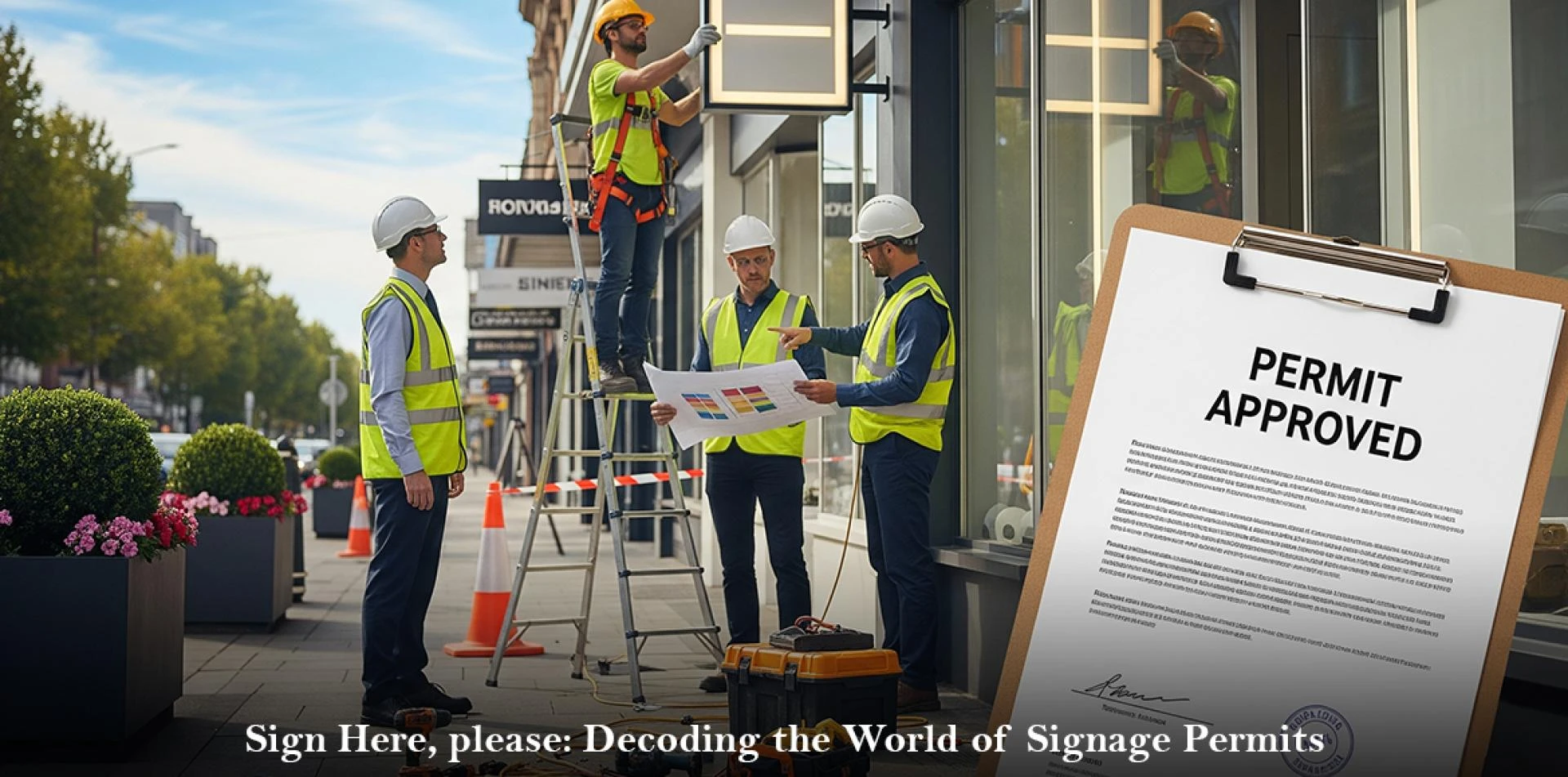
You've just approved a brilliant design for your business's new sign. It perfectly captures your brand identity and you’re eager to see it installed, attracting new customers and making your presence known. In this excitement, it’s easy to assume the next step is simply placing the order. However, a critical, often-overlooked stage stands between your approved design and a successful installation: securing a signage permit. Many entrepreneurs are caught off guard by the fact that you can’t simply erect any sign you wish. Local councils enforce specific regulations on signage, and proceeding without the proper permissions can result in steep fines, a legally mandated removal of your brand-new sign, and a significant financial loss.
Understanding the purpose behind these permits is the first step to demystifying the process. These regulations aren't arbitrary red tape; they are established to ensure public safety and maintain community aesthetics. They prevent signs from obstructing traffic, creating hazards by being structurally unsound, or contributing to visual clutter, especially in areas with unique architectural character. Before you even finalise a design or commit to a Signage Shop, your initial action should always be to consult your local council. While a reputable sign provider can offer guidance, the ultimate legal responsibility for obtaining the permit falls on you, the business owner. Proactive research at this stage will save you considerable time and potential headaches down the line.
A popular question is: Which signage require a permit? The answer varies significantly from one council to another, but the requirement generally hinges on factors like size, illumination, type, and location. Small, temporary signs might be exempt, whereas larger, permanent structures almost always require approval. This is a key distinction from other forms of marketing; you have complete freedom when ordering A4 Flyer Printing Melbourne for a letterbox drop, as it doesn't impact public space or infrastructure. A physical sign attached to a building, however, is considered a development and is subject to planning laws.
Here is a general breakdown of what often requires a permit versus what may be exempt:
· Signs Likely to Require a Permit:
o Any sign that is illuminated, whether internally (like a lightbox) or by external spotlights.
o Freestanding structures like pylon, monument, or pole signs.
o Any sign that exceeds a specific size threshold (e.g., over one square metre).
o Signage planned for a heritage-listed building or a designated heritage conservation area.
· Signs That May Be Exempt (Always Verify with Your Council):
o Small, flat signs mounted flush against the building facade.
o Window decals or graphics that cover less than 25% of the window area.
o Signs displaying public information or required by law.
o Temporary signs for events or sales, provided they meet size and duration limits.
Your business's specific context and geography have a significant impact on the rules. For example, the regulations for temporary signage are developed for practical and short-term use. The specific guidelines for Real Estate Flags Printing Melbourne dictate their acceptable size, placement, and how long they can be displayed around an open-for-inspection property to avoid creating a permanent fixture or obstructing pedestrian flow. In contrast, a permanent, freestanding pylon sign for a shopping centre would face a far more rigorous assessment covering engineering, wind loading, and its visual impact on the surrounding streetscape. Understanding where your proposed sign fits within these categories is essential for a smooth process.
If you determine that your sign requires a permit, you must make a formal application to your local government. This is not a quick formality; it can take weeks or even months for approval, so it’s vital to start the process early. For large or complex installations, such as ordering Mesh Banner Printing Melbourne to wrap a multi-story construction site, the documentation requirements will be extensive. Be prepared to gather and submit the following:
· A Detailed Site Plan: An architectural drawing showing property lines and the exact proposed location of the sign.
· Signage Mock-ups: Scaled drawings of the sign itself, detailing its dimensions, materials, colours, and the full text or graphics.
· Structural and Engineering Details: For any large, projecting, or freestanding sign, an engineer’s certification may be required to confirm its structural integrity.
· Illumination Plan: If the sign is lit, you must provide details on brightness, type of lighting, and hours of operation to address potential light spill.
· Property Owner’s Consent: If you are leasing the premises, you will need the written permission of the landlord.
Tackling the signage permit puzzle isn't just about avoiding fines; it’s about protecting your investment and ensuring your sign can do its job effectively for years to come. By performing your due diligence upfront, you transform a potentially frustrating bureaucratic hurdle into a straightforward part of your project plan.
Once your permit is secured and you have the green light to proceed, partnering with a reliable printer is the final step. The professional team at Mojo Press is ready to produce your high-quality, council-approved signage, ensuring the final product is every bit as brilliant as your initial vision.