
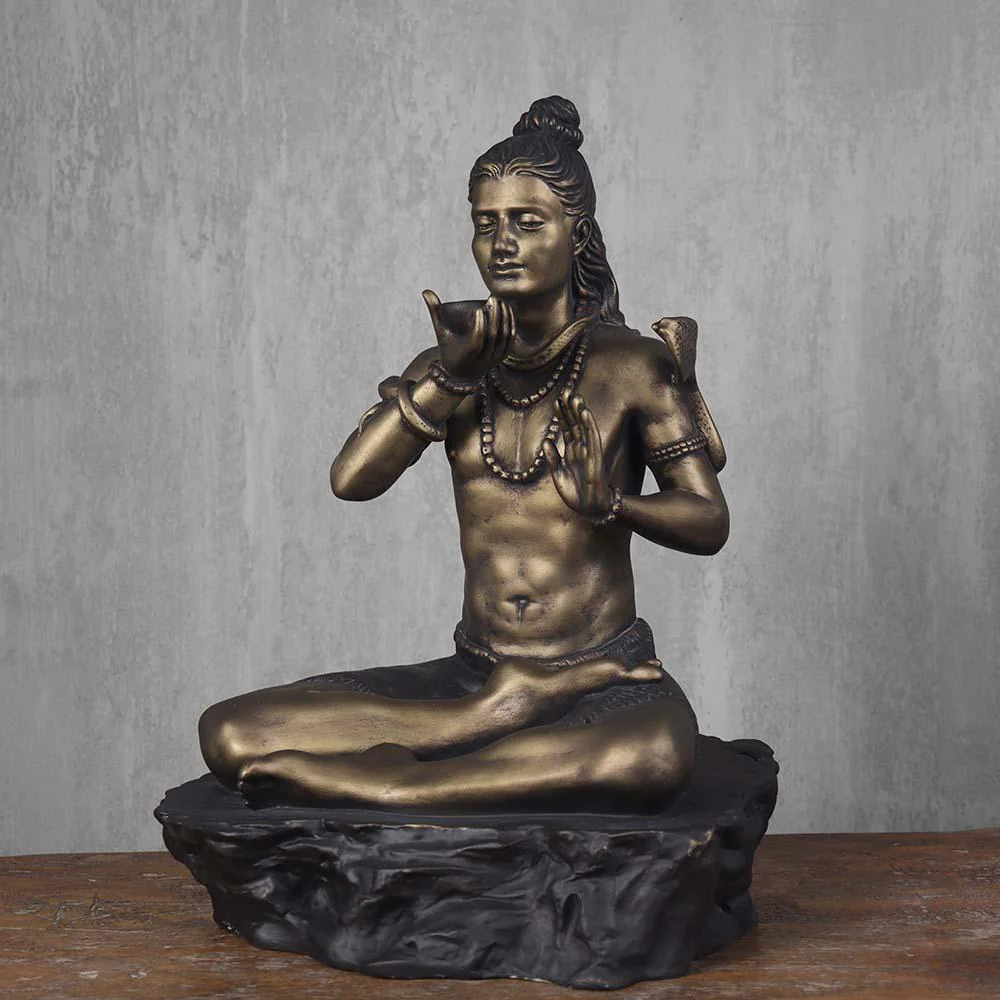
The Shiv Murti Statue, representing Lord Shiva—the supreme deity in Hinduism—is a profound symbol of spirituality, strength, and cosmic balance. Found in temples, homes, and public spaces across India and the world, these statues hold deep religious significance and are revered by millions of devotees. More than just a religious icon, a Shiv Murti serves as a spiritual focal point that inspires meditation, devotion, and peace.
The Significance of Lord Shiva
Lord Shiva is one of the principal deities in Hindu mythology and forms a part of the holy trinity known as the Trimurti, along with Brahma (the creator) and Vishnu (the preserver). Shiva is often referred to as “The Destroyer of Evil”, yet he is also a creator and protector of life. His presence embodies opposites—asceticism and sensuality, wrath and benevolence, destruction and regeneration.
A Shiv Murti captures these elements, often depicting him in iconic forms such as:
- Meditating in the Himalayas (symbolizing peace and detachment)
- Performing the cosmic dance (Nataraja) (representing the cycle of creation and destruction)
- With a serpent around his neck and Ganga flowing from his hair (signifying power and purity)
Features and Symbolism of a Shiv Murti
Every element of a Shiv Murti is symbolic:
- Trident (Trishul): Represents the three fundamental forces—creation, preservation, and destruction.
- Third Eye: Denotes inner vision and wisdom beyond ordinary perception.
- Crescent Moon: Symbolizes time and the cycle of creation.
- Blue Throat (Neelkanth): Refers to Shiva drinking poison during the churning of the ocean to save the world.
- Tiger Skin: Signifies victory over animal instincts and desires.
- Meditative Posture: Reflects inner peace, stillness, and spiritual awakening.
Types of Shiv Murti Statues
- White Marble Shiv Murti
- Ideal for homes and temples, white marble statues exude purity and serenity. These are often placed in prayer rooms or meditation spaces.
- Black Stone or Granite Shiv Murti
- Frequently seen in traditional temples, these statues are long-lasting and have a strong spiritual presence.
- Brass and Bronze Shiv Murti
- These metallic versions are often intricately detailed and used in homes or public installations.
- Fiber or Resin Shiv Murti
- Lightweight and durable, these are popular for both indoor and outdoor décor, especially in modern settings.
Placement of Shiv Murti at Home
- The best direction to place a Shiv Murti is north or northeast, which is considered highly auspicious in Vastu Shastra.
- It should be placed in a clean and elevated space, such as a temple or meditation corner.
- Avoid placing a Shiv Murti near or opposite a bathroom or under a staircase.
Popular Destinations Featuring Giant Shiv Murtis
Some of the tallest and most famous Shiv Murti statues have become landmarks and pilgrimage destinations:
- Kailashnath Mahadev Statue (Nepal): One of the tallest Shiva statues in the world at 143 feet.
- Adiyogi Shiva Statue (Coimbatore, India): A 112-foot high statue symbolizing the first yogi and a source of yogic wisdom.
- Murudeshwar Temple (Karnataka, India): Home to a majestic 123-foot tall Shiva statue by the Arabian Sea.
Spiritual and Decorative Value
A Shiv Murti not only enhances the spiritual energy of a space but also adds a timeless aesthetic. Whether placed in a temple, garden, office, or living room, it serves as a constant reminder of balance, inner strength, and the sacredness of life.
Final Thoughts
The Shiv Murti Statue is more than an artistic sculpture—it’s a living symbol of the eternal force that governs the universe. Whether for religious worship, meditation, or home décor, it inspires a connection to the divine and brings peace, power, and protection to those who revere it.