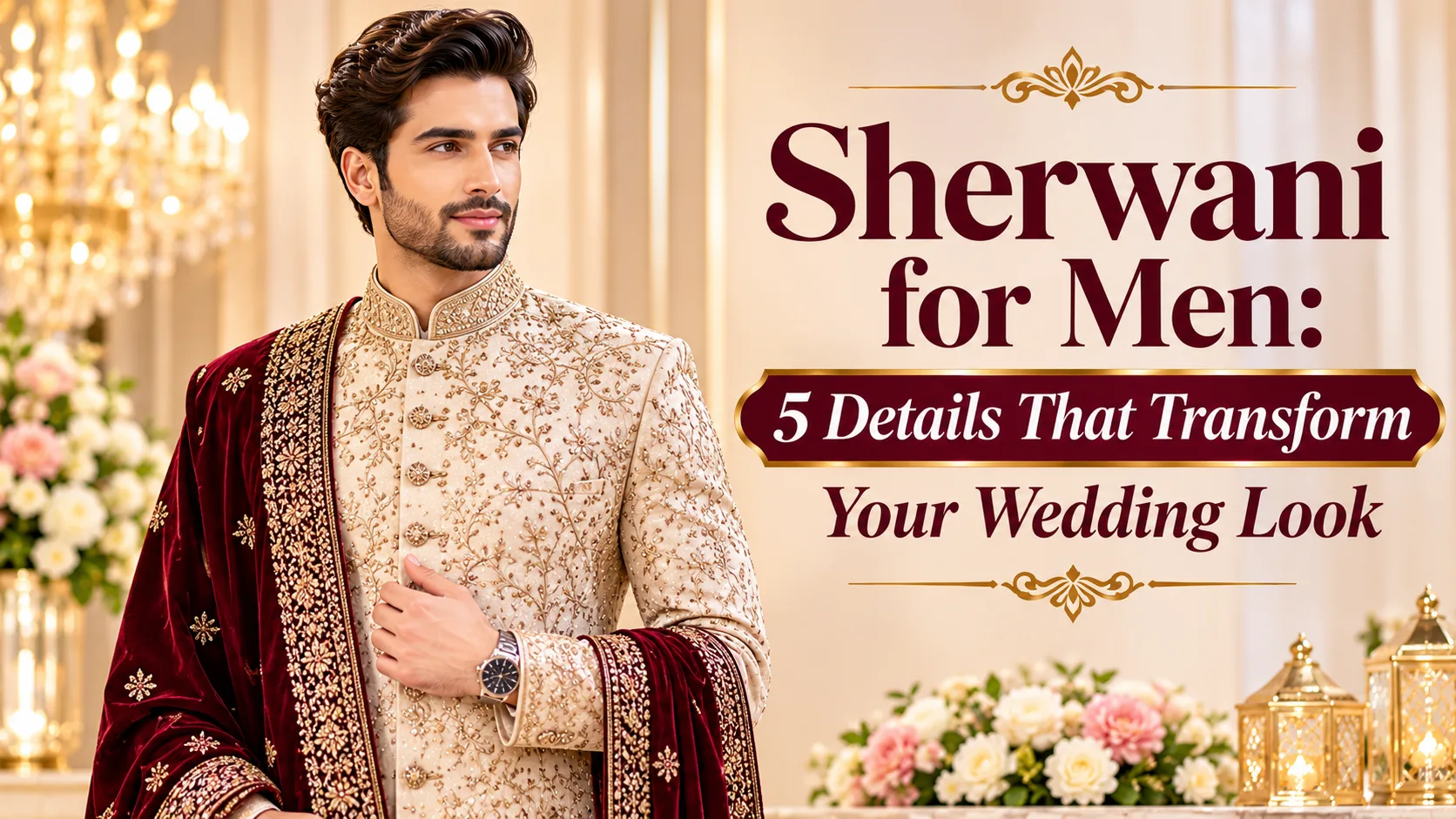
A wedding outfit is about more than looking well-dressed. For Indian and South Asian men, it is also a way to celebrate tradition, express personal style and create memories that last beyond the occasion. Whether you are getting married, attending a family wedding or preparing for a special celebration, choosing the right sherwani can make a noticeable difference to your overall appearance.
A well-styled sherwani brings together several elements, including the right fit, fabric, embroidery, colour and accessories. Even small details such as the collar design, sleeve length or footwear can influence how the complete outfit looks.
For men living in the UK, choosing wedding attire also involves considering the season, venue and nature of the celebration. From traditional ceremonies to contemporary hotel receptions, the right outfit should offer both style and comfort.
So, what makes a wedding sherwani stand out? Here are five important details that can transform your wedding look and help you make a confident style choice.
1. The Right Fit Makes All the Difference
One of the first things people notice about a wedding outfit is how well it fits. An expensive fabric or elaborate embroidery cannot compensate for poor tailoring. A properly fitted sherwani creates a balanced silhouette and gives the wearer a polished appearance.
When choosing a sherwani for men, pay attention to the shoulders, chest, waist and sleeve length. The shoulder seams should sit naturally without extending beyond your shoulders, while the chest should offer enough room for comfortable movement. Sleeves should finish around the wrists without looking too short or covering the hands.
The length and silhouette also influence the overall appearance. Traditional longer sherwanis offer a classic look, while shorter achkan-inspired designs provide a contemporary alternative. Slim-fit styles create a sharper silhouette, whereas straight-cut designs suit men who prefer a more relaxed traditional appearance.
Comfort is just as important as appearance. A wedding involves several hours of standing, sitting, walking, photography and participating in ceremonies. Your sherwani should allow you to move comfortably throughout the celebration.
It is also worth trying the complete outfit with the intended trousers or churidar and footwear before the wedding. This helps identify fitting issues early and allows enough time for alterations.
Style tip: Schedule your final fitting well before the wedding. A well-tailored sherwani can make even a relatively simple design look sophisticated.
2. Choose a Fabric That Matches the Occasion and Season
Fabric influences how a sherwani looks, feels and holds its shape. It also determines how comfortable you remain throughout a long wedding celebration.
For shoppers comparing mens sherwani UK collections, considering the UK's seasonal weather is particularly useful. A summer wedding at an outdoor venue may call for a lighter fabric, while a winter reception offers more opportunities to wear richer materials.
Raw silk is a popular choice for traditional wedding ceremonies because of its structured appearance and subtle texture. Brocade and jacquard are equally interesting options, featuring woven patterns that add visual character without always requiring heavy embroidery. These fabrics work well for men who prefer a traditional appearance with decorative detailing.
Velvet offers a richer texture and is particularly suitable for winter weddings and formal evening receptions. Cotton-silk blends, on the other hand, can provide a practical balance of comfort, texture and elegance for daytime functions.
When selecting fabric, consider the venue as well as the season. Heated hotel reception spaces, crowded wedding halls and outdoor ceremonies can create different comfort requirements. A heavily layered outfit may look impressive, but it should not become uncomfortable after a few hours.
Pay attention to the lining, fabric weight and breathability before making your choice. The best fabric is one that complements the occasion while allowing you to enjoy the celebration.
Style tip: Choose your sherwani fabric based on when and where you will wear it, rather than selecting a material simply because it looks luxurious.
3. Pay Attention to Embroidery and Craftsmanship
Embroidery is often what gives a wedding sherwani its distinctive character. From detailed traditional patterns to minimal contemporary designs, decorative work can make even a simple outfit look special.
Zardozi embroidery is known for its metallic threadwork and rich appearance, particularly around collars, cuffs and front panels. Dabka work adds intricate texture, while traditional thread embroidery can create a more subtle and refined finish. Beadwork is another option for men who prefer elaborate occasionwear.
Tonal embroidery, which uses threads close to the base colour of the fabric, is particularly suitable for contemporary styling. It adds depth and detail without creating too much contrast.
The placement of embroidery matters as much as the technique itself. Decorative work around the collar and chest naturally draws attention to the upper body, while embroidered borders create visual interest along the length of the outfit. For a traditional wedding ceremony, detailed embroidery can complement the formality of the occasion. For receptions and contemporary celebrations, subtle patterns and clean detailing may be more suitable.
Craftsmanship should also be considered. Check that decorative elements are securely attached and that the stitching looks consistent. A well-made sherwani should have a good balance between its fabric, embroidery and overall construction.
Style tip: Choose embroidery that complements the design instead of competing with it. One or two carefully detailed areas can create a more balanced appearance than heavy decoration throughout the outfit.
4. Select a Colour That Complements Your Wedding Style
Colour plays an important role in creating the overall impression of a wedding outfit. The right shade can make a sherwani look sophisticated, traditional or contemporary, depending on how it is styled.
While ivory, cream and gold remain popular choices for traditional celebrations, darker shades are also suitable for men who prefer a more distinctive appearance.
A black sherwani is an elegant option for men who want a refined and confident wedding look. It works particularly well for evening receptions, formal celebrations and contemporary wedding themes. Black provides a versatile base for different embroidery styles. Gold and silver detailing can create contrast, while tonal black embroidery offers a more understated finish. Pairing it with coordinated footwear and a complementary stole can make the outfit look complete without adding too many decorative elements.
Ivory and cream offer a timeless appearance and work beautifully for traditional ceremonies. Gold embroidery, delicate threadwork and subtle embellishments can add character without making the outfit look overly elaborate.
Navy blue is a sophisticated alternative for evening celebrations. It pairs naturally with silver, gold and antique-finish embroidery. Maroon and burgundy are equally appealing for men who prefer richer traditional colours, particularly for grand wedding ceremonies and festive gatherings.
Before settling on a shade, consider the wedding's colour theme, time of day and venue. Coordinating your sherwani with the bride's outfit can create a balanced appearance, but matching every detail is not necessary. For example, an ivory sherwani with complementary embroidery can look elegant alongside a richly coloured bridal outfit.
For anyone comparing sherwani UK collections, it is worth considering the occasion before deciding on a colour. Some families may also have particular preferences regarding colours for religious ceremonies, so checking beforehand can be helpful.
Style tip: Choose one main colour and build the remaining details around it. Your accessories do not need to match the sherwani exactly.
5. Accessories That Bring the Entire Look Together
Accessories may appear to be small details, but they can significantly influence the final appearance of a wedding outfit. The right combination adds personality and connects the different elements of your sherwani.
A traditional safa or turban adds ceremonial character and is particularly suitable for the groom's main wedding look. Choose a colour that complements the sherwani or repeats a shade from its embroidery. Mojaris or juttis are traditional footwear choices that complete the outfit, with embroidered or lightly embellished designs working particularly well with formal sherwanis.
A dupatta or stole introduces another layer of colour and texture. It can be coordinated with the embroidery or the bride's outfit to create a more connected appearance. A brooch or kalgi can add a decorative focal point, while a refined watch or traditional neckpiece can bring additional personality to simpler designs.
The key is to maintain balance. A heavily embroidered sherwani may only need a simple dupatta, elegant footwear and one statement accessory. A more minimal design gives you additional freedom to experiment with decorative pieces.
Men choosing a black sherwani can consider gold, silver or pearl-inspired accessories, depending on the embroidery and overall colour scheme. Traditional mojari footwear can complement the look, while a contrasting stole can introduce another shade without making the outfit appear too busy.
Comfort should not be overlooked. Weddings involve long hours of standing, walking, photography and dancing. Choose footwear that fits properly and feels comfortable. It is always better to try new shoes before the wedding rather than wear them for the first time on the day.
Style tip: Try all your accessories with the complete sherwani before the wedding. This helps you identify colour differences, uncomfortable fittings and details that may not work together.
Choosing a Sherwani for Different Wedding Functions in the UK
South Asian weddings often include several celebrations, and each function may have a different dress code and atmosphere. Rather than choosing an outfit based only on appearance, consider what the event involves.
For the main wedding ceremony, traditional silk or brocade sherwanis with detailed embroidery and coordinated accessories create a formal appearance. Engagement celebrations offer an opportunity to experiment with contemporary silhouettes, subtle embroidery and refined colours.
For Sangeet and Mehndi functions, comfortable fabrics and designs that allow easy movement are practical choices, especially when dancing and participating in celebrations. Wedding receptions provide more opportunities to experiment with darker shades, including black and navy, alongside modern silhouettes and sophisticated detailing.
Winter weddings also require some thought. Velvet, richer fabrics and deeper colours can complement the setting of a winter celebration. For outdoor photographs or colder ceremonies in the UK, consider practical layering while keeping the outfit's overall proportions balanced.
When comparing sherwani UK options, look beyond the design itself. Check fabric quality, available sizes, tailoring requirements and delivery timelines. Planning early is particularly important when alterations or custom measurements are involved.
Conclusion: The Small Details Create a Memorable Wedding Look
A well-styled sherwani is the result of thoughtful choices rather than simply selecting an elaborate design. The right fit, suitable fabric, quality embroidery, complementary colours and carefully selected accessories all contribute to a polished appearance.
Whether you prefer a traditional outfit or a contemporary wedding look, choose something that reflects your personality and keeps you comfortable throughout the celebration. With these details in mind, finding the right wedding attire becomes much easier.
For men considering occasionwear options from UK retailers, Sonas Couture is also a name to keep in mind when comparing traditional and contemporary styles for weddings and special celebrations.